Cambrian Explosion: The Rapid Rise of Complex Animal Life
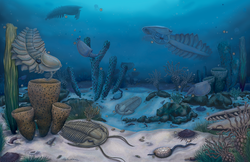
Approximately 538.8 million years ago, Earth witnessed one of the most significant events in the history of life: the Cambrian explosion. Also known as the Cambrian radiation or diversification, this interval saw a sudden surge in the appearance of complex organisms. Within a relatively short geological window of 13 to 25 million years, practically all major animal phyla appeared in the fossil record, setting the stage for most modern metazoan (multicellular animal) life.
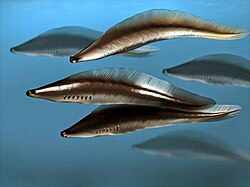
Before this era, life was predominantly simple. Most organisms consisted of individual cells or small multicellular colonies. However, as the rate of diversification accelerated, life became exponentially more complex, introducing the biological blueprints that still define animals today, including the earliest chordates—the group that eventually led to vertebrates.
Key Facts
- Timeline: Began roughly 538.8 million years ago and lasted between 13 and 25 million years.
- Biological Impact: Resulted in the divergence of most modern animal phyla.
- Preceding Life: Transitioned from simple cellular colonies and Ediacaran organisms to complex, multicellular animals.
- Key Fossil Sites: The Burgess Shale is renowned for preserving soft-bodied organisms.
- Major Innovations: Appearance of skeletonization, complex sensory organs, and predatory behaviors.
The Transition from Precambrian Life
To understand the Cambrian explosion, one must look at the era that preceded it. Evidence suggests animals may have existed as far back as one billion years ago, though they were far less complex. The Ediacaran organisms represent a mysterious precursor to Cambrian life; these were often quilted or soft-bodied creatures of unknown affinity.
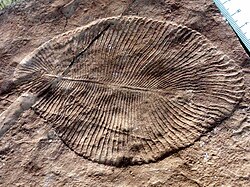
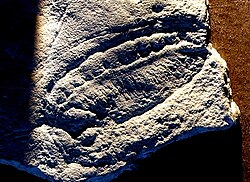
Among these early forms was Kimberella, a triploblastic bilaterian (an organism with three germ layers and a symmetrical left-and-right body plan), which some scientists believe may have been an early mollusc.
Microbial Foundations
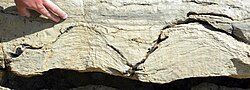
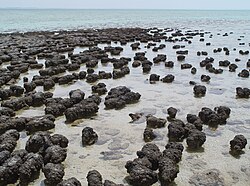
Throughout this transition, stromatolites—layered rocks formed by the trapping and binding of sedimentary grains by microorganisms—remained a staple of the environment, as seen in both ancient formations and modern reserves.
Cambrian Life and Fossil Evidence
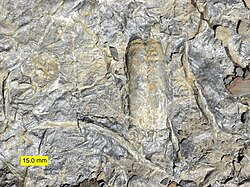
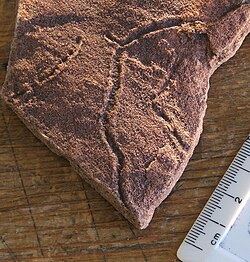
The Cambrian period is characterized by a wealth of body fossils and trace fossils (geological records of biological activity, such as burrows). One of the most significant developments was skeletonization, where animals began developing hard shells or skeletons, making them much easier to preserve in the fossil record.
The Burgess Shale and Soft-Tissue Preservation
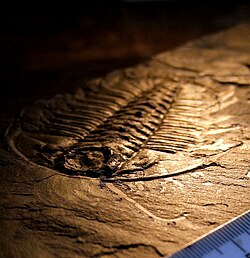
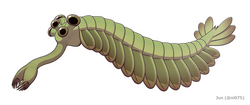
While most fossils preserve only hard parts, Burgess Shale-type faunas are exceptional because they preserve soft tissues. This has allowed paleontologists to study the antennae and legs of trilobites, as well as the strange anatomy of Opabinia.
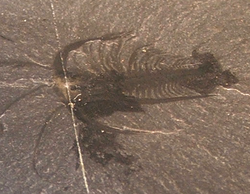
Other notable finds include Marrella, which provides some of the oldest evidence for liquid blood in animals, and Haikouichthys, one of the earliest known fish-like vertebrates.
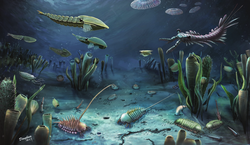
Diverse Organisms of the Era
- Trilobites: Ancient arthropods that became iconic symbols of the Cambrian.
- Cnidarians: Early relatives of jellyfish and corals.
- Echinoderms: Early ancestors of starfish and sea urchins.
- Crustaceans: Early arthropods showing sophisticated feeding mechanisms.
Scientific Frameworks and Terminology
To categorize these ancient creatures, scientists use specific phylogenetic techniques. A phylum is a primary taxonomic rank, while a stem group refers to the ancestral lineage that leads to a specific crown group (the group containing the last common ancestor of all living members). Understanding these relationships helps researchers determine if a fossil is a direct ancestor or a distant relative.
![Stem groups[56]— = Lines of descent = Basal node = Crown node = Total group = Crown group = Stem group](/images/5f/0c/5f0c3fa9cf0f4c1f73cca322f8b55801b15a7f888ff2675636304cb4683762ca.webp)
Additionally, the study of coelomates (animals with a true body cavity) and bilaterians helps map the evolution of complex internal organ systems.
Possible Causes of the Explosion
The suddenness of the Cambrian radiation has led to several theories regarding its cause, often categorized into environmental, developmental, and ecological explanations.
Environmental Changes
- Oxygen Levels: An increase in oxygen may have supported the higher metabolic demands of complex animals.
- Ozone Formation: The development of the ozone layer protected life from harmful UV radiation.
- Ocean Chemistry: Increases in alkalinity and mineral content in seawater may have facilitated the growth of shells and skeletons.
- Snowball Earth: Some suggest that the recovery from global glaciations triggered biological diversification.
Ecological and Developmental Drivers
The rise of predators created an "arms race," forcing prey to evolve defenses like hard shells and better sensory organs. This ecosystem engineering, including the act of burrowing into the sea floor, fundamentally changed the ocean's structure.
| Category | Key Driver/Feature | Impact on Life |
|---|---|---|
| Environmental | Increased Oxygen & Ozone | Supported larger, more active bodies |
| Chemical | Ocean Mineralization | Enabled the creation of shells/skeletons |
| Ecological | Predator-Prey Arms Race | Drove sensory and defensive evolution |
| Biological | Bilaterian Body Plans | Allowed for complex organ systems |
Frequently Asked Questions
What exactly was the Cambrian explosion?
It was a period approximately 538.8 million years ago when most major animal phyla first appeared in the fossil record over a span of 13 to 25 million years.
Why is the Burgess Shale so important?
The Burgess Shale is a rare site that preserves soft-bodied organisms, providing a much more complete picture of Cambrian biodiversity than sites that only preserve hard shells.
Did life truly "explode" into existence?
While called an "explosion," it was a rapid diversification relative to geological time. Some scientists suggest it may be partly a result of survivorship bias, as animals only became visible in the fossil record once they developed hard parts.
What role did oxygen play in this event?
Increased oxygen levels are believed to have provided the necessary energy for animals to grow larger, develop complex tissues, and maintain active predatory lifestyles.
What are Ediacaran organisms?
They were simple, often quilted, multicellular organisms that existed before the Cambrian period. Many are of unknown affinity, meaning they do not clearly fit into modern animal groups.