Cab Calloway: The Hi-De-Ho Man of Jazz and Swing
Cab Calloway was more than just a musician; he was a whirlwind of energy, style, and linguistic innovation who defined the spirit of the swing era. As a singer, songwriter, bandleader, and actor, Calloway blended the sophisticated sounds of jazz with the theatrical flair of vaudeville—a form of early 20th-century variety entertainment—to create a performance style that was entirely his own.
Over a career spanning more than 65 years, Calloway broke numerous barriers for African-American artists, becoming a household name through his residency at the legendary Cotton Club in Harlem and his chart-topping hits that resonated across five consecutive decades.
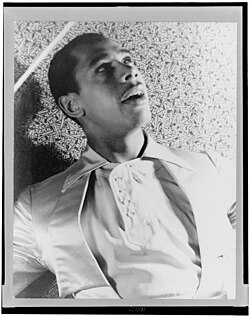
Key Facts
- First Million-Seller: The first African-American musician to sell one million copies of a single record.
- Radio Pioneer: The first African-American to host a nationally syndicated radio program.
- Signature Song: Famous for "Minnie the Moocher," recorded in 1931.
- Cultural Contribution: Published the first dictionary by an African-American, focusing on the "jive" language of the era.
- Versatility: Achieved success across music, film, Broadway, and television.
Early Life and Foundations
Born Cabell Calloway III on December 25, 1907, in Rochester, New York, Calloway was raised in an intellectually driven household. His father, Cabell Calloway Jr., was a graduate of Lincoln University of Pennsylvania, and his mother, Martha Eulalia Reed, was a graduate of Morgan State College who worked as a teacher, church organist, lawyer, and real estate professional.
The family relocated to Baltimore, Maryland, in 1919. Following the death of his father, his mother remarried John Nelson Fortune, and it was in this environment that Calloway's early interests in performance began to take shape.

The Rise to Stardom: 1927–1955
Calloway's professional journey began in 1927, eventually leading him to New York City. After a stint with the Alabamians and a recommendation from Louis Armstrong, he joined the musical revue Connie's Hot Chocolates, where he gained attention performing Fats Waller's "Ain't Misbehavin'."
The Cotton Club and the "Hi-De-Ho" Era
By 1930, he was leading his own group, Cab Calloway and His Orchestra. In 1931, the band secured a permanent spot at the Cotton Club in Harlem after substituting for Duke Ellington. This residency catapulted Calloway to fame, aided by twice-weekly NBC radio broadcasts.
It was during this period that he recorded "Minnie the Moocher," the song that earned him the nickname the "Hi-de-ho" man of jazz. The track was a massive commercial success, marking the first time an African-American artist sold a million copies of a record. Calloway's influence extended into animation as well; he provided the voice and the rotoscoped dance movements—a technique where animators trace over live-action footage—for several Betty Boop cartoons.
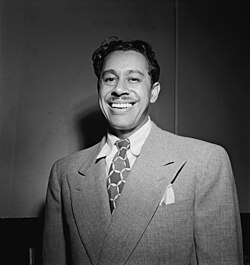
The Language of Jive
Calloway was not only a master of music but also of culture. In 1938, he published Cab Calloway's Cat-ologue: A "Hepster's" Dictionary. This was the first dictionary published by an African-American and served as the official reference for jive—the slang of the jazz subculture—at the New York Public Library.
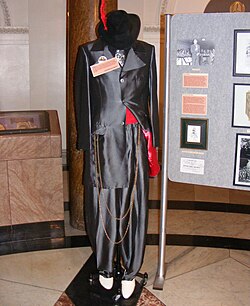
Later Career and Artistic Versatility
As the big band era evolved, Calloway transitioned seamlessly into acting and stage performance. He appeared in notable films such as Stormy Weather (1943) and The Cincinnati Kid (1965). On Broadway, he starred in Porgy and Bess (1953) and Hello, Dolly! (1967), the latter of which featured an all-black cast that revitalized the show's business.
In 1980, Calloway experienced a major career resurgence when he appeared as Curtis in the musical comedy film The Blues Brothers, introducing his energetic style to a new generation of fans.
Legacy and Honors
Calloway continued to perform well into his final years, appearing with the Baltimore Symphony and in Janet Jackson's "Alright" music video. He passed away on November 18, 1994, at the age of 86, following a stroke and pneumonia.
His contributions were recognized with the National Medal of Arts in 1993 and a posthumous Grammy Lifetime Achievement Award in 2008. His home films were selected for preservation by the National Film Registry in 2022, and "Minnie the Moocher" is preserved in the Library of Congress National Recording Registry.
| Category | Key Detail |
|---|---|
| Primary Genres | Jazz, Swing, Blues, Big Band |
| Major Hit | "Minnie the Moocher" (1931) |
| Key Roles | Singer, Bandleader, Actor, Songwriter |
| Notable Films | The Blues Brothers, Stormy Weather, The Cincinnati Kid |
| Major Awards | National Medal of Arts, Grammy Lifetime Achievement Award |
| Active Years | 1927–1994 |
Frequently Asked Questions
What was Cab Calloway's most famous song?
His most famous song was "Minnie the Moocher," recorded in 1931. It became a massive hit and earned him the nickname the "Hi-de-ho" man of jazz.
Why was Cab Calloway's dictionary significant?
He published the first dictionary by an African-American, Cab Calloway's Cat-ologue: A "Hepster's" Dictionary, which documented the jive language of the era and was recognized by the New York Public Library.
What records did Cab Calloway break for African-American musicians?
Calloway was the first African-American musician to sell one million copies of a single record and the first to have a nationally syndicated radio program.
In which modern movie did Cab Calloway have a resurgence?
Calloway enjoyed a significant career resurgence in the 1980s after appearing in the musical comedy film The Blues Brothers.
How did Calloway contribute to early animation?
He provided voice-overs and the basis for character movements through rotoscoping for several Betty Boop cartoons, including Minnie the Moocher and Snow-White.