Burghers of the South African Republics: History and Rights
In the context of 19th-century South Africa, a burgher was more than just a resident; they were fully enfranchised citizens of the Boer Republics. While the term historically referred to the non-slave bourgeoisie of European towns, in South Africa, it evolved into a specific legal and social status tied to land, politics, and military service.
The Origins of the Free Burghers
The concept began with the Free Burghers. Following the establishment of a Dutch East India Company (VOC) settlement at the Cape, several servants were issued "free papers" in 1657. These documents relieved them of their service to the Company, granting them the status of Free Burghers.
This status provided significant privileges, most notably the right to own land. These individuals used their land for farming and supplied produce to the VOC, typically at fixed rates. Over time, these settlers became the ancestors of the Boers, who migrated further into the interior of South Africa through movements such as the Trekboers and the Great Trek, eventually establishing the Boer republics by 1852.
Burgher Rights and Legal Restrictions
The term "burgher rights" encompassed the collective rights to own property and hold political representation. However, these rights were strictly limited based on race and gender.
- Orange Free State (1854–1902): The constitution restricted burgher rights exclusively to white male residents. While people of mixed ancestry (referred to as coloured people) could hold some property rights, they were denied burgher status.
- South African Republic / Transvaal (1852–1902): Burgher rights were granted only to white males. An 1858 bill explicitly forbade equality between white and coloured inhabitants in both Church and State.
The Citizen-Soldier Obligation
Being a burgher carried heavy responsibilities. They functioned as citizen-soldiers, required to serve in the republic's commandos without pay between the ages of 16 and 60. To serve, a burgher had to provide his own horse, rifle, 30 rounds of ammunition, and rations for the first ten days of service.
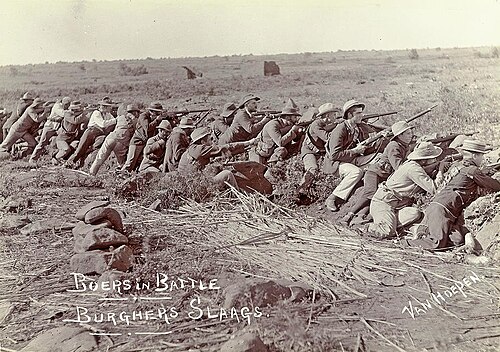
The Uitlander Conflict and the Second Boer War
The discovery of gold and diamonds in the 1870s and 1880s triggered a massive influx of white immigrants, primarily of British descent. The Boers called these newcomers uitlanders ("out landers").
Tensions rose as uitlanders demanded full burgher rights in the Transvaal. President Paul Kruger resisted these demands, fearing that the large number of immigrants would threaten the republic's independence. This political friction contributed to the Jameson Raid of 1895–96 and eventually sparked the Second Boer War (1899–1902).
Interestingly, some foreigners did gain status; the Irish Transvaal Brigade, consisting of volunteers from the Witwatersrand and Ireland under John MacBride, were granted full citizenship and became Burghers of the Boer republics.
Following the British victory and the Treaty of Vereeniging, the republics were annexed as the Transvaal Colony and the Orange River Colony.
Key Facts
- Definition: A burgher was a fully enfranchised citizen in the Boer Republics.
- Eligibility: Rights were restricted to white males; people of colour were explicitly barred.
- Military Duty: Men aged 16–60 served as unpaid citizen-soldiers in commandos.
- Origins: Derived from the "Free Burghers" of the Dutch East India Company in 1657.
- Conflict: The refusal to grant burgher rights to uitlanders (foreigners) helped trigger the Second Boer War.
Summary of Burgher Status
| Feature | Details |
|---|---|
| Primary Rights | Land ownership and political representation. |
| Eligibility | White males only. |
| Military Requirement | Unpaid service in commandos (ages 16–60). |
| Equipment Provided | Horse, rifle, 30 rounds of ammo, and 10 days of rations. |
| Key Republics | Orange Free State and South African Republic (Transvaal). |
Frequently Asked Questions
Who were the Free Burghers?
The Free Burghers were former servants of the Dutch East India Company who were granted "free papers" in 1657, allowing them to own land and farm independently at the Cape.
What were the military obligations of a burgher?
Burghers acted as citizen-soldiers. Between ages 16 and 60, they were required to serve in commandos without pay, providing their own horse, weapon, ammunition, and initial rations.
Why were the uitlanders significant?
Uitlanders were foreign immigrants (mostly British) who moved to the region for gold and diamonds. Their struggle to obtain burgher rights created political instability that led to the Second Boer War.
Did people of colour have burgher rights?
No. In both the Orange Free State and the South African Republic, burgher rights were strictly reserved for white males. People of mixed ancestry had some property rights but were not considered burghers.
What happened to the Boer Republics after the Second Boer War?
After the British victory and the Treaty of Vereeniging, the republics were annexed by Britain and became the Orange River Colony and the Transvaal Colony.