Christiaan de Wet: The Fighting General of the Boer Wars
Christiaan Rudolf de Wet was a pivotal figure in South African history, serving as a Boer general, politician, and rebel leader. Known by the moniker "The Fighting General," de Wet became a symbol of resistance for the Boer Republics during their struggle against British imperial forces. His mastery of guerrilla warfare and his ability to evade capture made him one of the most formidable opponents the British Army faced in the late 19th and early 20th centuries.
Key Facts
- Full Name: Christiaan Rudolf de Wet
- Born: October 7, 1854, in Smithfield, Orange Free State
- Died: February 3, 1922, in Dewetsdorp, Union of South Africa
- Primary Role: Boer General and Acting State President of the Orange Free State
- Military Specialization: Guerrilla warfare and commando leadership
- Notable Conflict: Second Boer War (1899–1902)
- Family: Married to Cornelia Margaretha Krüger with 16 children
Early Life and the First Boer War
Born on the Leeuwkop farm in the district of Smithfield, de Wet spent much of his life in the Orange Free State. Before his rise to military prominence, he was a farmer and later a member of the Volksraad (the parliament of the Boer Republic). His military career began during the First Boer War (1880–1881), where he served as a field cornet.
During this conflict, he participated in the Battle of Majuba Hill, a decisive victory for the Boers over British forces led by Major-General Sir George Pomeroy Colley. This victory was instrumental in restoring the independence of the Zuid-Afrikaansche Republiek, commonly known as the Transvaal Republic.
The Second Boer War: Rise to Command
When the Second Boer War broke out in September 1899, de Wet entered the conflict as an ordinary private burgher. However, his leadership qualities were quickly recognized; by October 1899, he was elected vice-commandant of the Heilbron kommando. He played a key role in the surrender of 954 British troops at Nicholson's Nek and participated in the Siege of Ladysmith.
In December 1899, State President M.T. Steyn appointed him as a fighting general. De Wet was initially assigned as second-in-command to General Piet Cronjé. Following the surrender of Cronjé at Paardeberg in February 1900, de Wet was appointed Commander-in-Chief of the Free State forces.
Despite the fall of the capital, Bloemfontein, de Wet achieved significant victories at Sanna's Post and Reddersburg. He became the primary architect of the Boer guerrilla warfare strategy—a style of irregular fighting characterized by mobility, surprise attacks, and the avoidance of large-scale pitched battles.
The Guerrilla Campaign and Peace
De Wet's ability to evade British columns while striking isolated posts earned him legendary status. His resilience was celebrated in local folklore, including parodies of Sir Walter Scott's poetry. However, the war took a toll on the region, and de Wet eventually participated in the 1902 peace negotiations. He briefly served as the acting State President of the Orange Free State on May 30, 1902, and was a signatory of the Treaty of Vereeniging, which ended the war.
Political Career and the Maritz Rebellion
Following the war, de Wet transitioned into politics. He served as the Minister of Agriculture for the Orange River Colony and was a delegate to the Closer Union Convention. However, his rebellious spirit resurfaced in 1914 during the Maritz Rebellion, an uprising against the Union of South Africa's involvement in World War I.
De Wet was defeated at Mushroom Valley by General Botha and captured in December 1914. He was sentenced to six years in prison and fined £2,000, though he was released after one year upon promising to withdraw from politics. This period gave rise to the nickname "The Five Shillings Rebellion," stemming from a remark de Wet made regarding a previous minor fine for beating a native boy with a shepherd's whip.
Legacy and Cultural Impact
Christiaan de Wet died on February 3, 1922, at the age of 67. He was given a state funeral in Bloemfontein and buried alongside President Steyn and Emily Hobhouse. His reputation for bravery and tactical brilliance extended beyond South Africa; in the 1920s, the British press referred to Irish republican leader Michael Collins as "the Irish de Wet."
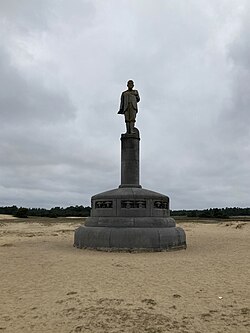
His influence persists in popular culture, appearing in the poetry of Rudyard Kipling and Irish folk songs. A bronze equestrian statue stands in his honor at the Raadzaal in Bloemfontein, and another monument exists in the Hoge Veluwe National Park in the Netherlands, commissioned by his friend Helene Kröller-Müller.
| Period | Role/Event | Key Outcome |
|---|---|---|
| 1880–1881 | First Boer War | Victory at Majuba Hill; Transvaal independence restored |
| 1899–1902 | Second Boer War | Commander-in-Chief of Free State forces; Guerrilla leader |
| May 1902 | Acting State President | Signed the Treaty of Vereeniging |
| 1907–1909 | Minister of Agriculture | Member of the first parliament of Orange River Colony |
| 1914 | Maritz Rebellion | Defeated at Mushroom Valley; Imprisoned |
Frequently Asked Questions
Why was Christiaan de Wet called "The Fighting General"?
He earned this nickname due to his aggressive leadership and his mastery of guerrilla warfare during the Second Boer War, where he consistently evaded British capture while launching successful surprise attacks.
What was de Wet's role in the Treaty of Vereeniging?
De Wet was one of the primary signatories of the treaty in 1902, which formally ended the Second Boer War and established the terms of peace between the Boer Republics and the British Empire.
What was the "Five Shillings Rebellion"?
This was a nickname for the Maritz Rebellion of 1914. It originated from a comment de Wet made about being fined five shillings by a magistrate for beating a native boy with a small whip.
How did de Wet influence figures outside of South Africa?
His reputation for elusive and effective guerrilla tactics was so great that the British press compared the Irish revolutionary Michael Collins to de Wet, calling him "the Irish de Wet."
Where is Christiaan de Wet buried?
He is buried in Bloemfontein, next to President Steyn and Emily Hobhouse, at the foot of the memorial for Boers who died in concentration camps during the Second Boer War.