Koos de la Rey: The Lion of the West Transvaal
Jacobus Herculaas de la Rey, known affectionately as Koos de la Rey, was a pivotal military leader and political figure in South African history. Earning the nickname "Lion of the West Transvaal," he rose to prominence as a general during the Second Boer War (1899–1902), where his innovative tactics and chivalrous conduct earned him respect from both his allies and his British adversaries.
Beyond the battlefield, De la Rey was a staunch advocate for Boer independence and a key player in the early political formation of the Union of South Africa. His life, marked by deep religious faith and a commitment to his people, ended under controversial circumstances that helped ignite a rebellion in 1914.
Key Facts
- Full Name: Jacobus Herculaas de la Rey
- Nickname: Koos Leeu van die Wes Transvaal (Lion of West Transvaal)
- Military Rank: General
- Key Innovation: Early implementation of trench warfare during the Second Boer War.
- Major Victory: The Battle of Magersfontein.
- Political Role: Member of the Transvaal Parliament and Senator.
- Death: Died on September 15, 1914, following a police shooting in Langlaagte.
Early Life and Family
Born on October 22, 1847, at Doornfontein Farm in the Winburg District of the Orange Free State, Koos de la Rey was of French Huguenot, Spanish, and Dutch descent. His early years were shaped by instability; after the Battle of Boomplaats, his family's farm was confiscated by the British, forcing them to trek to Lichtenburg in the Transvaal.
With limited formal education, De la Rey entered the workforce as a transport rider serving the diamond diggings in Kimberley. He eventually married Jacoba Elizabeth (Nonnie) Greeff, the daughter of Lichtenburg's founder. The couple shared a large family, raising twelve biological children and fostering six others. De la Rey was known for his devout nature, rarely seen without his pocket Bible, and possessed a distinguished, patriarchal appearance characterized by a neatly trimmed brown beard.
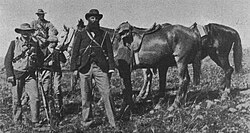
Military Ascent and Early Conflicts
De la Rey's military career began with the Basotho War of 1865 and Sekhukhune's War of 1876. During the First Boer War, he served as a field cornet in the western Transvaal, notably taking over the Potchefstroom siege in 1880–1881. By 1883, he was elected commandant of the Lichtenburg district and joined the Transvaal Volksraad (Parliament).
Politically, he aligned with the progressive faction under General Piet Joubert. He famously opposed Paul Kruger's policies regarding uitlanders (foreigners who arrived during the gold rush), warning that such tensions would inevitably lead to conflict with Great Britain.
The Second Boer War: Innovation and Strategy
At the start of the Second Boer War, De la Rey gained immediate fame at Kraaipan, where he led an attack on a British armored train, resulting in the first shots of the war. However, his relationship with his superior, the cautious General Piet Cronjé, remained strained.
The Shift to Trench Warfare
During the battles of Graspan and the Modder River, De la Rey realized that traditional Boer tactics—fighting from the tops of hills (koppies)—left them vulnerable to superior British artillery. In a groundbreaking move, he insisted his men dig into the banks of the Modder and Riet Rivers. This marked the first use of trench warfare in the conflict, forcing the British to advance into lethal rifle fire.
The Victory at Magersfontein
De la Rey's strategic evolution culminated at the Battle of Magersfontein on December 11, 1899. By entrenching his troops on flat ground at the base of the hill rather than on the summit, he deceived the British. The resulting ambush caused massive British casualties and forced a retreat, significantly delaying the relief of Kimberley.
Guerrilla Warfare and Chivalry
Following the fall of Pretoria and Bloemfontein in 1900, De la Rey transitioned to a mobile guerrilla campaign in the Western Transvaal. For two years, he led a highly mobile force, winning engagements at Nooitgedacht and Tweebosch. His ability to avoid ambushes was so legendary that some believed he was guided by the visions of the prophet Siener van Rensburg.
Despite the brutality of the war, De la Rey was renowned for his chivalry. After capturing Lieutenant General Methuen at Tweebosch in 1902, he released the General—who had suffered a broken leg—and sent the captured troops back to their lines because he lacked the resources to support them.
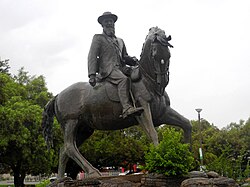
Peace and Political Career
De la Rey played a crucial role in ending the war. After forming a friendship with Lord Kitchener during a parley at Klerksdorp, he urged his compatriots to accept peace terms. This led to the Treaty of Vereeniging on May 31, 1902, which granted the Boers eventual self-government in exchange for acknowledging British sovereignty.
In the years following the war, De la Rey traveled to Europe, India, and Ceylon to raise funds for devastated Boer families and persuade prisoners of war to return home. He later entered politics, serving as a delegate to the National Convention that created the Union of South Africa in 1910 and subsequently serving as a Senator.
The Final Crisis and Death
The outbreak of World War I created a deep rift in South Africa. While Prime Minister Louis Botha agreed to invade the German colony of South West Africa, De la Rey advocated for neutrality, opposing war unless South Africa was directly attacked.
On September 15, 1914, while traveling from Johannesburg to Pretoria with General Christian Frederick Beyers, De la Rey's car encountered police roadblocks. The police opened fire, and De la Rey was struck in the back. His final words were "dit is raak" ("It hit"). While the government claimed the police were searching for the Foster gang, many Boers believed he was assassinated to prevent a coordinated resignation of senior officers in protest of the war.
His death served as a catalyst for the Maritz rebellion of 1914–1915, though the uprising was swiftly suppressed.
Summary of General De la Rey's Career
| Category | Details |
|---|---|
| Primary Conflict | Second Boer War (1899–1902) |
| Tactical Contribution | Pioneered trench warfare in South Africa |
| Notable Battles | Kraaipan, Modder River, Magersfontein, Tweebosch |
| Political Affiliation | Progressive faction; Senator of the Union of South Africa |
| Legacy | Symbol of Boer resistance and chivalry; subject of modern folk music |
Frequently Asked Questions
Why was Koos de la Rey called the "Lion of the West Transvaal"?
He earned this nickname due to his fierce leadership, strategic brilliance, and success in commanding the Boer forces in the western region of the Transvaal during the Second Boer War.
What was De la Rey's most significant military innovation?
He is credited with introducing trench warfare to the Boer conflict. By moving his troops from the tops of hills to concealed trenches at the base, he neutralized British artillery advantages and achieved a major victory at Magersfontein.
Was the death of General De la Rey an accident?
The official account states he was killed by police who were attempting to stop a car while searching for the Foster gang. However, a persistent theory suggests he was assassinated by the government to prevent him from leading a rebellion against South Africa's involvement in World War I.
How did De la Rey treat his prisoners of war?
He was noted for his chivalry. A prime example was his release of Lieutenant General Methuen and his troops at Tweebosch, citing both the General's injury and a lack of supplies to feed the prisoners.
How is Koos de la Rey remembered in modern South African culture?
He remains a significant historical figure, notably revitalized in popular culture by the 2005 song "De la Rey" by Bok van Blerk, which evokes the struggles of the Boer people during the war.