Lord Methuen: The Life and Military Career of Field Marshal Paul Sanford Methuen
Field Marshal Paul Sanford Methuen, 3rd Baron Methuen, was a distinguished yet controversial figure in the British Army during the late 19th and early 20th centuries. From his early days in the Scots Guards to his eventual rise to the highest rank in the army, Methuen's career spanned several continents and some of the British Empire's most challenging conflicts.
Born on September 1, 1845, at Corsham Court in Wiltshire, Methuen was the eldest son of Frederick Methuen, 2nd Baron Methuen. His trajectory was defined by a blend of aristocratic duty and a lifelong commitment to military service, characterized by both significant setbacks on the battlefield and high-level administrative success.
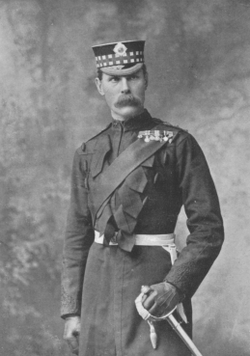
Key Facts
- Full Name: Paul Sanford Methuen, 3rd Baron Methuen.
- Highest Rank: Field Marshal.
- Primary Unit: Scots Guards.
- Major Conflicts: Third Anglo-Ashanti War and the Second Boer War.
- Key Defeat: The Battle of Magersfontein.
- Notable Appointments: Governor and Commander-in-Chief of Natal and Malta.
- Lifespan: 1845–1932.
Early Life and Military Ascent
Educated at Eton College, Methuen began his military journey as a cornet in the Royal Wiltshire Yeomanry. On November 22, 1864, he joined the Scots Fusilier Guards as an ensign. His early career was marked by a steady climb through the ranks and a variety of strategic postings.
By 1873, Methuen saw active duty during the Third Anglo-Ashanti War (a conflict between the British and the Ashanti Empire in modern-day Ghana) while serving on the staff of Sir Garnet Wolseley. His versatility was further demonstrated through roles as a military attaché in Berlin and as the commandant of headquarters in Egypt during the Battle of Tel el-Kebir in 1882.
In the mid-1880s, Methuen commanded "Methuen's Horse," a corps of mounted rifles, during Sir Charles Warren's expedition to Bechuanaland. Following the death of his father in 1891, he succeeded as the 3rd Baron Methuen. By 1898, he had reached the rank of lieutenant general and was positioned to lead the 1st Division at the onset of the Second Boer War.
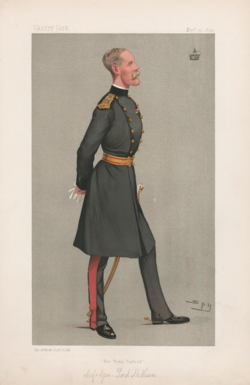
The Second Boer War: Triumph and Tragedy
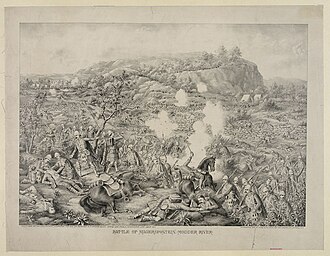
Lord Methuen arrived in South Africa in November 1899 with the objective of relieving the besieged town of Kimberley. While he successfully expelled Boer forces from Belmont and Graspan, his campaign was soon marred by a catastrophic failure at the Battle of Magersfontein.
At Magersfontein, Methuen failed to conduct adequate reconnaissance. Consequently, his artillery bombarded the wrong positions, leaving the Highland Brigade exposed and resulting in heavy casualties. This defeat was one of three British disasters during the infamous "Black Week," which prompted the British government to dispatch Lord Roberts to South Africa.
The war took a personal turn on March 7, 1902, at Tweebosch. During the battle, Methuen's horse fell on him, breaking his leg. He was captured by the Boers, but Boer General Koos de la Rey, moved by the severity of Methuen's injuries, released him and provided his own cart to transport him to a hospital in Klerksdorp. This act of chivalry reportedly forged a lifelong friendship between the two opposing generals.
Despite these setbacks, Lord Kitchener praised Methuen in his final despatch, citing his personal courage, modesty, and humanity as examples for the British Army.
Later Career and Retirement
Remarkably, Methuen's reputation remained intact within the military establishment. He was promoted to full general in 1904 and later served as General Officer Commanding-in-Chief in South Africa (1908) and Governor and Commander-in-Chief of Natal (1910). On June 19, 1911, he achieved the rank of Field Marshal.
In the early stages of World War I, Methuen contributed to improving the training standards of the British Expeditionary Force. His final active appointment was as Governor and Commander-in-Chief of Malta, a position he held from February 1915 until his retirement in May 1919.
In his final years, he served as the Constable of the Tower of London and the deputy lieutenant of Wiltshire. He passed away at Corsham Court on October 30, 1932, at the age of 87.
Summary of Lord Methuen's Career
| Category | Details |
|---|---|
| Service Years | 1864–1912 |
| Key Commands | 1st Division, Eastern Command, Natal, Malta |
| Major Awards | GCB, GCMG, GCVO |
| Notable Conflict | Second Boer War (1899–1902) |
| Final Rank | Field Marshal |
Frequently Asked Questions
Why is the Battle of Magersfontein significant in Lord Methuen's career?
It is regarded as his greatest defeat. Due to a lack of proper reconnaissance, his artillery targeted the wrong area, leading to heavy casualties for the Highland Brigade and contributing to the British "Black Week."
How did Lord Methuen's relationship with General Koos de la Rey begin?
After Methuen was captured and injured at Tweebosch in 1902, General de la Rey showed him mercy by providing a cart to transport him to a hospital, leading to a lifelong friendship.
What were Lord Methuen's roles after the Second Boer War?
He served as General Officer Commanding-in-Chief in South Africa, Governor and Commander-in-Chief of Natal, and Governor and Commander-in-Chief of Malta.
Which military unit was Lord Methuen primarily associated with?
He was primarily associated with the Scots Guards, eventually becoming their Colonel on May 1, 1904.
What honors was Lord Methuen awarded for his service?
He was a Knight Grand Cross of the Order of the Bath (GCB), the Order of St Michael and St George (GCMG), and the Royal Victorian Order (GCVO), among other foreign decorations from Italy and France.