Orange Free State: The Rise and Fall of a Boer Republic
The Orange Free State (Dutch: Oranje Vrijstaat; Afrikaans: Oranje Vrystaat) was an independent Boer republic that existed from 1854 to 1902. Located in the heart of Southern Africa, it was characterized by its parliamentary system, its struggle for autonomy against British imperialism, and its eventual absorption into the Union of South Africa. With its capital at Bloemfontein and a motto of "Geduld en Moed" (Patience and Courage), the republic played a pivotal role in the geopolitical landscape of the 19th century.
Key Facts
- Existence: 1854–1902.
- Capital: Bloemfontein.
- Government: Parliamentary republic governed by the Volksraad (the people's council).
- Official Language: Dutch.
- End of Independence: Ceased to exist on May 31, 1902, via the Treaty of Vereeniging.
- Succession: Became the Orange River Colony, then the Orange Free State Province of the Union of South Africa in 1910.
The Path to Independence
The origins of the state were marked by tension between Boer settlers and British colonial authorities. In 1848, Sir Harry Smith proclaimed British sovereignty over the region between the Orange and Vaal rivers, establishing the Orange River Sovereignty. This move was resisted by the republican party led by Andries Pretorius, though they were defeated at the Battle of Boomplaats on August 29, 1848.
By 1854, the British government decided that maintaining troops in the interior was impractical. Through the Orange River Convention, Britain recognized the independence of the region. On March 28, 1854, representatives met in Bloemfontein to frame a constitution, officially declaring the country the Orange Free State.
The new republic established a liberal constitution for the time, granting full burgher rights to persons of European blood with six months of residency. Executive power was held by a president elected by the burghers from a list provided by the Volksraad.
Growth and Governance
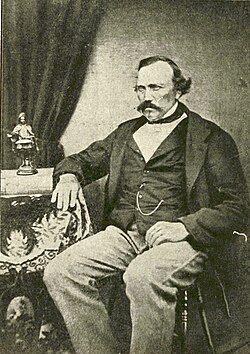
The presidency of Johannes Brand (1864–1888) is regarded as a turning point, bringing a period of peace and prosperity. However, this era was not without conflict. The republic engaged in a long-standing struggle with the Basotho people under Chief Moshoeshoe. After decades of strife, the Treaty of Aliwal North in 1869 finally defined the borders, with the "Conquered Territory" being ceded to the Free State.
While the republic remained relatively small and poor initially, it established a sophisticated diplomatic network, including consulates in the United States and Europe, with its most significant post located in the Netherlands.
Economic Evolution and Gold
While agriculture was the primary mainstay, the mid-20th century brought a dramatic economic shift. In 1934, new geophysical prospecting methods led to the discovery of deep gold-bearing reefs. This sparked the Free State Gold Rush, leading to the establishment of cities like Welkom and Riebeeckstad. By 1981, gold mining accounted for 37.4% of the province's GDP.
The Second Boer War and Annexation
For years, the Orange Free State maintained amicable relations with Great Britain. However, an offensive and defensive alliance with the South African Republic (Transvaal) eventually drew the Free State into conflict. Under President M.T. Steyn, the republic abandoned its neutrality.
The Second Boer War began in earnest on October 11, 1899, when Orange Free State Boers seized a train on the Natal border. Following the Battle of Paardeberg in February 1900, British forces under Lord Roberts occupied Bloemfontein. On May 28, 1900, the territory was annexed as the Orange River Colony.
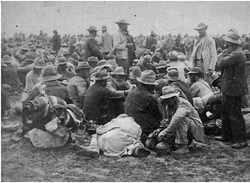
Despite continued guerrilla warfare led by figures such as Christiaan de Wet, the republic officially ceased to exist on May 31, 1902, with the signing of the Treaty of Vereeniging. The region later attained self-government in 1907 before joining the Union of South Africa in 1910.
Summary of the Orange Free State
| Category | Details |
|---|---|
| Period of Independence | 1854–1902 |
| Capital | Bloemfontein |
| Legislature | Volksraad |
| Area (1875) | 181,299 km² (70,000 sq mi) |
| Population (1875) | 100,000 (Whites and coloureds) |
| Currency | Orange Free State pound |
| Key Presidents | Josias P. Hoffman, Johannes Brand, M.T. Steyn |
Frequently Asked Questions
What was the Volksraad?
The Volksraad was the sole legislative authority of the Orange Free State, consisting of a single popularly elected chamber that held the power to frame laws and submit a list of candidates for the presidency.
How did the Orange Free State end?
The republic ended following the Second Boer War. It was first annexed as the Orange River Colony in 1900 and officially ceased to exist as an independent state on May 31, 1902, after the signing of the Treaty of Vereeniging.
Who was Johannes Brand?
Johannes Brand was a Cape bar advocate who served as president from 1864 to 1888. His leadership is credited with bringing a period of stability, prosperity, and the resolution of border disputes with Basutoland.
What was the significance of the gold discovery in the region?
Discovered via geophysical prospecting in 1934, gold transformed the region's economy. It led to a gold rush between 1936 and 1947 and eventually became a massive contributor to the GDP, fueling the growth of urban centers like Welkom.
What was the relationship between the Orange Free State and the Transvaal?
While they were separate republics, they shared a common Boer heritage. They eventually entered into an offensive and defensive alliance, which compelled the Orange Free State to join the Transvaal in the war against Great Britain in 1899.