Bulbophyllum: A Deep Dive into the World's Largest Orchid Genus
In the vast and diverse family of Orchidaceae, few groups command as much attention as Bulbophyllum. As the largest genus within the orchid family, it represents a massive biological undertaking, containing over 2,000 species. This immense diversity makes it one of the largest genera of flowering plants on Earth, surpassed in number only by Astragalus.
Found in warmer regions across the globe—including Africa, southern Asia, Latin America, the West Indies, and various islands in the Indian and Pacific Oceans—these orchids have mastered survival in a variety of environments. Whether clinging to the bark of a tree or the surface of a rock, Bulbophyllum is a testament to evolutionary success.
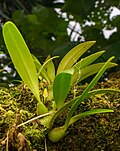
Key Facts
- Genus Size: Over 2,000 species, making it the largest orchid genus.
- Growth Habit: Primarily epiphytic (growing on plants) and lithophytic (growing on rocks).
- Core Feature: Characterized by a pseudobulb, a thickened stem segment used for water storage.
- Center of Diversity: The montane forests of Papua New Guinea host more than 600 species.
- Pollination: Many species use mimicry and odors to attract flies.
Botanical Characteristics and Morphology
The name Bulbophyllum is derived from the Greek words bolbos (bulb) and phyllon (leaf), a direct reference to the plant's structure. These orchids are sympodial herbs, meaning they grow laterally from a rhizome. A defining feature that distinguishes this genus from Dendrobium is the presence of a pseudobulb—a fleshy or leathery stem segment that typically supports one or two leaves.
Their root systems are specialized for their lifestyle, consisting of thread-like or fibrous roots that creep over surfaces or hang from branches. The flowers are typically arranged on an unbranched flowering stem, known as a raceme, which emerges from the base of the pseudobulb. Anatomically, the flowers often feature a fleshy, curved labellum (lip) that is hinged to the base of the column, a mechanism often used to facilitate pollination.
Taxonomic Complexity
Because of their immense variety, Bulbophyllum presents a significant challenge to taxonomists. There are currently more than 2,800 records, including accepted names and synonyms, and the genus is divided into approximately 120 sections and subgenera. While there have been various attempts to split the genus into smaller groups, most classifications remain unified under the Bulbophyllum name in major checklists.
Evolution and Global Distribution
Molecular studies suggest that the genus originated during the early Miocene epoch. Biogeographic evidence points to the Asia-Pacific region as the ancestral homeland. From there, the genus underwent a progressive east-to-west dispersal, leading to major evolutionary radiations in Madagascar, Africa, and the Neotropics (the tropical regions of the Americas).
Today, the distribution is truly pantropical. While Papua New Guinea is the heart of its diversity, significant populations exist in Borneo (over 200 species), Madagascar (135 species), Australia, India, and throughout tropical Central and South America.
| Clade | Example Sections | Type Species Example |
|---|---|---|
| Africa | Bifarium, Comata, Gilgiana | B. bifarium |
| Madagascar | Alcistachys, Kinethrix, Moratii | B. nutans |
| Neotropical | Bulbophyllaria, Didactyle, Xiphizusa | B. bracteolatum |
| Asia-Pacific | Cirrhopetalum, Drymoda, Sestochilos | B. longiflorum |
Ecology: The Art of Scent and Pollination
One of the most fascinating aspects of Bulbophyllum is its relationship with pollinators. Many species have evolved to produce odors that mimic decaying organic matter, such as rotting carcasses, dung, or urine. These scents attract flies, which serve as the primary pollinators. For instance, the species Bulbophyllum beccarii is famously described as having an overpowering odor, sometimes likened to a herd of dead elephants.
Not all species rely on unpleasant scents. Some utilize mild, pleasant fragrances to attract Dacini fruit flies. These plants produce chemical rewards like methyl eugenol, raspberry ketone, or zingerone to entice pollinators through both scent and nutritional benefit.
Horticulture and Cultivation
For orchid collectors, Bulbophyllum species have been a point of interest for over a century. However, they are generally considered moderate-to-difficult to cultivate. They thrive in environments with high humidity and constant air movement, making them unsuitable for standard indoor houseplant settings or enclosed Wardian cases without specialized ventilation.
Successful growers typically provide moderate light levels, as deep shade can hinder growth. Many species are ever-blooming, meaning they can produce flowers continuously throughout the year if their environmental needs are met.
Conservation Status
Due to habitat loss and environmental changes, several species within the genus are currently threatened. The IUCN (International Union for Conservation of Nature) recognizes several Bulbophyllum species as vulnerable, endangered, or critically endangered. Notable examples include:
- Bulbophyllum filiforme (Critically Endangered)
- Bulbophyllum kupense (Critically Endangered)
- Bulbophyllum modicum (Endangered)
- Bulbophyllum bifarium (Vulnerable)
Frequently Asked Questions
What is the main difference between Bulbophyllum and Dendrobium?
The primary distinction lies in the stem structure; Bulbophyllum possesses a pseudobulb, which is a specialized storage organ, a feature that distinguishes it from the Dendrobium genus.
Why do some Bulbophyllum flowers smell bad?
Many species produce odors resembling carrion, dung, or rotting meat to attract flies, which are their primary pollinators. This scent-based mimicry ensures the plant can reproduce effectively in its natural habitat.
Are Bulbophyllum orchids easy to grow as houseplants?
Generally, no. They require high humidity and significant air movement to prevent rot, making them more suitable for controlled greenhouse environments rather than typical home settings.
Where is the highest concentration of Bulbophyllum species found?
The highest diversity is found in the montane forests of Papua New Guinea, which is believed to be the evolutionary center of the genus.
What does the name Bulbophyllum mean?
The name comes from the Greek words bolbos, meaning 'bulb', and phyllon, meaning 'a leaf', referring to the leaf that grows atop the plant's pseudobulb.