Orchids: The Diverse and Fascinating World of Orchidaceae
Orchids belong to the Orchidaceae family, one of the two largest families of flowering plants on Earth. With approximately 28,000 currently accepted species spanning around 700 genera, orchids represent a significant portion—roughly 6% to 11%—of all known seed plant species. This immense diversity has made them a cornerstone of horticulture, inspiring countless orchid societies and the development of complex hybrids and cultivars worldwide.
From the delicate blooms in a home garden to specialized species in remote tropical forests, orchids exhibit a remarkable range of biological strategies and evolutionary histories.
![Orchid reproductive anatomy, illustrated with a Brassia[27]](/images/d6/7c/d67cf42dceb9b260d5b9d8a5158caa24ed35bf5e0229296827158d737256a799.webp)
Key Facts
- Species Count: Approximately 28,000 accepted species.
- Taxonomy: Part of the order Asparagales.
- Growth Patterns: Can be monopodial (growing from a single point) or sympodial (growing from multiple nodes).
- Evolutionary Age: Genetic sequencing suggests origins as early as 76 to 84 million years ago.
- Diversity: Rivaled in size only by the Asteraceae family.
Biological Structure and Growth
All orchids are perennial herbs, meaning they live for more than two years, and they lack any permanent woody structures. To navigate their environments, orchids generally follow one of two distinct growth patterns:
Growth Patterns
- Monopodial: The plant grows upward from a single point, such as in the Phalaenopsis genus.
- Sympodial: The plant grows from multiple internodes, often developing pseudobulbs (thickened stem segments used for storage). In this pattern, older leaves may die off at the back of the plant, as seen in Prosthechea fragrans.
The pseudobulb is a specialized structure found in some species, such as Bulbophyllum nutans, which arises from a single internode to assist in nutrient and water storage.
Taxonomy and Classification
The classification of orchids is a complex and evolving field. In 1753, Carl Linnaeus recognized eight genera, but as botanical understanding grew, so did the number of recognized groups. Antoine Laurent de Jussieu established Orchidaceae as a separate family in 1789. Today, the family is placed within the order Asparagales based on molecular phylogenetics.
Modern taxonomy recognizes five primary subfamilies:
- Apostasioideae: Includes 2 genera and 16 species, primarily found in southeastern Asia.
- Cypripedioideae: Includes 5 genera and 130 species, found in temperate regions, tropical America, and tropical Asia.
- Epidendroideae
- Orchidoideae
- Vanilloideae
!["Orchideae" in Ernst Haeckel's 1899 Kunstformen der Natur[89]](/images/02/fc/02fccb6715ef4fd73eb691051f41214fcc5893f801bb960b544c7a4dddbe3427.jpg)
Evolutionary History and Fossils
While orchid fossils are relatively rare, significant discoveries have provided a window into their past. In 2007, a Miocene-era amber find revealed a stingless bee (*Proplebeia dominicana*) carrying the pollen of an extinct orchid, Meliorchis caribea. This provided the first fossil evidence that insects were active orchid pollinators as far back as 15–20 million years ago.
Other fossil evidence includes Succinathera baltica, described in 2017 from Eocene-age Baltic amber (approximately 40–55 million years ago). However, genetic sequencing suggests the family may be even older, potentially arising during the Late Cretaceous period (76 to 84 million years ago), with some phylogenetic patterns suggesting an age of roughly 100 million years.
Reproduction and Pollination
Orchids have developed highly specialized methods for reproduction. Many species rely on specific insect pollinators. Some orchids use deception to attract pollinators, mimicking the appearance or scent of other organisms. Pollination often involves the transfer of pollinia—masses of pollen grains—which can become attached to an insect via a sticky structure called a viscidium.
Beyond sexual reproduction, some orchids can reproduce asexually. For example, a Phalaenopsis may produce a keiki, which is a small plantlet that grows at the apex of the plant and can eventually be separated and planted as an individual.
Summary of Orchidaceae Characteristics
| Feature | Description |
|---|---|
| Plant Type | Perennial herbs (non-woody) |
| Genera Count | Approximately 700 |
| Species Count | Approximately 28,000 |
| Order | Asparagales |
| Primary Growth | Monopodial or Sympodial |
Frequently Asked Questions
What is the difference between monopodial and sympodial orchids?
Monopodial orchids grow from a single upward-reaching stem from one point, while sympodial orchids grow horizontally via multiple nodes and often utilize pseudobulbs for storage.
How old are orchids?
While fossil evidence dates specific species to the Miocene and Eocene, genetic sequencing suggests the Orchidaceae family may have originated between 76 and 100 million years ago.
Are all orchids the same type of plant?
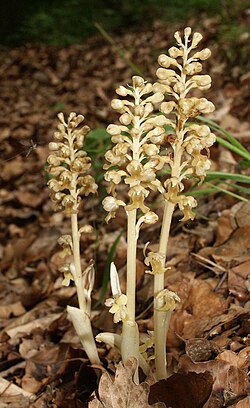
No, they are incredibly diverse. They can be epiphytic (growing on other plants), terrestrial, or even myco-heterotrophic (relying on fungi for nutrients rather than photosynthesis).
How do orchids reproduce?
Orchids reproduce sexually through pollination (often involving insects and pollinia) and can also reproduce asexually, such as through the production of keikis.
What is a pseudobulb?
A pseudobulb is a thickened, specialized stem segment used by many sympodial orchids to store water and nutrients.