The Giants of Botany: Understanding the World's Largest Plant Genera
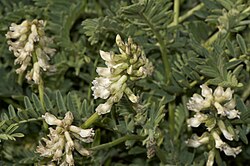
The diversity of the plant kingdom is staggering, with vast differences in how species are grouped. While some genera contain only a single species, others are massive, encompassing thousands. As of 2023, there are 86 identified genera of flowering plants that contain at least 500 described species. Currently, the largest of these is the legume genus Astragalus (also known as milk-vetches), which contains more than 3,200 species.
The History of Plant Classification
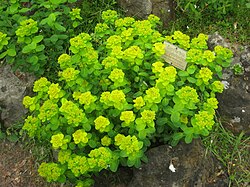
The disparity in genus sizes has been a point of interest since the early days of botanical science. In his seminal work, Species Plantarum, the famous taxonomist Carl Linnaeus believed that no single genus should contain more than 100 species. At that time, the largest genus he identified was Euphorbia, which contained 56 species.
Why Do Genus Sizes Vary So Widely?
The massive size of some genera compared to others is not purely a matter of biology; it is also shaped by history and how humans perceive plants. In 1961, Max Walters proposed a hypothesis suggesting that the size of a genus is often related to the age of the taxon (a group of organisms) in the minds of taxonomists, rather than the age of the plants themselves.
Historical and Geographic Influences
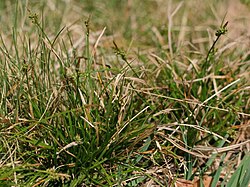
Early taxonomy was largely based on plants found in Europe. Because these plants were well-studied, they were often divided into many small, distinct genera. In contrast, plants from the tropics were often grouped into much larger, more diverse, and heterogeneous genera. Furthermore, plants with shared medicinal properties, such as those in the Euphorbia genus, were often united into a single large group. Conversely, plants with highly diverse uses, such as various grasses, were split into many smaller genera. Finally, groups that had many classical names were often divided into small genera, while those without such classical subdivisions, such as Carex, remained as large, singular genera.
Biological Drivers of Diversity
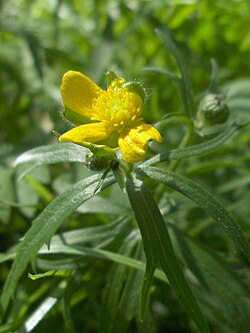
Biological factors also play a significant role in genus size. For example, the occurrence of apomixis—a method of asexual reproduction where plants produce seeds without fertilization—allows for the recognition of many agamospecies (taxa that arise through apomixis). The presence of these agamospecies has helped bolster the species counts in genera such as Ranunculus and Potentilla.
Managing Complexity in Taxonomy
As genera grew larger and more complex, botanists needed new ways to organize them. In the 19th century, botanists like Augustin Pyrame de Candolle introduced infrageneric taxa—classification levels within a genus, such as subgenera, sections, and series. These tools allowed scientists to retain large genera without them becoming unwieldy. Some researchers, such as E. J. H. Corner, argued that studying these large genera could provide deeper insights into evolutionary biology, leading him to focus on massive tropical genera like Ficus.
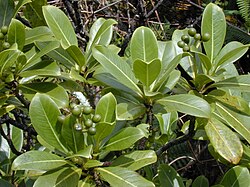
Today, the classification of large genera remains a dynamic field. For instance, Psychotria is recognized as one of the largest flowering plant genera, containing more than 1,900 species.
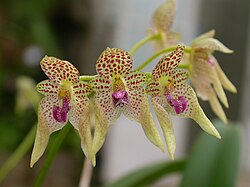
Another significant group is Bulbophyllum, which ranks as the second largest flowering plant genus with more than 2,000 species.
The Challenges of Modern Counting
Determining the exact number of species in a genus is often difficult. Because different taxonomists use different approaches, and many large genera have not been the subject of recent, comprehensive studies (known as monographs), species counts can vary significantly. For example, estimates for the number of species in the orchid genus Pleurothallis range from 1,120 to as many as 2,500. This uncertainty also extends to other groups of vascular plants, such as pteridophytes (a group of plants that includes ferns), which include large genera like Selaginella, Asplenium, and Cyathea.
Key Facts
- As of 2023, 86 genera of flowering plants contain at least 500 species.
- Astragalus is the largest flowering plant genus, with over 3,200 species.
- Carl Linnaeus originally believed that no genus should exceed 100 species.
- Apomixis, or asexual seed production, contributes to the high species counts in certain genera.
- Genus sizes are influenced by both biological factors and historical taxonomic practices.
Summary of Large Plant Genera
| Genus | Approximate Species Count |
|---|---|
| Astragalus | Over 3,200 |
| Bulbophyllum | Over 2,000 |
| Psychotria | Over 1,900 |
| Euphorbia | Over 1,800 |
| Carex | Over 1,700 |
Frequently Asked Questions
What is the largest flowering plant genus?
The largest flowering plant genus is currently Astragalus, which contains more than 3,200 species.
Why do some plant genera have so many species while others have very few?
The size of a genus is influenced by biological factors, such as apomixis, and historical factors, such as how early taxonomists grouped tropical versus European plants or how they categorized plants based on medicinal use.
What is apomixis?
Apomixis is a form of asexual reproduction in plants where seeds are produced without the need for fertilization.
Why is it difficult to know the exact number of species in a genus?
Species counts are often imprecise because different taxonomists use different classification approaches, and many large genera have not undergone recent, detailed scientific reviews.
What are pteridophytes?
Pteridophytes are a group of vascular plants that includes ferns.