Brunswick: A Journey Through the History and Culture of Braunschweig
Located in the heart of Lower Saxony, Brunswick (known in German as Braunschweig) is a city where medieval heritage meets modern urban vitality. Founded in the 9th century, it has evolved from a strategic stronghold into a thriving center of science, education, and culture. From its iconic lion statue to its role in the early development of football, Brunswick offers a rich tapestry of German history.
The city is characterized by its unique blend of architectural styles, ranging from the reconstructed grandeur of the Brunswick Palace to the quaint timber-framed houses of the surrounding region. Today, it serves as a key hub within the Hannover–Braunschweig–Göttingen–Wolfsburg Metropolitan Region.
Key Facts
- Founded: 9th century.
- Population: 252,962 (City), with an urban agglomeration of approximately 551,000.
- State: Lower Saxony, Germany.
- Key Landmark: The Brunswick Lion, a symbol of the city's power and history.
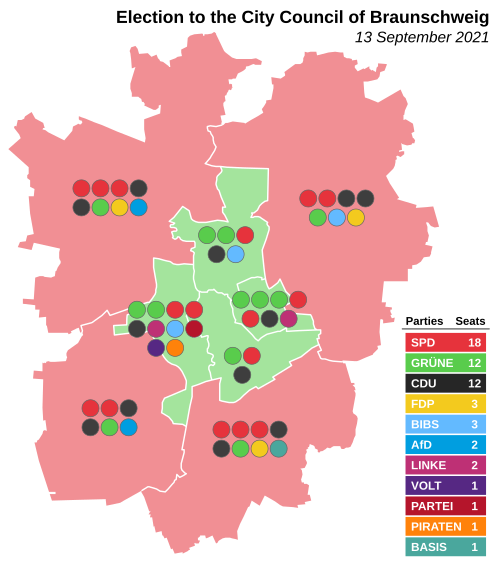
- Governance: Led by Lord Mayor Thorsten Kornblum (SPD).
- Climate: Temperate, with an average annual precipitation of 614.8 mm.
Historical Evolution
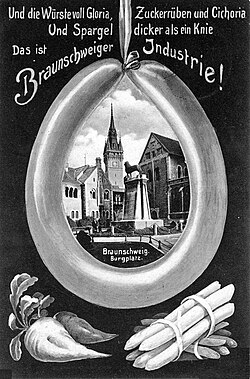
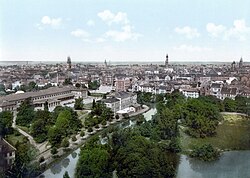
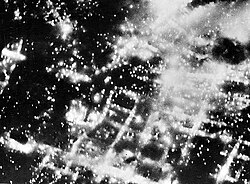
Brunswick's history is deeply intertwined with the nobility of Saxony and Bavaria. During the Middle Ages and the early modern period, the city established itself as a significant political and economic center. The 19th century brought industrialization, while the early to mid-20th century saw the city navigate the turmoil of two World Wars.
![Brunswick in the 16th century, from the Civitates orbis terrarum by Georg Braun and Frans Hogenberg[18]](/images/50/0f/500f0696599b16901333c4f070025358701d00d29b50fbeb93c5111504f45db6.jpg)
The postwar period was marked by reconstruction and a shift toward becoming a center for research and science. The city's population has fluctuated over the centuries, growing from 16,000 in 1330 to over 250,000 in the modern era, reflecting its enduring appeal as a place of residence and industry.
City Landmarks and Culture
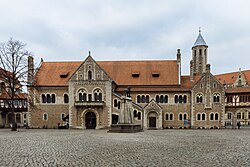
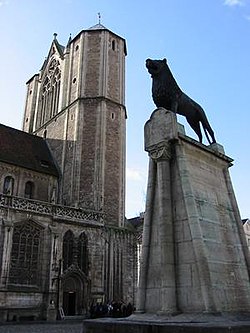
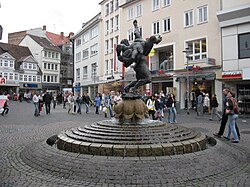
The city center is a treasure trove of sights. The Burgplatz serves as the focal point, featuring the Brunswick Cathedral, the Town Hall, and the famous Brunswick Lion. The original lion statue is preserved within the castle museum, while the replica stands as a public landmark.
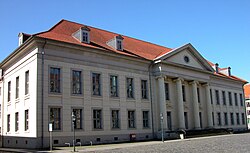
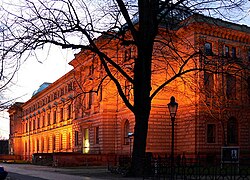
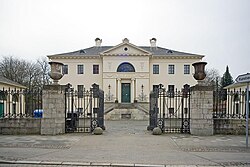
Other notable sites include the Herzog Anton Ulrich Museum, the Villa Salve Hospes, and the Landschaftliches Haus, which served as the Landtag building for the Duchy and Free State of Brunswick.
Parks and Recreation
Green spaces are integral to the city's layout. Residents and visitors frequent the Bürgerpark, the Botanischer Garten (Botanical Garden), and the Museumpark. For those looking beyond the city limits, the nearby Wolfenbüttel Castle is renowned for its collection of approximately 1,000 timber-framed buildings.
Demographics and Society
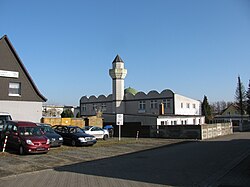
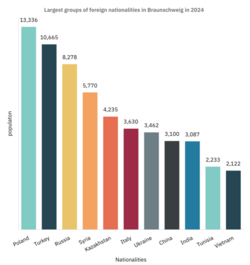
Brunswick is a diverse urban center with a significant international population. As of 2024, the city hosts residents from numerous countries, with the largest foreign-born groups originating from Poland, Turkey, and Russia.
Urban Structure
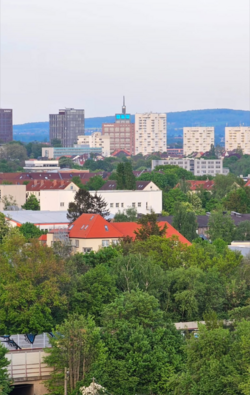
The city is divided into 19 boroughs, including the Innenstadt (City Center), Nordstadt, and Weststadt. The urban agglomeration extends to include parts of Salzgitter, Wolfenbüttel, and the districts of Gifhorn and Peine.
Infrastructure and Economy
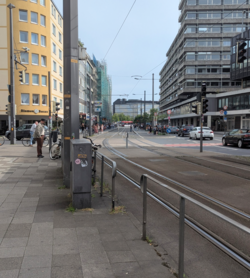
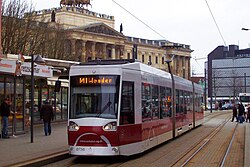
Transportation in Brunswick is efficient, centered around the main station area and a comprehensive tram and bus network. The tram system connects key districts, such as the line from Wenden to Stöckheim and the route from the Hauptbahnhof to Broitzem.
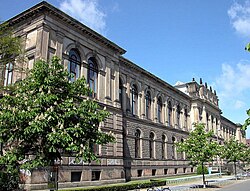
The city is also a hub for higher education and research, most notably represented by the Braunschweig University of Technology.
Sports and Legacy
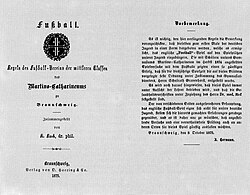
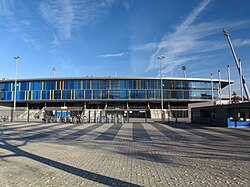
Brunswick holds a special place in sporting history; Konrad Koch produced the first German version of the rules of football here. Today, the city is represented by the 2. Bundesliga club Eintracht Braunschweig, playing at the Eintracht-Stadion.
City Overview Summary
| Category | Detail |
|---|---|
| State | Lower Saxony |
| City Population (2024) | 252,962 |
| Urban Agglomeration | 551,000 |
| Area | 192.13 km² |
| Elevation | 75 m |
| Key Industry | Research, Science, and Education |
Frequently Asked Questions
What is the significance of the Brunswick Lion?
The Brunswick Lion is a historic symbol of the city's power and heritage, originally commissioned by Henry the Lion. The original statue is now housed in the castle museum.
Which sports are prominent in Brunswick?
Football is highly prominent, with the city being the site of the first German football rules. Eintracht Braunschweig is the city's professional club in the 2. Bundesliga.
What is the climate like in Braunschweig?
The city has a temperate climate with an average annual precipitation of 614.8 mm. Record highs have reached 38.3°C, while record lows have dropped to -26.3°C.
How is the city governed?
Brunswick is an urban district governed by a Lord Mayor, currently Thorsten Kornblum of the Social Democratic Party (SPD), and a city council.
What are the main educational institutions in the city?
The Braunschweig University of Technology is one of the primary centers for research and higher education in the region.