Duchy of Brunswick
The Duchy of Brunswick (German: Herzogtum Braunschweig) was a sovereign German state that existed from 1815 until 1918. With its capital in the city of Brunswick (Braunschweig), the duchy served as a significant political entity through the shifting landscapes of the 19th and early 20th centuries. Established by the Congress of Vienna as the successor to the Principality of Brunswick-Wolfenbüttel, it evolved from a member of the German Confederation into a federal state of the German Empire.
The state's history is deeply intertwined with the House of Welf (Guelph), a dynasty that ruled various territories in northwest Germany for centuries. The duchy eventually ceased to exist following the German Revolution of 1918, when its territory was incorporated into the Weimar Republic as the Free State of Brunswick.
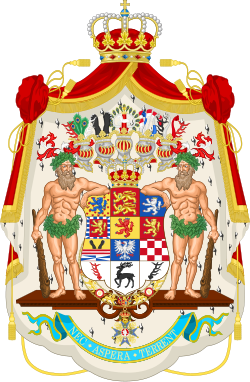
Key Facts
- Capital: Brunswick (Braunschweig)
- Duration: 1815–1918
- Government: Constitutional Monarchy
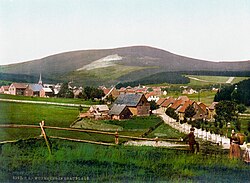
- Highest Point: Wurmberg (971 meters)
- Population (1910): 494,339
- Area (1910): 3,672 km²
- Primary Religion: Protestantism (Evangelical Lutheran)
Historical Evolution
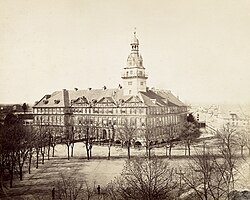
The Roots: Principality of Brunswick-Wolfenbüttel
The foundations of the duchy lie in the holdings of the Welf family, who held the title "Duke of Brunswick and Lüneburg" starting in 1235. These lands were often divided among sons or reallocated when family branches became extinct. By 1546, two distinct dynastic lines emerged: the senior branch in Brunswick-Wolfenbüttel and the younger branch in Calenberg-Hanover.
From 1432, Wolfenbüttel served as the capital of the broader Duchy of Brunswick and Lüneburg. While the Lüneburg territories eventually fell under the control of the Electors of Hanover by 1705, the princes of Wolfenbüttel maintained their own distinct authority.
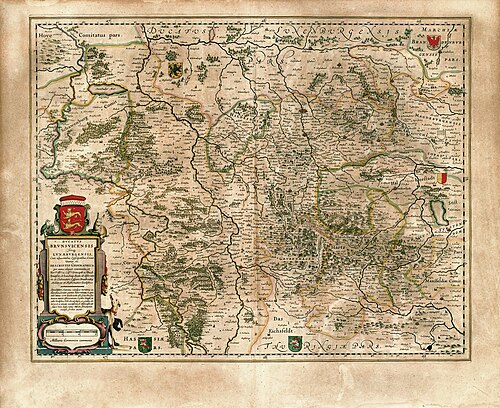
Establishment and Early Sovereignty
Following a period from 1807 to 1813 where the territory was part of the Kingdom of Westphalia, the Congress of Vienna formally recognized the territory as the independent Duchy of Brunswick in 1815. This sovereignty was not without dispute; Duke Charles II and later his grandson, Ulric de Civry, maintained protests against the territorial arrangements decided by the Council of Vienna.
The Era of Charles II and William VIII
Duke Charles II (1815–1830) ruled with an absolutist style that eventually alienated the bourgeoisie and nobility. This tension culminated in the July Revolution of 1830, during which an angry mob stormed and destroyed the ducal palace in Braunschweig, forcing Charles to flee the country.
His successor, William VIII (1830–1884), adopted a more liberal approach. Under his rule, a new constitution was adopted on October 12, 1832, which limited the duke's powers and granted the parliament more rights than was common in other German states at the time.
Regency and the House of Hanover
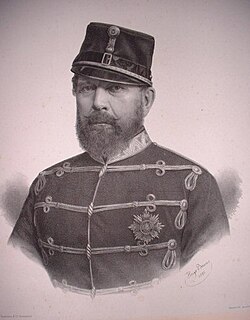
Upon the death of William VIII in 1884, the Wolfenbüttel line ended. Succession passed to the House of Hanover. However, the rightful heir, the Duke of Cumberland, was blocked by the Federal Council because he still claimed the throne of the Kingdom of Hanover, which Prussia had annexed in 1866. This led to a period of regency from 1884 to 1913, managed first by Prince Albert of Prussia and later by Duke John Albert of Mecklenburg.
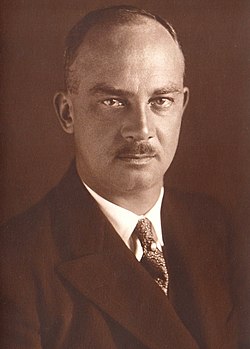
The impasse ended in 1913 when the Duke of Cumberland renounced his claims in favor of his son, Ernest Augustus. After swearing allegiance to the German Empire and renouncing claims to Hanover, Ernest Augustus ascended the throne.
The End of the Monarchy
The monarchy came to an abrupt end during the German Revolution of 1918. Duke Ernest Augustus was forced to abdicate, marking the transition of the territory into the Free State of Brunswick within the Weimar Republic.
Geography and Administration
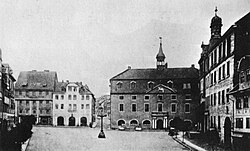
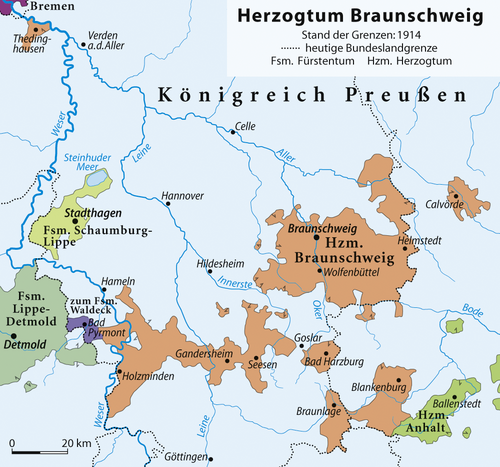
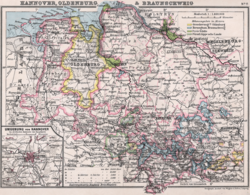
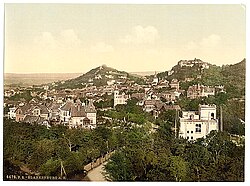
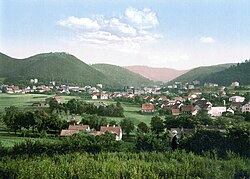
The duchy's landscape was diverse, spanning the Weser Uplands in the west, the northern Harz Foreland, and the Harz mountains in the south. The northern regions bordered the North German Plain. The territory was drained by several major rivers, including the Weser, Aller, Leine, Oker, Bode, and Innerste.
Territorial Organization
The state consisted of a main territory and several exclaves. By 1833, it was divided into six districts (Kreise), which were further split into cities (Städte) and rural townships (Ämter).
| Region/Exclave | Area (km²) | Shared Borders |
|---|---|---|
| Main part (Braunschweig, Wolfenbüttel, Helmstedt) | 1808 | Province of Hanover, Province of Saxony |
| Western part (Holzminden, Seesen, Gandersheim) | 1107 | Province of Hanover, Province of Westphalia, Waldeck |
| Lower Harz (Blankenburg, Braunlage) | 475 | Province of Hanover, Province of Saxony, Anhalt |
| Harzburg | 125 | Province of Hanover |
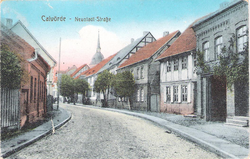
| Calvörde | 102 | Province of Saxony |
| Thedinghausen | 56 | Province of Hanover |
Society and Economy
Demographics and Religion
The population grew steadily throughout the 19th century, reaching 494,339 by 1910. The society was overwhelmingly Protestant, with 92.5% of the population adhering to the Evangelical Lutheran Church as of 1905. Other religious groups included Catholics (5.5%), Reformed churches (0.97%), and the Jewish faith (0.39%).
Economic Structure and Transport
By 1905, the economy was heavily industrial, with 45.5% of the workforce employed in industry, mining, or construction. Agriculture and forestry employed 28.9%, while commerce and the civil service made up the remainder.
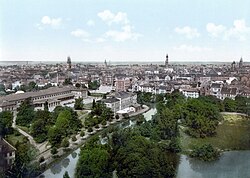
Brunswick was a pioneer in transportation; the Duchy of Brunswick State Railway was the first state railway in Germany. Its line connecting Braunschweig and Wolfenbüttel, opened on December 1, 1838, was the first railway line in Northern Germany.
Culture and Sports
The duchy saw the birth of organized sports in the region, with MTV Braunschweig founded in 1847 as the first sports club. Football gained popularity in the early 20th century, leading to the foundation of the Duchy of Brunswick Football Association in 1904. Eintracht Braunschweig, founded in 1895, remains a prominent club today, still wearing the blue and yellow colors of the former duchy's flag.
Frequently Asked Questions
How was the Duchy of Brunswick established?
It was established in 1815 by the Congress of Vienna as the successor state to the Principality of Brunswick-Wolfenbüttel.
Who was the last Duke of Brunswick?
The last ruling duke was Ernest Augustus, who reigned from 1913 until his abdication in 1918.
What happened to the duchy after 1918?
Following the German Revolution of 1918, the monarchy was abolished, and the territory became the Free State of Brunswick, a member state of the Weimar Republic.
What was unique about the Brunswick State Railway?
It was the first state railway in Germany, and its Brunswick–Bad Harzburg line was the first railway line constructed in Northern Germany.
What were the colors of the Duchy of Brunswick?
The flag of the duchy consisted of blue over yellow, colors that are still used today by the football club Eintracht Braunschweig.