British Invasions of the River Plate
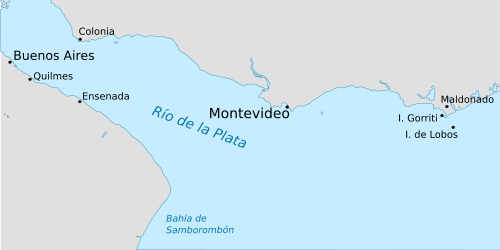
Between 1806 and 1807, the shores of the Río de la Plata became a primary theater of the Anglo-Spanish War. In a series of ambitious military campaigns, the United Kingdom attempted to seize control of the Spanish colonies in present-day Argentina and Uruguay. While the British sought to expand their global trading networks, they encountered a fierce resistance that not only repelled the invaders but also planted the seeds of national independence in the region.
The conflict unfolded in two distinct phases: a brief occupation of Buenos Aires in 1806, followed by a larger, more violent attempt to capture both Montevideo and Buenos Aires in 1807. Despite their naval superiority, the British forces were ultimately defeated by a combination of colonial troops and local militias.
Key Facts
- Timeline: The invasions took place between 1806 and 1807.
- Outcome: A decisive Spanish victory resulting in the total withdrawal of British forces.
- Key Figures: Santiago de Liniers (Spanish leader) and Lieutenant-General John Whitelocke (British commander).
- Strategic Impact: The failure of the British and the lack of support from Spain encouraged the Criollos (Spanish descendants born in the Americas) to seek independence.
- Casualties: The second invasion was particularly bloody, with thousands of casualties on both sides during urban combat.
Historical Background
The city of Buenos Aires was established by Spain in the 16th century, eventually becoming a major hub in the Americas. To counter Portuguese expansion from the nearby colony of Colonia del Sacramento, Spain founded Montevideo in 1726 and created the Viceroyalty of the Río de la Plata in 1776.
By the turn of the 19th century, the Napoleonic Wars shifted European alliances. Spain joined France in its war against the United Kingdom via the Second Treaty of San Ildefonso in 1796. Following the British naval victory at the Battle of Trafalgar in 1805, Spain's communication with its American colonies was severely crippled, leaving Buenos Aires vulnerable and neglected by the Spanish Crown.
British Strategic Interests
For decades, British strategists had eyed the Río de la Plata as a prime location for a colonial trading base. Proposals ranged from establishing agricultural zones to the more aggressive "Maitland Plan," which suggested seizing Buenos Aires as a stepping stone to conquer Chile, Peru, and Quito.
The opportunity arose when Home Riggs Popham, while patrolling the South American coast, identified local discontent regarding Spain's restrictive trade regulations. Popham convinced the British command that the region could be taken with a relatively small force.
The First Invasion (1806)
In 1806, General William Beresford led a force of approximately 1,668 soldiers to capture Buenos Aires. The British successfully occupied the city for 46 days. However, the occupation was short-lived. Santiago de Liniers organized a mixed force of line troops and militia, successfully reclaiming the city and forcing Beresford to surrender on August 14, 1806.
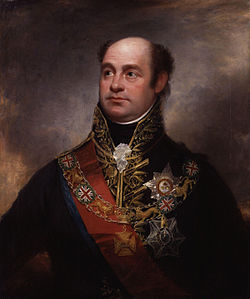
Following the victory, a local cabildo (municipal council) deposed the Spanish governor, Rafael de Sobremonte, and granted military authority to Liniers, who became a local hero.
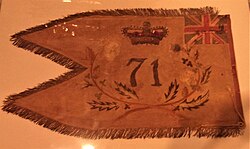
The Second Invasion (1807)
The Fall of Montevideo
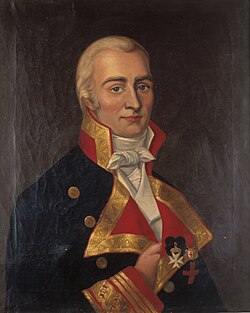
The British returned in 1807 with a significantly larger force. On February 3, a joint naval and military operation led by General Samuel Auchmuty and Admiral Charles Stirling besieged Montevideo. Despite heavy resistance, the British breached the walls and forced the unconditional surrender of Governor Ruiz Huidobro by 5:00 a.m. that same day.
The Second Battle of Buenos Aires
In May 1807, Lieutenant-General John Whitelocke took overall command. On July 1, he engaged Liniers' forces at Miserere. Rather than immediately entering the city, Whitelocke demanded surrender, giving Mayor Martín de Álzaga time to fortify the city with trenches and fences.
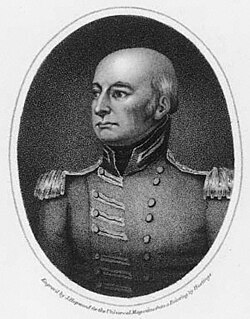
Whitelocke eventually attacked on July 4 and 5, dividing his army into 12 columns and advancing without artillery. He underestimated the brutality of urban warfare. Local militias, including 686 African slaves and the "Patricios" Infantry Regiment, fought from the streets and rooftops, raining boiling water and burning oil down on the British soldiers.
The British suffered devastating losses. After a failed truce and a fierce counter-attack, Whitelocke signed an armistice on August 12. He withdrew all forces from the region, leaving behind 400 seriously wounded soldiers. Upon his return to England, Whitelocke was court-martialled and cashiered for his failure.
![Coat of arms of Santiago de Liniers, 1st Count of Buenos Aires, which he used as viceroy of the Río de la Plata. Observe the six flags captured from the British during the English Invasions. [35]](/images/c7/b1/c7b1ccc098421dfaf42d8e96c9a593f36e43b1c346ad6f66699a14fe36bd1cdc.webp)
Summary of Military Forces and Losses
| Phase | Belligerent | Approx. Strength | Casualties/Losses |
|---|---|---|---|
| First Invasion | United Kingdom | ~1,668 | 157 dead/wounded, 1,300 captured |
| Spain/Colonies | ~2,500 | 205 dead/wounded | |
| Second Invasion | United Kingdom | ~15,000 - 18,000 | ~2,500+ (incl. 1,600 captured in BA) |
| Spain/Colonies | ~12,000 - 15,000 | ~2,100 (Montevideo & BA) |
Path to Independence
The invasions served as a catalyst for the Argentine War of Independence. Having defended their own land with little help from the Spanish Crown, the Criollos realized their own strength and capacity for self-governance. The local militia battalions were led by figures who would later become revolutionaries, such as Manuel Belgrano and Cornelio Saavedra.
When Napoleon installed Joseph Bonaparte on the Spanish throne in 1808, the momentum shifted. This political vacuum led directly to the May Revolution of 1810 and the eventual Declaration of Independence of Argentina in 1816.
Frequently Asked Questions
Why did the British want to invade the River Plate?
The British were interested in the region's wealth and sought to establish a colonial trading base to open new markets and weaken Spanish influence in the Americas.
Who was Santiago de Liniers?
Liniers was the military leader who successfully led the expulsion of the British during the first invasion and was later named Viceroy of the Río de la Plata by the Spanish Crown.
What was the significance of the urban combat in Buenos Aires?
The British underestimated the difficulty of street fighting. Local inhabitants used improvised weapons, such as boiling oil and water thrown from rooftops, to inflict heavy casualties on the British columns.
What happened to General John Whitelocke after the defeat?
Whitelocke was court-martialled and cashiered upon his return to the United Kingdom, facing severe criticism in the press for his surrender to a largely militia force.
How did these invasions lead to Argentine independence?
The conflict proved that the local population could defend themselves without Spanish aid. This fostered a sense of autonomy and revolutionary zeal among the Criollos, leading to the May Revolution of 1810.