Santiago de Liniers: The French-Born Hero and Viceroy of the Río de la Plata
The history of colonial South America is marked by figures of unexpected origins and dramatic trajectories. Few embody this more than Santiago de Liniers (born Jacques de Liniers), a French nobleman who became one of the most celebrated military leaders of the Spanish Empire. From his early training in the Order of Saint John to his rise as the 10th Viceroy of the Río de la Plata, Liniers' life was a whirlwind of naval warfare, political intrigue, and ultimate tragedy.
Key Facts
- Full Name: Santiago Antonio María de Liniers y Bremond.
- Primary Role: 10th Viceroy of the Río de la Plata (1807–1809).
- Major Achievement: Led the reconquest of Buenos Aires after the first British invasion.
- Noble Title: 1st Count of Buenos Aires.
- Death: Executed by firing squad on August 26, 1810, following a failed counter-revolution.
Early Life and Military Foundations
Born on July 25, 1753, in Niort, France, as Jacques de Liniers, he was the fourth son of a French naval captain and belonged to a noble family with roots dating back to the 11th century. Because he was unlikely to inherit family estates, he was steered toward a military career, entering the military academy of the Order of Saint John at age 12. By 1768, he had graduated with the Cross of Chevalier and served as a Sub-Lieutenant of Cavalry in the French Royal Army.
Liniers' transition to Spanish service began in 1774 when he volunteered for campaigns against the Moors in Algiers. This was made possible by the Pacte de Famille, a diplomatic agreement allowing French citizens to serve in Spanish military campaigns. After passing exams in Cádiz, he became an Ensign in the Spanish Navy in 1775.
A Distinguished Naval Career
Liniers spent the following decades proving his loyalty and skill under the Spanish Crown. He participated in the occupation of Santa Catarina Island in Brazil and attacks on Colonia del Sacramento. During the American Revolutionary War, he served aboard the San Vicente, distinguishing himself in the siege of Port Mahon by capturing British ships laden with ammunition under heavy fire.
In 1788, the Spanish court appointed him to organize a flotilla of gunships in the Río de la Plata. It was during this period that he established his life in Buenos Aires, marrying María Martina Sarratea, the daughter of a wealthy local merchant, after the death of his first wife.
The British Invasions and the Rise to Power
The Napoleonic Wars shifted the global balance of power, leading Britain to seek new markets in South America. In June 1806, British forces invaded Buenos Aires. While the sitting Viceroy, Rafael de Sobremonte, abandoned the city, Liniers remained in disguise, vowing to recover the city and capture the British flags.
Liniers escaped to Montevideo, raised a force of 1,200 volunteers, and launched a daring liberation campaign. On August 4, 1806, his forces stormed the fortified cathedral, forcing General William Carr Beresford to surrender.
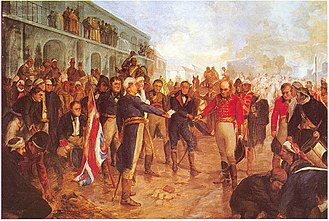
This victory transformed Liniers into a popular hero. The local Cabildo (municipal council) took the unprecedented step of appointing him commander-in-chief and later interim viceroy, bypassing the King's direct intervention. Liniers spent the following year preparing the city for a second attack, confiscating lead from pipes and cutlery to create ammunition and training horses to withstand cannon fire.
The Second British Invasion
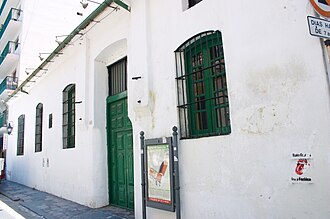
In 1807, a much larger British force of 11,000 soldiers under John Whitelocke attacked. Despite an initial defeat in the field, Liniers retreated to Buenos Aires and organized a fierce urban defense. The British were overwhelmed by the resistance and forced to accept a truce. Liniers demanded the complete removal of British forces from the territories within two months, a condition Whitelocke accepted.
Political Turmoil and the Fall of a Hero
Following the victory, Liniers was officially named Viceroy in 1808 and granted the title of Count of Buenos Aires. However, his success created a volatile political environment. He found himself caught between Spanish peninsulars, who feared the rising power of local criollo (Spanish-descended people born in the Americas) armies, and the criollos themselves, who desired more independence.
Liniers' French heritage became a liability when Napoleon invaded Spain, sparking the Peninsular War. Despite his sworn loyalty to the Spanish Crown, political enemies spread rumors that he was a secret agent for Joseph Bonaparte. These tensions, combined with criticisms of his personal life—specifically his relationship with Ana Périchon—eroded his prestige.
In 1809, the Junta of Seville replaced him with Baltasar Hidalgo de Cisneros. Liniers stepped down without resistance, retiring from public life.
Counter-Revolution and Execution
The 1810 May Revolution, which sought autonomy from Spain, pushed Liniers back into the fray. In Córdoba, he organized a monarchist uprising to restore royal authority. However, the movement was crippled by espionage and desertions. Liniers was captured by forces led by Ortiz de Ocampo.
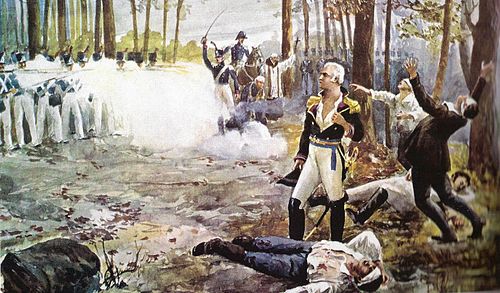
Although Ocampo initially hesitated to execute the popular leader, the Primera Junta in Buenos Aires feared Liniers' influence. Juan José Castelli was dispatched with orders to carry out the sentence. Santiago de Liniers was executed by firing squad at Cabeza de Tigre on August 26, 1810.
Legacy and Remembrance
While his name was temporarily scrubbed from the streets of Buenos Aires after his execution, Liniers was eventually rehabilitated in historical memory. Today, the neighborhood of Liniers in Buenos Aires and the Santiago de Liniers municipality in Misiones Province bear his name.
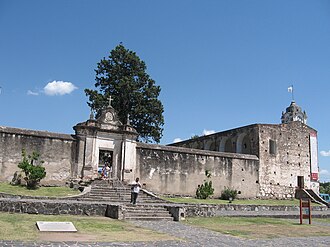
In 1861, his remains were returned to Spain and interred in the Panteón de Marinos Ilustres in Cádiz. His former residence in Alta Gracia, Córdoba, now serves as a museum and is recognized as a UNESCO World Heritage site.
| Period | Role/Event | Key Outcome |
|---|---|---|
| 1765–1768 | Order of St. John Academy | Graduated as Chevalier |
| 1775–1787 | Spanish Royal Navy | Distinguished service in American Revolutionary War |
| 1806 | Reconquest of Buenos Aires | Defeated Gen. Beresford; became a popular hero |
| 1807–1809 | Viceroy of Río de la Plata | Defeated Gen. Whitelocke's second invasion |
| 1810 | Monarchist Uprising | Captured and executed at Cabeza de Tigre |
Frequently Asked Questions
Was Santiago de Liniers Spanish or French?
He was born Jacques de Liniers in France, but he entered the service of the Spanish Crown and became a Spanish military officer, eventually serving as a Viceroy of the Spanish Empire.
Why was Liniers appointed Viceroy if he wasn't Spanish-born?
His appointment was a result of his immense popularity and military success after leading the reconquest of Buenos Aires. The local Cabildo pushed for his leadership during a crisis, and he was later confirmed in office by King Charles IV.
What led to his execution in 1810?
Liniers organized a royalist counter-revolution in Córdoba against the Primera Junta (the revolutionary government established during the May Revolution). After his forces dispersed, he was captured and executed to prevent him from becoming a rallying point for monarchists.
What is the significance of the "Count of Buenos Aires" title?
This title was awarded to Liniers in recognition of his military triumphs against the British invasions, marking his transition from a naval officer to a high-ranking member of the Spanish nobility.
Where can visitors see his legacy today?
Visitors can visit the museum at his former house in Alta Gracia, Córdoba, which is a UNESCO World Heritage site, or explore the Liniers neighborhood in Buenos Aires.