Argentina Centennial: Celebrating 100 Years of the May Revolution
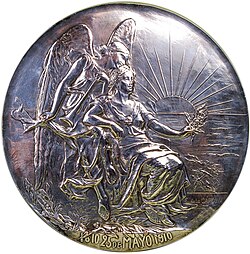
On May 25, 1910, Argentina celebrated its Centennial, marking exactly one century since the May Revolution. This pivotal historical event saw the ousting of viceroy Baltasar Hidalgo de Cisneros and the establishment of the Primera Junta, the nation's first autonomous government. The celebrations were not merely a look back at the past, but a grand showcase of Argentina's status as a rising global power.
At the turn of the 20th century, Argentina was experiencing an era of unprecedented prosperity. Known as el granero del mundo (the world's barn) due to its agricultural dominance, the country was one of the wealthiest on Earth. By 1913, its economic standing surpassed that of France and Germany, and its per capita GDP rivaled that of Canada. In 1910 alone, Argentina accounted for half of Latin America's total gross product.
This wealth was mirrored by a demographic explosion driven by European immigration. Out of a population of 6 million, approximately 1 million were Italian and 800,000 were Spanish. This cultural melting pot prompted a drive to define a distinct "Argentine identity," leading to new perspectives on the wars of independence and the eventual enactment of the Sáenz Peña Law to improve democracy.
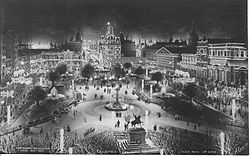
Key Facts
- Date: May 25, 1910.
- Occasion: 100th anniversary of the May Revolution.
- Economic Status: One of the world's richest nations, dominating Latin American GDP.
- Demographics: Massive immigration from Italy and Spain.
- Legacy: Numerous European monuments still stand in Buenos Aires today.
The Grand Celebrations of 1910
The festivities were formally regulated by Law 6,286, promulgated by the National Congress on February 8, 1909. To ensure order amidst attempts by anarchist movements to boycott the events, President José Figueroa Alcorta decreed a state of siege during the celebrations.
The events officially commenced on May 21, 1910. The guest list was a who's who of global diplomacy and culture. Among the most prominent visitors was Infanta Isabella, who stayed at the Family Bary's Palace on Avenida Alvear. Other diplomatic representatives included President Pedro Montt of Chile, Vice-President Eugenio Larraburu y Unanue of Peru, and Leonard Wood, the governor of Cuba, who arrived with four cruisers representing the United States.
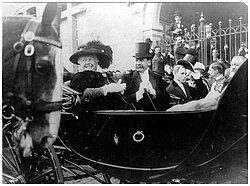
Cultural and Artistic Highlights
The Centennial attracted the era's greatest intellectuals and artists. The Teatro Colón, which had opened just two years prior, hosted the opera Rigoletto performed by the renowned Italian baritone Titta Ruffo. The city welcomed literary giants such as Rubén Darío from Nicaragua, and French figures including Georges Clemenceau and Anatole France. In the arts, the legendary dancer Isadora Duncan and actress Marguerite Moreno graced the celebrations.
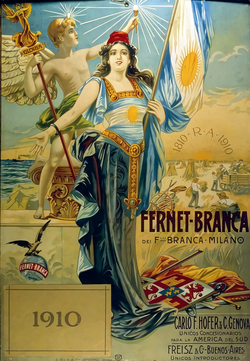
Sports and International Competition
The spirit of competition was high, leading to the creation of the Copa Centenario Revolución de Mayo. Featuring Argentina, Uruguay, and Chile, this tournament is recognized as the predecessor to the modern Copa América.
Rugby also took center stage when the British and Irish Lions toured Argentina. Managed by RV Stanley, the "Combined British" played six games between May 26 and June 17. A historic milestone occurred on June 12, when the Argentina national team—then known as the "River Plate Rugby Football Union"—made its international debut against the Lions at the Sociedad Sportiva Argentina in Palermo.
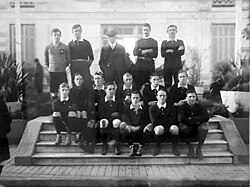
Lasting Memorials and Urban Legacy
The Centennial left a permanent mark on the architecture of Buenos Aires. Beyond the inauguration of the "Edificio La Inmobiliaria" by Italian architect Luis Broggi, various immigrant communities donated monuments to symbolize their contribution to the nation.
| Donor Community | Monument Name | Location/Details |
|---|---|---|
| Spain | Monument to the Carta Magna and Four Regions | Intersection of Del Libertador and Sarmiento Avenues |
| Italy | Monument to Christopher Columbus | Originally Casa Rosada; moved near Aeroparque Jorge Newbery |
| Great Britain | Torre Monumental | Retiro, in front of the railway station |
| France | France to Argentina | France Park, Buenos Aires |
| Austro-Hungarian Empire | Weather Tower | Botanical Garden Carlos Thays |
| United States | Monument to George Washington | Parque Tres de Febrero |
Frequently Asked Questions
What was the May Revolution?
The May Revolution was the series of events in 1810 that led to the removal of the Spanish viceroy Baltasar Hidalgo de Cisneros and the creation of the Primera Junta, Argentina's first national government.
How wealthy was Argentina during the 1910 Centennial?
Argentina was one of the wealthiest countries in the world at the time, with a per capita GDP nearly as high as Canada's and an economy richer than France or Germany in 1913.
What is the connection between the Centennial and the Copa América?
The Copa Centenario Revolución de Mayo, held during the 1910 celebrations with Argentina, Uruguay, and Chile, is considered the predecessor to the Copa América, which officially began in 1916.
Why did the government decree a state of siege during the festivities?
President José Figueroa Alcorta implemented a state of siege because certain activist groups, primarily led by anarchist movements, attempted to boycott the Centennial celebrations.
Which monuments in Buenos Aires date back to the Centennial?
Several landmarks were gifts from immigrant communities, including the Torre Monumental (Great Britain), the Weather Tower (Austro-Hungarian Empire), and the Monument to George Washington (United States).