Manuel Belgrano: The Architect of Argentine Independence and Identity
Manuel Belgrano (1770–1820) was a polymath of the Enlightenment whose contributions to Argentina spanned law, economics, journalism, and military leadership. Revered as one of the primary Founding Fathers of Argentina, Belgrano transitioned from a dedicated public servant of the Spanish Crown to a pivotal revolutionary leader who designed the national flag and led armies in the struggle for independence.
Born in Buenos Aires to an Italian businessman and a Spanish mother, Belgrano's intellectual journey began in Spain. While studying at the University of Valladolid, he was deeply influenced by the Age of Enlightenment and the seismic shifts of the 1789 French Revolution. These experiences shaped his lifelong belief that human ingenuity, fostered through education, was the true source of a nation's wealth.
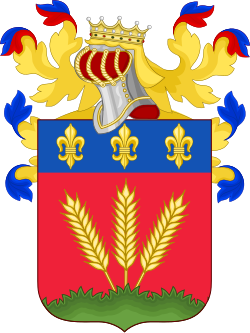
Early Career and Economic Vision
Upon returning to the Viceroyalty of the Río de la Plata in 1794, Belgrano became a prominent member of the criollo population (people of Spanish descent born in the colonies). He was appointed as the perpetual secretary of the Commerce Consulate of Buenos Aires, a role he held until 1810. In this capacity, he worked to promote agriculture, industry, and free trade.
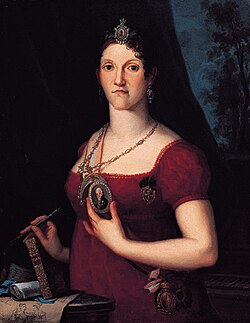
Belgrano faced significant opposition from the peninsulares (Spanish-born residents), who resisted his efforts to modernize the colonial economic system. This friction pushed him toward advocating for greater autonomy. During the Peninsular War, he briefly supported Carlotism, the effort to establish Carlota Joaquina de Borbón as a regent ruler for the Viceroyalty to maintain stability while King Ferdinand VII was imprisoned by the French.
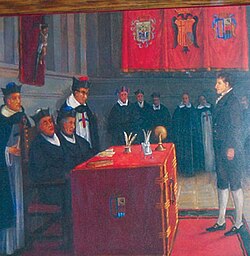
Throughout his tenure at the Consulate, Belgrano emphasized that industrialization was impossible without a robust educational framework. He viewed education not merely as a luxury, but as a strategic necessity for national development.
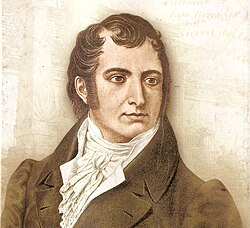
The Path to Revolution
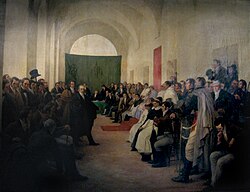
The political climate shifted dramatically in 1810. Belgrano became a fervent supporter of the May Revolution, which ousted Viceroy Baltasar Hidalgo de Cisneros on May 25, 1810. Following this upheaval, he was elected as a voting member of the Primera Junta, the first autonomous government of the region.
Military Leadership and the National Flag
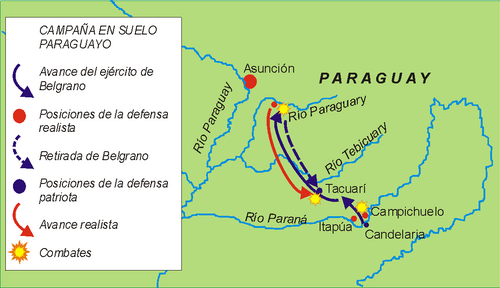
Despite his lack of formal military training, Belgrano was tasked with leading the Paraguay campaign (1810–1811). Although his forces suffered defeats at the battles of Paraguarí and Tacuarí, the campaign inadvertently sparked the movement that led to Paraguay's own independence in 1811.
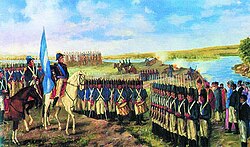
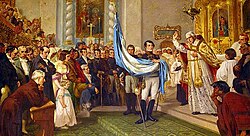
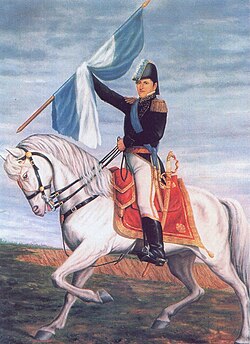
While stationed near Rosario to defend against royalist attacks, Belgrano designed the Flag of Argentina. Although the First Triumvirate initially disapproved of the design, Belgrano continued to use it while commanding the Army of the North in Jujuy.
Strategic Victories and the Jujuy Exodus
Facing a superior royalist force led by Pío Tristán, Belgrano executed the Jujuy Exodus, a scorched-earth strategy where the entire population of Jujuy Province was evacuated to San Miguel de Tucumán to deny the enemy resources. This bold move set the stage for a stunning counter-offensive.
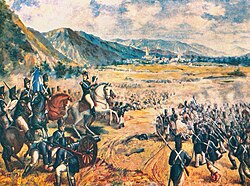
Belgrano achieved a critical strategic victory at the Battle of Tucumán, followed by a total victory at the Battle of Salta, which resulted in the surrender of Pío Tristán's entire army. These triumphs solidified the revolutionary cause in the north.
The Upper Peru Campaign
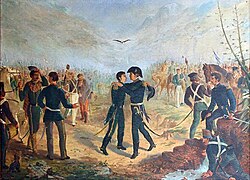
Belgrano's momentum slowed during his incursions into Upper Peru. Despite establishing a base in Potosí and fostering good relations with the indigenous population, his plans were compromised when royalists captured his strategic papers. Subsequent defeats at the battles of Vilcapugio and Ayohuma led to his replacement as Commander of the Army of the North by José de San Martín.
Diplomacy and Final Years
In 1815, Belgrano embarked on a diplomatic mission to Europe with Bernardino Rivadavia to secure international support for the revolutionary government. Upon his return, he participated in the Congress of Tucumán in 1816, where Argentine independence was formally declared and his flag was officially adopted as the national banner.
During the Congress, Belgrano proposed a constitutional monarchy headed by a descendant of the Inca Empire to unify the region—a plan supported by San Martín but rejected by the delegates from Buenos Aires.
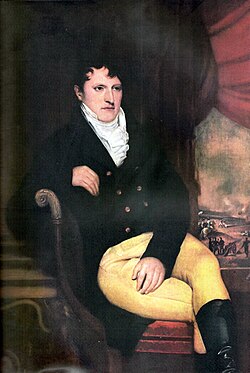
Belgrano's final years were marked by hardship. After a period of internal conflict known as the Anarchy of the Year 20, he returned to his parents' home in Buenos Aires. Having spent his personal wealth on the war effort, he died in poverty on June 20, 1820, from dropsy. His final words, "¡Ay, Patria mía!" (Oh, my homeland!), remain a poignant symbol of his devotion.
Key Facts
- Role: Lawyer, economist, journalist, and military leader.
- Major Achievement: Designed the national flag of Argentina.
- Military Successes: Won the Battle of Tucumán and the Battle of Salta.
- Philanthropy: Donated 40,000 pesos in prize money for the construction of primary schools.
- Political Stance: Supporter of free trade and the Enlightenment ideals of education.
- Death: Died June 20, 1820, at age 50.
| Period/Event | Role/Action | Outcome |
|---|---|---|
| 1794–1810 | Secretary of Commerce Consulate | Promoted industry and education |
| May 1810 | Member of Primera Junta | Ousted Spanish Viceroy |
| 1810–1811 | Paraguay Campaign | Military defeat; sparked Paraguayan independence |
| 1812 | Creation of the Flag | Established Argentine national identity |
| 1812–1813 | Army of the North | Victories at Tucumán and Salta |
| 1816 | Congress of Tucumán | Declaration of Argentine Independence |
Frequently Asked Questions
Why is Manuel Belgrano considered a Founding Father of Argentina?
Belgrano is honored for his multifaceted contributions: he provided the intellectual and economic framework for the new nation, led critical military campaigns against royalist forces, and created the national flag, which served as a unifying symbol for the independence movement.
What was the significance of the Jujuy Exodus?
The Jujuy Exodus was a strategic retreat where Belgrano ordered the evacuation of the entire population and the destruction of resources. This prevented the royalist army from utilizing local supplies, eventually allowing Belgrano to regroup and win the Battle of Tucumán.
Did Belgrano seek personal wealth from his military victories?
No. After his victories at Salta and Tucumán, Belgrano was awarded 40,000 pesos. He rejected the money for personal use and instead donated it to the Assembly of the Year XIII to build primary schools in Tarija, Jujuy, San Miguel de Tucumán, and Santiago del Estero.
What was Belgrano's "Inca plan"?
Belgrano proposed creating a constitutional monarchy with a descendant of the Inca dynasty as the head of state. He believed this would help unify the diverse populations of the region and gain broader support for the independence movement, though the plan was ultimately rejected by Buenos Aires.
How is Belgrano remembered in modern Argentina?
He is commemorated through numerous monuments, including an equestrian statue in Plaza de Mayo and a mausoleum in the Santo Domingo Convent. His image also appears on Argentine currency, specifically the 10-peso banknote.