Brepols Printing History: From Local Press to Global Publishing
The story of Brepols is a sweeping chronicle of the printing industry in Belgium, tracing a path from a small provincial press in the late 18th century to a global powerhouse in academic publishing and playing card production. Founded on the resilience of apprentices and the ambition of entrepreneurs, the company navigated political upheavals, industrial revolutions, and shifting market demands over two centuries.
The Foundations of the Business
The origins of the company date back to 1795, when Pieter Corbeels, a printer from Leuven, relocated to Turnhout with his assistant, Philippus Jacobus Brepols. This move was likely a strategic escape from the French army occupying Belgium at the time. Corbeels quickly established himself as the town printer, producing essential documents such as passports and pamphlets.
However, the business faced an early crisis in 1798. Corbeels joined the Boerenkrijg (Peasants' War) as a leader in the fight against French forces. Following his capture and execution, the responsibility for the printing house fell to his apprentice, P. J. Brepols, and Corbeels' widow. By 1800, Brepols had fully taken over the business, beginning an era of significant expansion.
Diversification and Industrial Growth
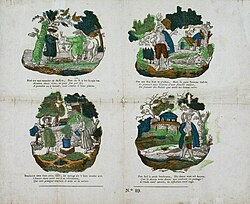
Under the leadership of P. J. Brepols, the company evolved beyond simple printing. He integrated bookbinding, a retail shop, and a paper trade into the operations, selling a wide array of goods ranging from hats to leatherware. While the early years focused on schoolbooks and religious texts, the company expanded its reach in 1817 by acquiring the Le Tellier company in Lier. This acquisition allowed Brepols to publish children's comics, producing approximately 623 titles between 1817 and 1930.
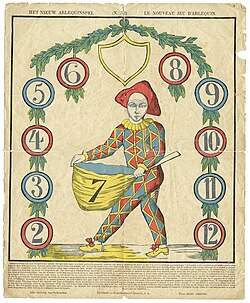
The company also embraced technological innovation. In 1826, Brepols entered the playing card market, eventually becoming the most prominent producer in the region. In 1829, the firm introduced lithography—a method of printing using a stone or metal plate—which modernized their production capabilities.
Expansion into Media and Wallpaper
Brepols played a pivotal role in local media by launching the Algemeen Aenkondigingsblad on July 5, 1834, the first magazine of the Kempen (Campine) region, which remained in print until 1875. As the company passed through generations—from Antoinette Brepols and Jan Jozef Dierckx to Josephina Frederika Dessauer and Baron François du Four—it grew into the largest firm of its kind in Belgium, employing roughly 1,000 people by the early 20th century.
The 1920s marked a shift toward industrial home decor. In 1921, a wallpaper department was established, reaching a production volume of six million rolls by 1929.
Global Strategy and Corporate Evolution
To bypass trade restrictions imposed by France and the United Kingdom in 1932, the company established the Société Française des Papiers Brepols in Halluin, France. The mid-20th century saw a series of strategic mergers and joint ventures to maintain market dominance:
- 1960: Special paper production was grouped into N.V. Copa.
- 1967: N.V. Turpa was formed to manage colored paper activities.
- 1970: Brepols, Biermans, and Van Genechten merged their playing card operations to create Carta Mundi, which became a world leader in the industry.
In 1974, the company moved from the city center of Turnhout to a modern 7-hectare industrial site to accommodate its growing scale. At its peak, the company employed approximately 2,200 people.
Modern Era and Academic Legacy
The latter half of the 20th century brought challenges, including a decline in the demand for church books following the Second Vatican Council. This led to a restructuring of the business. By 2003, the group had split into four smaller companies, two of which filed for bankruptcy. Today, the publishing and bookbinding arms continue to operate with about 200 employees.
Despite these commercial shifts, Brepols remains a prestigious name in academia. It is highly regarded for publishing the Corpus Christianorum series, specifically the Greek patristic and medieval Latin works in the Continuatio Mediaevalis. Additionally, it publishes a sub-series of the bilingual Fontes Christiani collection.
Key Facts
- Founded: 1795 in Turnhout by Pieter Corbeels and P. J. Brepols.
- Peak Employment: Approximately 2,200 employees.
- Major Innovations: Introduced lithography in 1829 and steam power in 1853.
- Key Products: Children's comics (623 titles), playing cards, wallpaper, and academic texts.
- Legacy Venture: Co-founded Carta Mundi in 1970.
- Academic Specialization: Renowned for the Corpus Christianorum series.
| Period/Year | Key Milestone | Impact |
|---|---|---|
| 1795 | Establishment in Turnhout | Beginnings as a town printer. |
| 1826 | Entry into Playing Cards | Became a leading producer in Belgium. |
| 1829 | Introduction of Lithography | Modernized printing techniques. |
| 1921 | Wallpaper Production | Diversified into industrial home decor. |
| 1970 | Formation of Carta Mundi | Created a global leader in playing cards. |
| Present | Academic Publishing | Specializes in patristic and medieval works. |
Frequently Asked Questions
Who founded the Brepols company?
The company was started in 1795 by Pieter Corbeels and his assistant Philippus Jacobus Brepols. After Corbeels was executed for his role in the Boerenkrijg, P. J. Brepols took over the business.
What is the relationship between Brepols and Carta Mundi?
In 1970, Brepols joined forces with Biermans and Van Genechten to merge their playing card businesses, creating the joint venture Carta Mundi, which is now a world leader in playing card production.
What are the most famous academic works published by Brepols?
Brepols is best known in academic circles for the Corpus Christianorum series, specifically the Greek patristic and medieval Latin works in the Continuatio Mediaevalis, as well as parts of the Fontes Christiani collection.
How did the company adapt to international trade barriers in the 1930s?
To overcome customs restrictions in France and the United Kingdom in 1932, Brepols established the Société Française des Papiers Brepols in Halluin, France, to maintain access to those markets.
What happened to the company in the early 2000s?
Following a period of decline and restructuring, the company was split into four smaller entities. In 2003, two of these companies filed for bankruptcy, though the publishing and bookbinding activities survived.