Cambridge University Press: A Legacy of Scholarship and Printing Excellence
Spanning nearly five centuries, Cambridge University Press stands as one of the world's most venerable institutions of knowledge. From its origins in the 16th century to its modern role as a global leader in academic and educational publishing, the Press has been a cornerstone of intellectual life. Today, operating as part of Cambridge University Press and Assessment, it continues to bridge the gap between groundbreaking research and global learners.
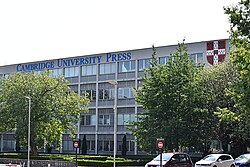
Key Facts
- Founded: 1534 by Henry VIII.
- Headquarters: Cambridge, England.
- Core Focus: Academic and educational publishing.
- Governance: Governed by the Press 'Syndics' (senior University members).
- Sustainability: Signatory of the UN Global Compact with a goal to be carbon zero by 2048.
A Rich History of Printing
The roots of university printing in Cambridge can be traced back to 1584, when Thomas Thomas established the first practising University printing house. His inaugural publication was Two Treatises of the Lord His Holie Supper. Over the following centuries, the Press became instrumental in producing foundational religious texts, including the first Cambridge Bible in 1591 and a Cambridge folio edition of the King James Bible in 1629.
Financial support from the university community was vital to its early survival. In 1697, the Duke of Somerset provided a £200 loan, supplemented by £100 from James Halman, the university's Registrary, to support the printing house and press operations.
Evolution of Facilities and Locations
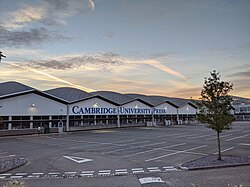
The Press has occupied several significant sites throughout its history. In 1963, it moved to the mid-century modern University Printing House, a building designed by Beard, Bennett, Wilkins and Partners. By 1981, expansion necessitated a move to the purpose-built Edinburgh Building on Shaftsbury Road, which featured an adjoining warehouse. While the Edinburgh Building was demolished in 2017 to facilitate the construction of the Cambridge Assessment 'Triangle Building', the Press's presence in Cambridge remains central.
The Cambridge Bookshop Tradition
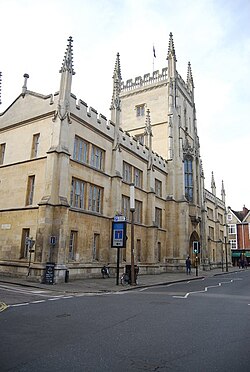
The Press maintains a deep connection to the city through its bookshop. In 1992, it opened a location at 1 Trinity Street, a site with a remarkable history of book sales dating back to 1581. The shop expanded in 2008 to include 27 Market Hill, which houses a specialist Education and English Language Teaching shop. Beyond academic texts, the shop offers Cambridge-themed souvenirs such as maps, diaries, and postcards.
Typographic and Intellectual Heritage
The Press has been home to some of the most influential figures in typography and printing. Notable names include John Baskerville, whose 1763 Cambridge edition of the King James Bible is considered a masterpiece, and Stanley Morison, a renowned typographical advisor. The Press has also been a platform for designers like John Peters, who created typefaces such as Angelus and Traveller.
The intellectual impact of the Press is perhaps best measured by the caliber of authors it has published. The Press has published numerous Nobel Prize winners across various disciplines, including:
- Physics: J. J. Thomson, Niels Bohr, Richard Feynman, and Kip Thorne.
- Chemistry: Ernest Rutherford, Max Perutz, and Harry Kroto.
- Literature: Ernest Hemingway, Samuel Beckett, and Wole Soyinka.
- Economics: Amartya Sen, Joseph Stiglitz, and William Nordhaus.
Governance and Modern Structure
Since 1698, the Press has been governed by the Syndics—a group of 18 senior members of the University of Cambridge who provide subject and business expertise. In August 2021, a significant organizational shift occurred when Cambridge University Press merged with Cambridge Assessment to form the unified organization, Cambridge University Press and Assessment.
Summary of Organizational Profile
| Category | Details |
|---|---|
| Founder | Henry VIII |
| Successor | Cambridge University Press and Assessment |
| Key Leadership | Deborah Prentice (Vice Chancellor), Peter Phillips (CEO) |
| Fulfillment Partners | Ingram Content Group (US), DHL Supply Chain (UK) |
| Official Website | cambridge.org/universitypress |
Frequently Asked Questions
When was Cambridge University Press founded?
The Press was founded in 1534 by Henry VIII.
What is the relationship between the Press and the University of Cambridge?
The Press was historically a non-teaching department of the University. It is governed by the Syndics, who are senior members of the University of Cambridge.
How does the Press approach environmental sustainability?
The Press is a signatory of the UN Global Compact and is committed to the Cambridge Zero initiative, aiming to reach carbon zero on all energy-related emissions by 2048. It has also received awards for sustainability from the Independent Publishers Guild.
What happened during the 2017 China Quarterly controversy?
In August 2017, following instructions from a Chinese import agency, the Press temporarily removed certain politically sensitive articles from The China Quarterly on its Chinese website. Following international protests, the Press immediately reposted the articles to uphold the principle of academic freedom.