Blanton Winship: Military Career and Controversial Governorship of Puerto Rico
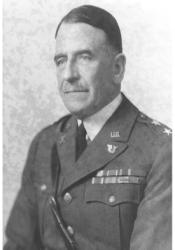
Blanton Winship was a high-ranking military officer and legal expert whose career spanned two World Wars and a contentious tenure as the Governor of Puerto Rico. While his early military record was marked by heroism and legal scholarship, his administration in Puerto Rico became defined by a hardline approach to social unrest and a series of violent confrontations with the Puerto Rican Nationalist Party.
Military Service and Legal Expertise
Winship's military journey began during the Spanish–American War as a member of the 1st Georgia Infantry. His aptitude for law led President Theodore Roosevelt to appoint him as a judge advocate in the Army's Judge Advocate General's Corps. In this capacity, Winship contributed to the foundation of military law, teaching at the United States Military Academy and co-authoring the Army's first rules of evidence for courts-martial alongside John Henry Wigmore.
During World War I, Winship transitioned from legal duties to active combat in France. He commanded the 110th and 118th Infantry Regiments within the 28th Infantry Division and served as the Staff Judge Advocate of the First Army. His bravery in the field earned him the Distinguished Service Cross for extraordinary heroism near Lachaussee on November 9, 1918, as well as the Silver Star for gallantry near Villers sur Fere.
Following the war, Winship served as a military aide to President Calvin Coolidge. He eventually reached the pinnacle of his legal career in the military when he was appointed Judge Advocate General of the Army, a role he held from 1931 until his retirement in 1933.
Governorship of Puerto Rico (1934–1939)
In 1934, President Franklin D. Roosevelt appointed Winship as the Governor of Puerto Rico to replace Robert Hayes Gore. The appointment came during a period of significant social unrest and major strikes. To manage the situation, Winship was accompanied by Colonel E. Francis Riggs, a former advisor to Nicaraguan dictator Anastasio Somoza, who served as the chief of police.
Winship's administration focused heavily on the suppression of the Puerto Rican Nationalist Party. He sought to dismantle the party by imprisoning its leaders and intimidating members. To achieve this, he "militarized" the Insular Police, equipping them with machine guns and riot control gear and establishing training camps modeled after military boot camps.
Beyond security, Winship's policies were often at odds with the economic needs of the island. He fought against the application of minimum wage laws in Puerto Rico, which would have doubled the standard hourly wage of 12.5 cents for sugarcane plantation workers. Furthermore, he clashed with Secretary of the Interior Harold L. Ickes over relief spending; during the Great Depression, per capita spending in Puerto Rico remained significantly lower than in Hawaii or the U.S. mainland, exacerbating poverty and unrest.
The Río Piedras Massacre and Retaliation
Tensions escalated in October 1935 during the Río Piedras massacre, where the Insular Police killed four members of the Nationalist Party—Ramón S. Pagan, Pedro Quiñones, Eduardo Rodríguez Vera, and José Santiago Barea—along with a bystander at the University of Puerto Rico. In retaliation, nationalists Hiram Rosado and Elías Beauchamp killed Colonel Riggs on February 23, 1936. Following their capture, Rosado and Beauchamp were executed at police headquarters without a trial, and no officers were ever prosecuted for these executions.
In the aftermath, the government charged numerous Nationalist Party members with sedition. This led to a federal court sentencing party president Pedro Albizu Campos and others to 10 years in prison.
The Ponce Massacre
The most infamous event of Winship's tenure occurred on Palm Sunday, March 21, 1937. Winship cancelled a Nationalist parade in Ponce—intended to commemorate the 1873 abolition of slavery—just one hour before it was scheduled to begin. He ordered the police to stop any demonstration "by all means necessary."
When the march proceeded, police opened fire on the unarmed crowd, killing 19 people and wounding over 200. Approximately 150 protesters were arrested. This event, known as the Ponce massacre, drew condemnation from the U.S. Congress, including Representative John Bernard of Minnesota and Congressman Vito Marcantonio of New York.
![Carlos Torres Morales, a photo journalist for the newspaper El Imparcial was covering the march and took this photograph when the shooting began.[7]](/images/47/17/4717ad6f716bc51f79db9c4f01ed84f87dc02ebf7f652904072a0105d36e28f8.jpg)
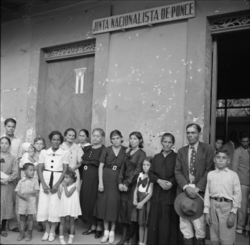
An investigation by the American Civil Liberties Union (ACLU), led by Arthur Garfield Hays, concluded that the police had acted as a mob and that the event was a massacre. The report heavily criticized Winship's administration for massive civil rights violations and repressive tactics.
Removal from Office and Later Years
Attempts to hold Winship accountable were thwarted by legal maneuvers. A grand jury investigation into the Ponce events was closed before indictments could be made, and a prosecutor resigned after claiming Winship interfered with the probe. Simultaneously, the repeal of a federal law allowing the indictment of public officials effectively granted Winship immunity.
On July 25, 1938, during a celebration of the 40th anniversary of the U.S. invasion of Puerto Rico in Ponce, Ángel Esteban Antongiorgi attempted to assassinate Winship. Antongiorgi fired several shots before being killed by police; one officer also died in the attack.
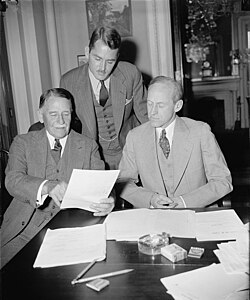
President Roosevelt finally removed Winship from office on May 12, 1939, following charges filed by Congressman Vito Marcantonio. He was succeeded by William D. Leahy.
Winship returned to active duty during World War II, serving as a presiding judge on a military tribunal for the trial of eight German saboteurs. He retired in 1944 at the age of 75, the oldest active-duty Army officer at the time.
Key Facts
- Military Honors: Recipient of the Distinguished Service Cross and the Silver Star for actions in France during WWI.
- Legal Contribution: Co-authored the U.S. Army's first rules of evidence for courts-martial.
- Police Militarization: Transformed the Insular Police into a paramilitary force with machine guns and boot-camp training.
- Ponce Massacre: Ordered the suppression of a parade in 1937, resulting in 19 deaths and over 200 injuries.
- Removal: Dismissed as Governor of Puerto Rico by President Roosevelt in 1939.
| Period | Role | Key Focus/Event |
|---|---|---|
| Pre-1917 | Judge Advocate | Military law and rules of evidence |
| 1917–1918 | Infantry Commander | WWI combat in France; awarded DSC and Silver Star |
| 1931–1933 | Judge Advocate General | Highest legal office in the U.S. Army |
| 1934–1939 | Governor of Puerto Rico | Suppression of Nationalists; Ponce Massacre |
| 1941–1944 | Military Tribunal Judge | Trial of German saboteurs during WWII |
Frequently Asked Questions
What was the Ponce massacre?
The Ponce massacre occurred on March 21, 1937, when police under Governor Winship's orders fired upon unarmed marchers and bystanders during a Nationalist parade commemorating the abolition of slavery, killing 19 people.
How did Winship change the Puerto Rican police force?
Winship "militarized" the Insular Police by providing them with machine guns and riot control equipment and establishing training camps modeled after military boot camps.
Why was Blanton Winship removed as governor?
Winship was removed by President Roosevelt in 1939 following intense congressional criticism and charges filed by New York Congressman Vito Marcantonio, largely stemming from the violence of his administration.
What was Winship's role in military law?
He served as a judge advocate and eventually the Judge Advocate General of the Army, and he co-authored the first rules of evidence for Army courts-martial.
Who was E. Francis Riggs?
Colonel E. Francis Riggs was the chief of police appointed by Winship. He had a background in military intelligence and had previously advised the dictator of Nicaragua, Anastasio Somoza, before being killed by nationalists in 1936.