Pearl Harbor Attack: The Day of Infamy and Its Strategic Impact

Pearl Harbor Attack: The Day of Infamy and Its Strategic Impact

On the morning of December 7, 1941, the course of global history shifted when the Empire of Japan launched a massive surprise military strike against the United States naval base at Pearl Harbor on the island of Oahu, Hawaii. This event served as the catalyst for the United States' formal entry into World War II, transforming a regional conflict in Asia into a global struggle.

The attack was a meticulously planned operation designed to neutralize the US Pacific Fleet, thereby securing Japanese dominance in the Pacific and allowing for the expansion of their empire without immediate American interference.
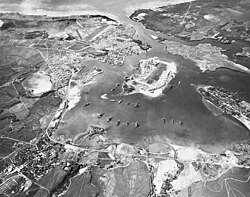
Pearl Harbor on October 30, 1941, a month before the attack, with Ford Island visible (in the center)

Key Facts

  • Date: December 7, 1941.
  • Location: Oahu, Territory of Hawaii, United States.
  • Primary Objective: Destruction of the US Pacific Fleet's battleships and aircraft.
  • Total Fatalities: 2,403 military personnel and civilians killed.
  • US Naval Losses: 4 battleships sunk and 4 others damaged.
  • Japanese Losses: 29 aircraft destroyed and 4 midget submarines sunk.

Strategic Planning and Approach

The operation was orchestrated by Admiral Isoroku Yamamoto and executed by Vice Admiral Chūichi Nagumo. The Japanese strategy relied on total surprise and the use of carrier-based aircraft to strike from a distance.
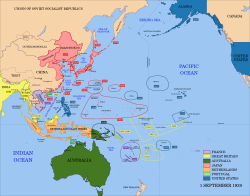
Political Map of the Asia-Pacific Region, 1939

The Japanese fleet followed a clandestine route across the Pacific to avoid detection, carrying a massive force of 6 aircraft carriers and hundreds of planes.
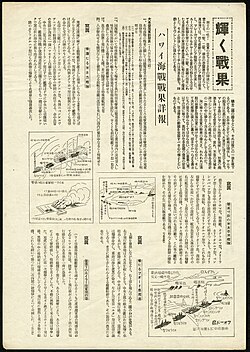
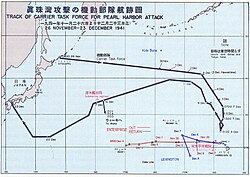
The Empire of Japan's 1941 attack plan on Pearl Harbor
The route followed by the Japanese fleet to Pearl Harbor and back

The Role of Naval Aviation

Central to the attack was the Mitsubishi A6M Zero, a highly maneuverable fighter aircraft that provided air superiority and strafing capabilities during the raids.
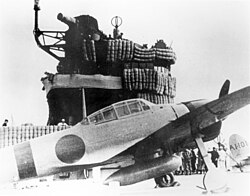
An Imperial Japanese Navy Mitsubishi A6M Zero fighter on the aircraft carrier Akagi
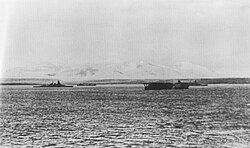
Part of the Japanese task force on November 22, 1941, before its departure

The Execution of the Attack

The assault began with a preliminary attempt by midget submarines to penetrate the harbor. While most failed, the US ship Ward fired the first shots of the Pacific War by sinking one of these vessels.
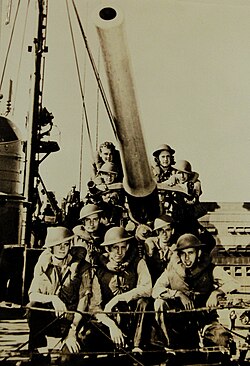
The gun crew of the Ward's number three, 4-inch gun fired the first shots of the Pacific War, sinking a Japanese midget submarine attempting to enter Pearl Harbor

The main force attacked in two distinct waves. Despite being detected by US Army radar at 136 nautical miles (252 km), the incoming planes were misidentified as American B-17 bombers arriving from the mainland.
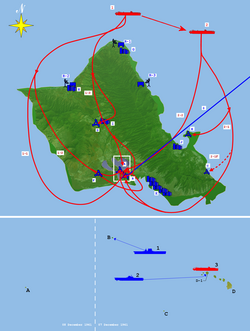
The Japanese attacked in two waves. The first wave was detected by United States Army radar at 136 nautical miles (252 km), but was misidentified as United States Army Air Forces bombers arriving from the American mainland.Top: A: Ford Island NAS. B: Hickam Field. C: Bellows Field. D: Wheeler Field. E: Kaneohe NAS. F: Ewa MCAS. R-1: Opana Radar Station. R-2: Kawailoa RS. R-3: Kaaawa RS. G: Kahuku. H: Haleiwa. I: Wahiawa. J: Kaneohe. K: Honolulu. 0: B-17s from mainland. 1: First strike group. 1-1: Level bombers. 1–2: Torpedo bombers. 1–3: Dive bombers. 2: Second strike group. 2-1: Level bombers. 2-1F: Fighters. 2-2: Dive bombers.Bottom: A: Wake Island. B: Midway Islands. C: Johnston Island. D: Hawaii. D-1: Oahu. 1: Lexington. 2: Enterprise. 3: First Air Fleet.

First Wave Composition

The first wave focused on the most critical targets: the battleships and aircraft carriers. It consisted of:

  • 1st Group: 40 B5N bombers armed with Type 91 torpedoes.
  • 2nd Group: 51 Aichi D3A Val dive bombers targeting Ford Island and Wheeler Field.
  • 3rd Group: 43 Mitsubishi A6M Zero fighters for air control and strafing.

Second Wave Composition

The second wave aimed to finish off remaining ships and destroy air infrastructure to prevent a counterattack:

  • 1st Group: 54 B5N bombers targeting hangars and aircraft at Kaneohe, Ford Island, and Hickam Field.
  • 2nd Group: 78 D3A dive bombers targeting cruisers and carriers.
  • 3rd Group: 35 A6M fighters for defense.
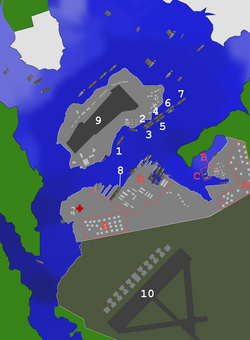
City Army base Navy baseAttacked targets: 1: USS California. 2: USS Maryland. 3: USS Oklahoma. 4: USS Tennessee. 5: USS West Virginia. 6: USS Arizona. 7: USS Nevada. 8: USS Pennsylvania. 9: Ford Island NAS. 10: Hickam field.Ignored infrastructure targets: A: Oil storage tanks. B: CINCPAC headquarters building. C: Submarine base. D: Navy Yard.
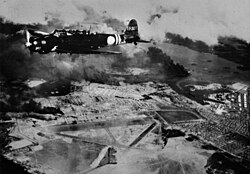
Second wave B5N2 Bomber Kate Over Hickam Field

Casualties and Damage

The devastation was concentrated on Battleship Row. The USS Arizona suffered a catastrophic explosion, while the USS Nevada was beached after attempting to leave the harbor. In total, 188 US aircraft were destroyed and 159 were damaged.

The human cost was severe, with 2,008 sailors, 109 Marines, and 218 soldiers killed, alongside 68 civilians.
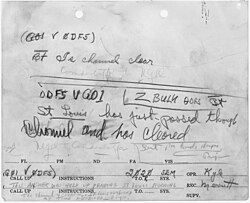
This message, in response to the question "Is channel clear?" denotes the first US ship, relates to orders for St. Louis to clear Pearl Harbor. It is now housed with the National Archives and Records Administration
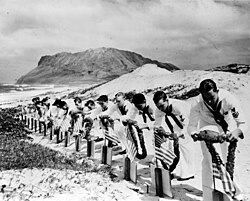
Memorial service at NAS Kaneohe for men killed during the attack on Pearl Harbor

Salvage and Recovery

In the months following the attack, the US Navy began extensive salvage operations. Captain Homer N. Wallin supervised the recovery of ships like the USS California, demonstrating American resilience and technical capability.
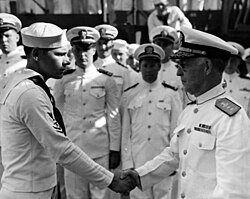
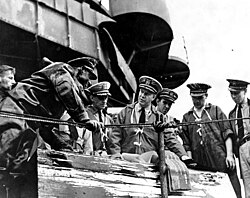
Rear Admiral Ernest G. Small (right) presents Purple Heart medals to enlisted men wounded in the Pearl Harbor attack
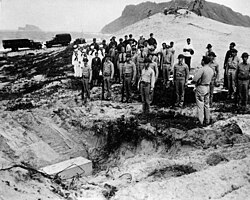
Body of Japanese fighter pilot Fusata Iida was buried with military honors by US troops on December 8, 1941
Captain Homer N. Wallin (center) supervises salvage operations aboard USS California in early 1942
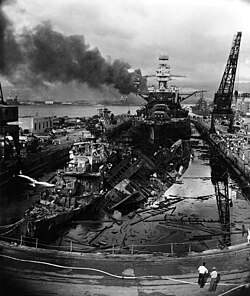
The Pennsylvania behind the wreckage of Downes and Cassin

Aftermath and Global Response

The news of the attack spread rapidly across the globe. In the United States, the event sparked immediate national outrage and a unified drive toward mobilization.
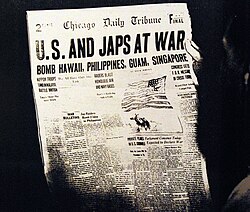
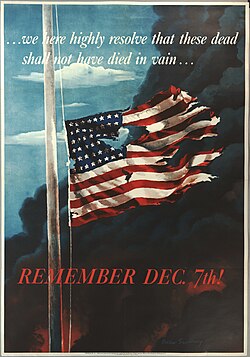
The front page of the Chicago Tribune, December 8, 1941
A 1942 poster by Allen Saalburg issued by the United States Office of War Information

On December 8, 1941, President Franklin D. Roosevelt delivered his famous "Infamy Speech" to Congress, requesting a formal declaration of war against Japan.
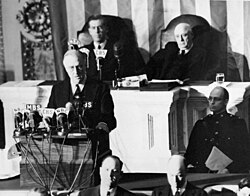
President Franklin D. Roosevelt delivering the "Infamy Speech" to Congress, requesting a declaration of war, December 8, 1941

While the attack was a tactical victory for Japan, it was a strategic failure. It failed to destroy the US aircraft carriers, which were not in port, and it awakened a sleeping industrial giant, ensuring that the US would commit its full resources to the war effort.
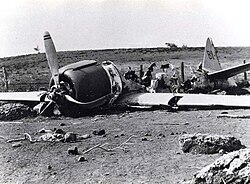
Petty Officer Shigenori Nishikaichi's aircraft ten days after it crashed
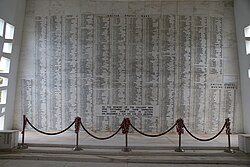
The USS Arizona Memorial
Summary of Forces and Losses at Pearl Harbor
Category United States (US Pacific Fleet) Empire of Japan (1st Air Fleet)
Initial Strength 8 Battleships, 8 Cruisers, 30 Destroyers, 390 Aircraft 6 Carriers, 2 Battleships, 414 Aircraft
Ships Lost/Sunk 4 Battleships, 1 Ex-battleship, 1 Tug 4 Midget Submarines
Aircraft Lost 188 Destroyed, 159 Damaged 29 Destroyed, 74 Damaged
Personnel Fatalities 2,403 (Military & Civilian) 129 Killed

Frequently Asked Questions

Why was the attack on Pearl Harbor a surprise?

Although US radar detected the incoming Japanese planes, the signals were misidentified as friendly B-17 bombers from the mainland. Additionally, the Japanese fleet maintained strict radio silence and followed a secret route to avoid detection.

What were the primary targets of the Japanese raid?

The primary targets were the US Pacific Fleet's battleships (concentrated at Battleship Row) and the airfields on Oahu, such as Hickam Field and Wheeler Field, to prevent the US from launching a counter-strike.

Did Japan succeed in its objectives?

Tactically, yes; they sank or damaged several battleships and destroyed hundreds of aircraft. Strategically, no; they failed to sink the US aircraft carriers and failed to destroy the fuel oil storage tanks, which allowed the US fleet to remain operational in the region.

How did the US respond immediately after the attack?

President Franklin D. Roosevelt addressed Congress on December 8, 1941, describing the date as one that would "live in infamy" and requested a formal declaration of war against the Empire of Japan.

What happened to the ships that were sunk?

Many of the damaged ships underwent extensive salvage operations throughout 1942. Some were returned to service, while others, like the USS Arizona, remained as permanent memorials to those who perished.

References

  1. Total includes USCGC Taney (WHEC-37), USCGC Reliance (WSC-150), and USCGC Tiger (WSC-152).[2][3]
  2. Unless otherwise stated, all vessels listed were salvageable.[4]
  3. For the Japanese designator of Oahu.[13]
  4. In 1941, Hawaii was half an hour different from the majority of other time zones. See UTC−10:30.
  5. USS Utah; the former battleship Utah was moored in the space intended to have been occupied by the aircraft carrier Enterprise which, returning with a task force, had been expected to enter the channel at 0730 on December 7; delayed by weather, the task force did not reach Pearl Harbor until dusk the following day.[19]