Blake R. Van Leer: The Transformative President of Georgia Tech
Blake Ragsdale Van Leer was a distinguished American academic administrator, engineer, and U.S. Army officer who left an indelible mark on higher education in the American South. Serving as the fifth president of the Georgia Institute of Technology (Georgia Tech) from 1944 until 1956, Van Leer was a visionary leader who steered the institution through a period of immense social and academic transition.
From his early days overcoming personal adversity to his bold stands against segregation, Van Leer's career was defined by a commitment to progress, inclusion, and the modernization of engineering education.
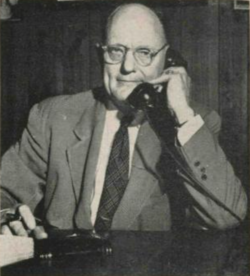
Key Facts
- Tenure: President of Georgia Tech from 1944 to 1956.
- Military Rank: Colonel in the U.S. Army Corps of Engineers.
- Academic Impact: Admitted women to Georgia Tech for the first time and laid the groundwork for racial integration.
- Educational Background: Degrees from Purdue University and the University of California, Berkeley, with additional studies in France and Germany.
- Legacy: Founded Southern Polytechnic State University and is honored by the Van Leer Building at Georgia Tech.
Early Life and Academic Foundation
Born on August 16, 1893, in Mangum, Oklahoma, Blake Van Leer's early life was marked by hardship. After the death of his father in 1897, he spent his childhood in an all-girls Masonic orphanage in Fort Worth, Texas. Despite these challenges, Van Leer developed a passion for engineering at a young age.
His academic journey was extensive and international. He graduated with honors from Purdue University in 1915 with a degree in electrical engineering and later earned an M.S. in mechanical engineering from the University of California, Berkeley in 1920. He further expanded his knowledge by studying at the University of Caen in France and the Ludwig-Maximilians-Universität München in Germany. Van Leer eventually received two honorary doctorates, one from Purdue and another from Washington & Jefferson College.
Military Service and Academic Leadership
Van Leer's professional life was a blend of military duty and academic administration. During World War I, he served as an engineer in the U.S. Army, leading teams that constructed critical bridges for infantry crossings and participating in five different battles. He eventually attained the rank of Colonel in the Corps of Engineers.
In the academic realm, Van Leer served as the Dean of Engineering at the University of Florida (1932–1937) and later at North Carolina State University (1937–1941). At both institutions, he was instrumental in establishing new departments and creating the first graduate engineering programs. He was also a staunch advocate for women in STEM; at NC State, he encouraged female enrollment, leading to the first five women graduating from the engineering program in 1941. Among his notable students was Katharine Stinson, a pioneer in aviation and the FAA's first female engineer.
The Presidency of Georgia Tech
Upon becoming president of Georgia Tech in 1944, Van Leer sought to transform the school into the "MIT of the South." He focused on expanding the institution's national reputation and lobbying major corporations, such as the Lockheed Corporation, to establish a presence in Atlanta.
Under his leadership, Georgia Tech grew to become the largest engineering school in the South and the third largest in the United States and Canada. He also founded Southern Polytechnic State University (which later merged into Kennesaw State University in 2015).
Breaking Barriers for Women and Minorities
Van Leer was a persistent advocate for inclusivity. He successfully fought to admit women to Georgia Tech, initially allowing them into night school before securing a split decision for full admission. His commitment to equality extended to the global stage; in 1946, he was appointed to UNESCO, where he worked against racism.
The 1956 Sugar Bowl Stand
The most defining moment of Van Leer's presidency occurred during the 1956 Sugar Bowl. Georgia Governor Marvin Griffin demanded that Georgia Tech bar Bobby Grier, a Black player from the University of Pittsburgh, from participating in the game. Griffin pressured the Board of Regents to maintain segregation, even threatening the "Tech boys" with punishment.
Van Leer refused to yield, famously telling the Board of Regents: "Either we're going to the Sugar Bowl or you can find yourself another damn president of Georgia Tech." His defiance ensured the game proceeded as planned, marking a pivotal step toward racial integration at the university.
Summary of Career and Legacy
| Period/Year | Role/Achievement | Institution/Organization |
|---|---|---|
| 1917–1953 | Colonel, Corps of Engineers | U.S. Army |
| 1932–1937 | Dean of Engineering | University of Florida |
| 1937–1941 | Dean of Engineering | North Carolina State University |
| 1944–1956 | President | Georgia Institute of Technology |
| 1946 | Member | UNESCO |
Personal Life and Lasting Influence
Van Leer's commitment to engineering was a family trait; all of his children graduated as engineers. His daughter, Maryly V. Peck, became a college president and women's rights advocate, while his son Blake Wayne Van Leer became a high-ranking officer in the U.S. Navy. His youngest son, Samuel, noted that his father was a progressive leader who did not let race or gender limit his vision of who could succeed at Georgia Tech.
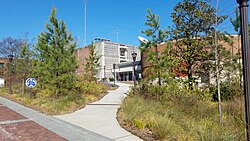
Blake R. Van Leer died of a heart attack on January 24, 1956. Today, his legacy lives on through the Van Leer Building, which houses Georgia Tech's School of Electrical and Computer Engineering, and the Blake R. Van Leer Scholarship for out-of-state students.
Frequently Asked Questions
How did Blake Van Leer impact women's education at Georgia Tech?
Van Leer fought to admit women to the institution, starting with night school and eventually succeeding in gaining full admission through a split decision by the governing bodies.
What was Van Leer's role in the 1956 Sugar Bowl controversy?
He defied Georgia Governor Marvin Griffin's orders to bar Bobby Grier, a Black athlete, from the game, risking his own presidency to ensure the event remained integrated.
What military rank did Blake Van Leer achieve?
He served as a Colonel in the United States Army, specifically within the Corps of Engineers, serving during both World War I and World War II.
Which other university did Van Leer help found?
While serving as president of Georgia Tech, Van Leer founded Southern Polytechnic State University, which later merged with Kennesaw State University in 2015.
How is Van Leer remembered at Georgia Tech today?
He is honored through the naming of the Van Leer Building (housing Electrical and Computer Engineering) and the Blake R. Van Leer Scholarship.