Bobby Grier: The Trailblazer Who Broke the Sugar Bowl Color Barrier
In the mid-1950s, the American South was a landscape of strident racial segregation, where systemic barriers dictated where people could live, work, and play. Amidst this tension, a young athlete from Ohio stepped onto one of the most prestigious stages in collegiate sports to challenge the status quo. Bobby Grier, a versatile powerhouse for the Pittsburgh Panthers, became a symbol of progress when he broke the color barrier of the Sugar Bowl in 1956.
Grier's journey was not merely about athletic prowess; it was a pivotal moment in the intersection of sports and civil rights. Playing as a fullback, linebacker, and defensive back, Grier faced an all-white team in an era defined by racial conflict, marking a significant milestone in the integration of American collegiate athletics.
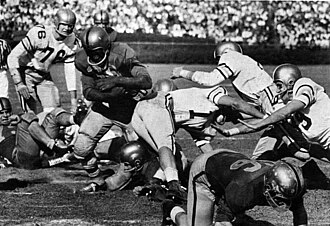
Key Facts
- Historic Achievement: First African American to play in the Sugar Bowl (1956).
- Versatility: Played three positions: fullback, linebacker, and defensive back.
- Academic Background: Majored in business administration at the University of Pittsburgh, graduating in 1957.
- Military Service: Served several years in the United States Air Force.
- Legacy: Inducted into the Sugar Bowl Hall of Fame and the Pitt Athletics Hall of Fame.
The 1956 Sugar Bowl Controversy
The lead-up to the 1956 matchup between the Pittsburgh Panthers and the Georgia Tech Yellow Jackets was fraught with political and social turmoil. The game took place during a period of intense racial unrest, occurring shortly after the lynching of Emmett Till in Mississippi and the start of the Montgomery bus boycott sparked by Rosa Parks.
The opposition to Grier's participation was vocal. Georgia Governor Marvin Griffin publicly opposed racial integration and sent a telegram to the state's Board of Regents, urging Georgia teams to avoid integrated events where Black individuals were participants or spectators. Many in the New Orleans community and some connected to Georgia Tech fought to bar Grier or the entire Pitt team from the game.
The Courage of Leadership
Despite the political pressure, Grier's path to the gridiron was cleared by a coalition of supporters. Georgia Tech's president, Blake R. Van Leer, along with the school's coach, students, and players, rejected Governor Griffin's demands. Van Leer's refusal to comply with the governor's wishes was a rare act of defiance for a Deep South administrator in the 1950s; he even threatened to resign rather than exclude Grier.
Game Performance and the Disputed Call
On the field, Grier proved his talent, finishing the game as the leading rusher with 51 yards. However, the game is often remembered for a controversial play in the first quarter. Grier was called for a 31-yard pass interference penalty, which placed Georgia Tech on the Pitt 1-yard line. The Yellow Jackets scored the game's only touchdown on the following play, winning 7–0.
Later analysis of game films strongly indicated that the penalty call was incorrect. The referee, Rusty Coles—who happened to be from the Pittsburgh area—later admitted the mistake. Despite the frustration of the call, Grier maintained a spirit of sportsmanship, praising the Georgia Tech players for playing a hard but clean game.
Life Beyond the Gridiron
After graduating from the University of Pittsburgh in 1957, Bobby Grier transitioned into a life of service and administration. Following his tenure in the Air Force, he served as an administrator at a Pittsburgh community college and remained a pillar of the local community.
His legacy was formally recognized through numerous honors. He was named a Washington High School Distinguished Citizen and added to the Massillon Tiger Wall of Champions. In 2022, he was enshrined in the Pitt Athletics Hall of Fame and featured in the documentary Sky Blossom, which chronicled his family's history.
Bobby Grier passed away on June 30, 2024, at the age of 91. To honor his enduring impact, the University of Pittsburgh announced that the football team would wear a commemorative helmet sticker throughout the 2024 season.
Summary of Bobby Grier's Legacy
| Category | Details |
|---|---|
| College | University of Pittsburgh (1952–1955) |
| Positions Played | Fullback, Linebacker, Defensive Back |
| Major Milestone | First Black player in the Sugar Bowl (1956) |
| Hall of Fame Inductions | Sugar Bowl Hall of Fame, Pitt Athletics Hall of Fame, Pennsylvania Sports Hall of Fame (Western Chapter) |
| Post-Football Career | U.S. Air Force, Community College Administrator |
Frequently Asked Questions
Why was Bobby Grier's participation in the 1956 Sugar Bowl significant?
It was a landmark event in American race relations because Grier was the first African American to break the color barrier of the Sugar Bowl, playing during a time of strict racial segregation in the Deep South.
Who supported Bobby Grier despite the political opposition?
He was supported by Georgia Tech's president Blake R. Van Leer, the Georgia Tech coaching staff and players, civil rights leaders, and the University of Pittsburgh community.
What happened during the 1956 Sugar Bowl game?
Georgia Tech won 7–0. The only touchdown resulted from a disputed pass interference penalty called against Grier, though Grier led the game in rushing with 51 yards.
What did Bobby Grier do after his football career?
Grier served in the U.S. Air Force and later worked as an administrator at a community college in Pittsburgh, remaining active in community service.
How is Bobby Grier being remembered by the University of Pittsburgh?
In addition to his induction into the Pitt Athletics Hall of Fame, the university announced that the football team would wear a commemorative helmet sticker during the 2024 season to honor him.