Chancellor vs. President: Navigating University Leadership Roles
In the complex world of higher education, titles can be confusing. Depending on where you are in the world, the person in charge of a university might be called a chancellor, a president, a vice-chancellor, or a rector. While these terms are often used interchangeably in casual conversation, they carry distinct legal, administrative, and ceremonial meanings that vary significantly by country and institution.
Understanding these roles requires looking at the distinction between ceremonial heads—who represent the institution's prestige—and executive heads, who manage the day-to-day operations, finances, and academic direction.
Key Facts
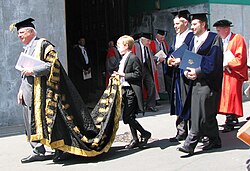
- In many Commonwealth nations, the chancellor is a ceremonial, non-resident figurehead.
- The vice-chancellor is typically the chief executive responsible for daily operations in many international systems.
- In the United States, president is the standard title for the head of a single college or university.
- In some systems, such as Germany and Poland, the chancellor focuses on administration while the rector focuses on academics.
- University leadership roles can vary within a single country; for example, the Philippines uses different titles depending on whether the institution is a constituent part of a larger system.
Global Variations in University Leadership
Commonwealth and European Traditions
In many Commonwealth and former Commonwealth nations, the chancellor serves as a ceremonial head. In these settings, the vice-chancellor acts as the chief executive. Sometimes, the executive leader holds a dual title, such as "president and vice-chancellor."
In Canada, universities follow a similar model to England and Wales, where a titular chancellor exists alongside a vice-chancellor who manages operations. In the United Kingdom, the chancellor is often a prominent public figure, while the vice-chancellor (or "principal and vice-chancellor" in Scotland) handles the executive duties.
European models offer further distinctions. In Finland, the chancellor of the University of Helsinki holds a unique position, with the right to speak in the Council of State on university matters. In France, the term chancelier is a title held by the rector, a senior civil servant who oversees regional educational districts and awards degrees, though they hold no direct executive function within the university itself.
Administrative vs. Academic Leadership in Germany and Poland
In Germany and Poland, the roles are often split between administrative and academic oversight. In Poland, the kanclerz (chancellor) leads the non-academic staff and administration, while the rektor serves as the academic head. Similarly, in Germany, the Kanzler is typically recruited from an administrative background to manage the university's operations, while a rector or president directs the institution. Notably, the German chancellor often possesses significant veto power due to responsibilities assigned by higher education law.
Leadership in Asia and the Pacific
Across Asia, the role of the chancellor varies from political to ceremonial. In Bangladesh, the chancellor is a titular position held by the incumbent President of the country. In Hong Kong, the Chief Executive acts as the chancellor for all chartered universities. In Malaysia, the position is often granted to royalty or prominent politicians to represent the university in the political arena.
In the Philippines, leadership structures are highly specific to the institution. For example, De La Salle University designates its head as a chancellor, while the University of the Philippines uses a system where a president leads the entire system and individual chancellors lead the constituent universities. At the University of Santo Tomas, the roles are largely ceremonial, with the rector magnificus overseeing academic and financial affairs.
The American Model: Presidents and Chancellors
In the United States, the title president is the most common designation for the chief executive of a college or university. However, the title chancellor appears in two specific contexts:
- Multi-campus systems: In large systems like the State University of New York or the California State University, a chancellor may serve as the systemwide chief, overseeing various presidents of individual campuses.
- K-12 Education: In some urban school districts, such as New York City, the term chancellor is used for the chief executive officer of the department of education.
The American presidency is a demanding role. Data shows that the average length of a university president's term in the U.S. has decreased from 8.5 years in 2006 to 5.9 years in 2023, often due to the heavy burden of responsibility and the risk of occupational burnout.
Summary of Leadership Titles by Region
| Region/Country | Ceremonial Head | Executive/Administrative Head |
|---|---|---|
| United Kingdom | Chancellor | Vice-Chancellor / Principal |
| United States | Varies | President (or Chancellor in systems) |
| Germany | Varies | Kanzler (Admin) / Rektor (Academic) |
| Poland | Varies | Kanclerz (Admin) / Rektor (Academic) |
| India | Chancellor | Vice-Chancellor |
| Bangladesh | President of Bangladesh | Vice-Chancellor |
Frequently Asked Questions
What is the main difference between a chancellor and a vice-chancellor?
In many international systems, the chancellor is a ceremonial figurehead, while the vice-chancellor is the actual chief executive responsible for the university's daily management.
Does a university president always have executive power?
Generally, yes. In the United States, the president is typically the highest-ranking officer. However, in some countries, the title "president" may be used alongside "vice-chancellor" to denote different levels of authority.
Why do some university systems use both presidents and chancellors?
In large, multi-campus systems, a chancellor often oversees the entire system, while individual presidents are assigned to lead the specific colleges or campuses within that system.
Who is the de facto head of a public university in India?
While the governor of a state often serves as the honorary chancellor, the vice-chancellor is the de facto head responsible for running the university.
Can a chancellor be an administrative leader?
Yes. In Germany and Poland, the chancellor (Kanzler) is specifically the head of the university's administration and non-academic staff, rather than a ceremonial figure.