Black and Tan Clubs: The Integrated Nightlife of Early Jazz
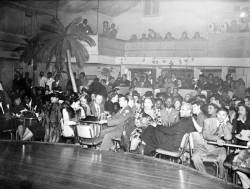
In the early 20th century, a unique cultural phenomenon emerged across the urban landscapes of the United States: the Black and Tan clubs. These nightclubs catered to Black and mixed-race (referred to as "tan") populations, flourishing particularly during the speakeasy era. While they began as havens for specific communities, they eventually evolved into venues where Black and white clienteles mingled, creating a complex social dynamic during a period of strict racial segregation.
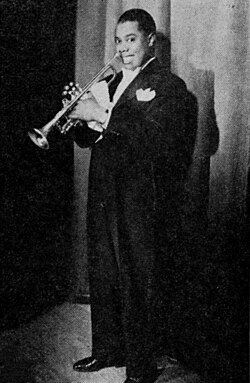
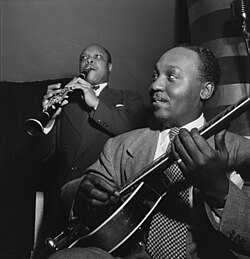
For many African Americans migrating from the rural South to Northern cities like Manhattan, Cincinnati, San Francisco, and Seattle, these clubs served as vital cultural refuges. They provided a space for new immigrants to maintain their traditions while offering a professional springboard for legendary musicians. Many icons of jazz, including Louis Armstrong, Ethel Waters, Cab Calloway, and Jelly Roll Morton, found early success or launched their careers within these walls.
Key Facts
- Purpose: Originally created as cultural havens for Black and mixed-race populations in Northern cities.
- Social Impact: Provided rare spaces for racial social exchange, though some clubs remained segregated in practice.
- Musical Legacy: Acted as incubators for early jazz, bebop, and R&B.
- Controversies: Often viewed as morally disreputable by the wider society and sensationalized by the press.
- Diversity of Ownership: Ranged from Black-owned integrated spaces to white-owned venues with segregated audiences.
The Complex Social Dynamics of Integration
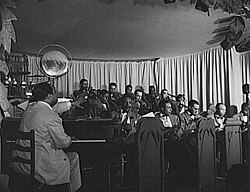
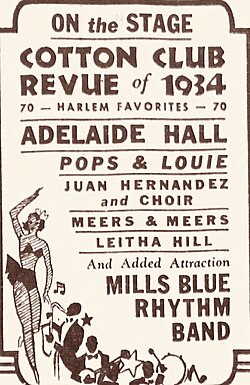
The liberal atmosphere of Black and Tan clubs often attracted Bohemians and artists of all races. White musicians frequently visited Black neighborhoods to study jazz and learn directly from Black performers. However, this inter-mixing was often imperfect. Some venues, such as the Cotton Club and the Plantation Club in Harlem, maintained a strict policy where Black people were employed as performers and servers but were barred as guests.
This disparity led to a tension where white patrons were sometimes viewed as "slumming"—visiting impoverished Black neighborhoods for entertainment. To manage racial tensions and societal pressure, some clubs implemented physical separations within the venue or designated specific hours for different racial groups.
Notable Clubs and Their Legacies
Chicago's Opulent Venues
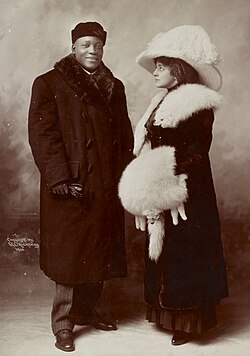
In 1912, heavyweight champion Jack Johnson opened the Café de Champion in Chicago's Bronzeville district. It was a landmark of luxury for African Americans, featuring mahogany bars and electric fans. Johnson even played the double bass (or "bull fiddle") in the house band. However, the club was marred by tragedy when Johnson's wife, Etta, committed suicide in their top-floor apartment in September 1912.
The Sunset Café (also known as the Grand Terrace) became one of America's most critical jazz hubs between 1917 and 1940s. It was a rare integrated haven where various ethnicities mingled freely, playing a pivotal role in the evolution of jazz and the later emergence of bebop.
The Harlem Scene
The Cotton Club, purchased by gangster Owney Madden in 1923, is perhaps the most famous yet contradictory of these venues. While it featured world-class Black talent, it restricted its audience to white patrons and often utilized racist imagery, depicting Black people as "savages" in jungle settings.
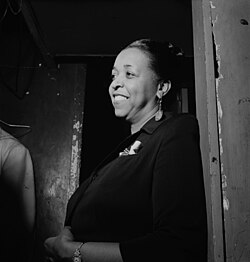
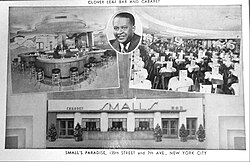
In contrast, Smalls Paradise, opened in 1925, was owned by Ed Smalls and remained integrated. It was known for promoting popular dances like the Charleston and the Twist, and it operated until 1986, making it the longest-running club in Harlem.
Café Society, opened by Barney Josephson in 1938, took a principled stand on equality, treating Black and white customers identically. It launched the careers of stars like Billie Holiday and Lena Horne.
Regional Hubs: Cincinnati, San Francisco, and Seattle
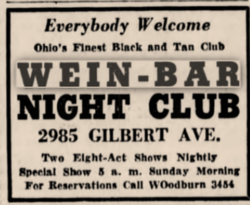
In Cincinnati, the Wein Bar (est. 1934) evolved into an R&B powerhouse and a center for civil rights activism, supporting the NAACP and hosting artists like James Brown.
San Francisco hosted several notable spots, including Purcell's So Different Cafe, The Jupiter (opened by Jelly Roll Morton), and Spider Kelly's Saloon, the latter known as one of the rowdiest spots on "Terrific Street." Finally, Seattle's Black and Tan Club (est. 1922) welcomed a diverse crowd of white, Black, and Asian patrons, hosting legends like Duke Ellington and Ray Charles before closing in 1966.
Summary of Iconic Black and Tan Venues
| Club Name | City | Key Characteristic | Notable Artists |
|---|---|---|---|
| Cotton Club | New York | White-only audience; Black performers | Ethel Waters, Bill Robinson |
| Smalls Paradise | New York | Black-owned and integrated | Bill "Bojangles" Robinson |
| Café Society | New York | Strict racial equality for patrons | Billie Holiday, Lena Horne |
| Sunset Café | Chicago | Integrated jazz innovation hub | Various Jazz/Bebop pioneers |
| Wein Bar | Cincinnati | Civil rights activism center | James Brown, Fats Waller |
| Black and Tan Club | Seattle | Multi-ethnic (White, Black, Asian) | Duke Ellington, Ray Charles |
Cultural Representation in Film
The era was captured in the 1929 short film Black and Tan, directed by Dudley Murphy. Set during the Harlem Renaissance, it marked the film debut of actress Fredi Washington and the first appearance of Duke Ellington and his Orchestra. The film's historical significance was recognized in 2015 when it was selected for preservation in the National Film Registry.
Frequently Asked Questions
What does the term "Black and Tan" mean in the context of these clubs?
The term originally referred to nightclubs catering to Black and mixed-race ("tan") populations. Over time, it became a broader term for any club that welcomed both Black and white patrons.
Were all Black and Tan clubs truly integrated?
No. While some, like Café Society and Smalls Paradise, were genuinely integrated, others like the Cotton Club were segregated, allowing Black performers to work there but barring Black guests from the audience.
How did the wider society view these clubs?
Many in the general public viewed them as socially and sexually disreputable. The press often sensationalized them, and some citizens feared they encouraged "racial impurity" and moral corruption.
What role did these clubs play in the Civil Rights Movement?
Some clubs, most notably the Wein Bar in Cincinnati, served as meeting places for planning activism, organizing protests, and fundraising for the NAACP.
Who were some of the most famous musicians associated with these venues?
The clubs hosted a vast array of talent, including Louis Armstrong, Duke Ellington, Billie Holiday, James Brown, and Cab Calloway, often providing the stage where their careers first took off.