Black Activists and Leaders of the 19th and Early 20th Centuries
The history of the United States is inextricably linked to the efforts of Black leaders who fought for dignity, equality, and freedom. From the early 19th century through the early 20th century, a diverse array of activists utilized religion, business, journalism, and academia to challenge systemic oppression. These figures did not always agree on the best path forward, but their collective work laid the foundation for the modern civil rights movement.
Key Facts
- Richard Allen founded the African Methodist Episcopal (AME) Church to provide a space for worship free from racial oppression.
- James Forten used his wealth as a businessman to fund abolitionist efforts and oppose colonization movements.
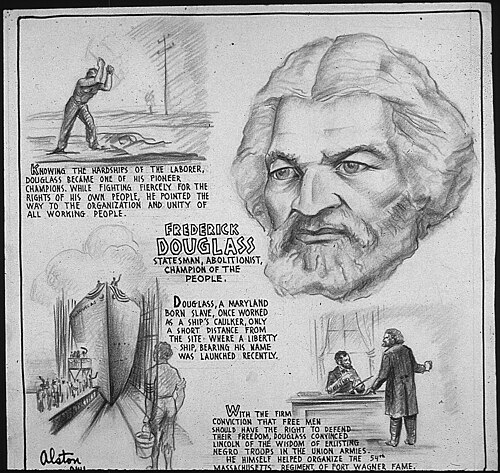
- Frederick Douglass shifted from Garrisonian abolitionism to advocating for equality through the U.S. Constitution.
- Henry McNeal Turner served as the first African-American chaplain in the U.S. Colored Troops and later advocated for black nationalism.
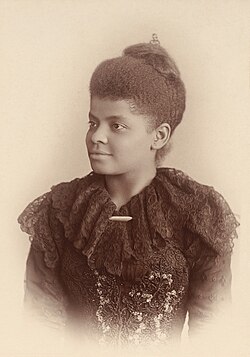
- Ida B. Wells pioneered investigative journalism to expose the truth behind lynching in the American South.
- W.E.B. Du Bois championed the "Talented Tenth" and co-founded the NAACP to fight for full civil rights.
Foundations of Community and Faith
In the early 1800s, leadership often emerged through the creation of independent institutions. Bishop Richard Allen (1760–1831) recognized that spiritual independence was a prerequisite for social dignity. He founded the African Methodist Episcopal (AME) Church, which became the largest all-black organization in the nation. As the first bishop of the AME Church, elected in 1816, Allen established Sabbath schools to promote literacy and developed national organizations to coordinate political strategies.
Economic Power and Abolitionism
While some led through faith, others used economic influence to drive social change. James Forten (1766–1842), a wealthy Philadelphia businessman, leveraged his social standing to advocate for civil rights. Forten was a staunch opponent of colonization movements—efforts to relocate African Americans from the U.S. to other lands—specifically opposing the American Colonization Society. He argued that African Americans had a rightful claim to the United States.
Forten's influence extended to the media; he persuaded William Lloyd Garrison to oppose colonization and helped fund The Liberator. He also served as vice-president of the biracial American Anti-Slavery Society, founded in 1833.
Political Evolution and the Civil War Era
The mid-19th century saw a shift toward political strategy and institutional reform. Frederick Douglass (1817–1895) is described by biographer David Blight as a pivotal figure in America's "Second Founding" following the Civil War. Though initially aligned with Garrison, Douglass broke away by 1851 to pursue abolition and equality through the existing political system and the U.S. Constitution.
During the Civil War, Henry McNeal Turner (1834–1915) broke new ground in 1863 when the US Army appointed him as the first African-American chaplain in the United States Colored Troops. Following the war, Turner worked with the Freedmen's Bureau in Georgia and was elected to the state legislature in 1868. Despite his early success in the AME Church—becoming its first Southern bishop in 1880—the rise of Jim Crow laws (state and local laws enforcing racial segregation) eventually led him to support black nationalism and emigration to Africa.
Journalism and the Fight Against Violence
As the 19th century closed, the fight for equality faced a violent backlash. Ida B. Wells (1862–1931) emerged as a powerhouse of investigative journalism and a co-founder of the National Association for the Advancement of Colored People (NAACP). Wells focused her efforts on documenting the reality of lynching in the South.
Through her pamphlets, Southern Horrors: Lynch Law in all its Phases and The Red Record, Wells debunked the claim that lynching was only used against criminals. She exposed it as a tool of intimidation used by whites to suppress Black economic and political competition.
Intellectual Leadership and Global Perspectives
At the turn of the century, a philosophical divide emerged regarding the best strategy for racial uplift. W.E.B. Du Bois (1868–1963), an academic sociologist, rose to prominence through the Niagara Movement. Du Bois famously opposed the "Atlanta Compromise" proposed by Booker T. Washington, which suggested that Black Southerners submit to white political rule in exchange for basic economic and educational opportunities.
Du Bois argued for full civil rights and political representation, believing that leadership should be driven by the "Talented Tenth"—an intellectual elite who would be developed through advanced education. His vision was global; he was a proponent of Pan-Africanism (the movement to unify people of African descent) and helped organize Pan-African Congresses to fight European colonialism in Africa and Asia.
| Leader | Primary Focus | Key Contribution/Organization |
|---|---|---|
| Richard Allen | Faith & Literacy | Founded the AME Church |
| James Forten | Abolition & Civil Rights | Funded The Liberator; Opposed Colonization |
| Frederick Douglass | Political Equality | Advocated for Constitutional reform |
| Henry McNeal Turner | Military & Nationalism | First Black chaplain in U.S. Colored Troops |
| Ida B. Wells | Journalism & Justice | Exposed lynching; Co-founded NAACP |
| W.E.B. Du Bois | Sociology & Global Rights | The "Talented Tenth"; Pan-Africanism |
Frequently Asked Questions
What was the purpose of the AME Church?
Founded by Richard Allen, the African Methodist Episcopal Church was designed as a denomination where free Black people could worship without facing racial oppression and where enslaved people could find dignity.
How did Ida B. Wells challenge the narrative of lynching?
Wells used investigative journalism and pamphlets to prove that lynching was not a response to crime, but rather a barbaric method used by whites in the South to intimidate Black individuals who became economic or political competitors.
What was the "Talented Tenth"?
The "Talented Tenth" was a concept developed by W.E.B. Du Bois, referring to an intellectual elite of African Americans who, through advanced education, would provide the leadership necessary to achieve full civil rights.
How did W.E.B. Du Bois differ from Booker T. Washington?
While Washington's Atlanta Compromise suggested submitting to white political rule in exchange for economic opportunities, Du Bois insisted on immediate full civil rights and increased political representation.
What is Pan-Africanism?
Pan-Africanism is a movement advocating for the unity of people of African descent worldwide. W.E.B. Du Bois promoted this through Pan-African Congresses to fight for the independence of African colonies from European powers.