Belém: The Vibrant Gateway to the Brazilian Amazon
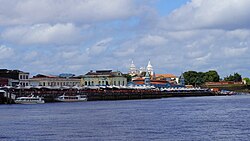
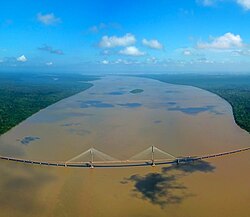
Located in the North Region of Brazil, Belém serves as the capital and largest city of the state of Pará. Known as the gateway to the Amazon River, this bustling municipality is a critical hub for transport and commerce, featuring a busy port, international airport, and extensive bus networks. Situated approximately 100 km upriver from the Atlantic Ocean on the Pará River, Belém is separated from the main Amazon delta by the massive Ilha de Marajó.
With a municipal population of approximately 1.4 million and a metropolitan area exceeding 2.2 million people, Belém is the 11th most populous city in Brazil and the second largest in the North Region, trailing only Manaus. Its strategic location and economic relevance make it a cornerstone of the Amazonian interior.
Key Facts
- Founded: January 12, 1616.
- Location: Capital of Pará, Brazil, situated on the Pará River.
- Population: ~1,397,315 (Municipality); ~2,249,405 (Metropolitan).
- Economy: GDP (PPP) of $18.4 billion (2023).
- Climate: Tropical with high annual precipitation (3,308.3 mm).
- Key Landmark: Ver-o-Peso Public Market.
History and Etymology
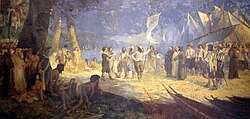
Originally named Feliz Lusitânia, the settlement was later renamed Nossa Senhora de Belém do Grão-Pará (Our Lady of Bethlehem of Great Pará) and Santa Maria de Belém. The city officially received city status in 1655. In 1772, Belém became the capital of the state when Pará was separated from Maranhão.
The early 19th century was a period of significant political instability, characterized by internal strife and uprisings that persisted until 1836.
Geography and Climate
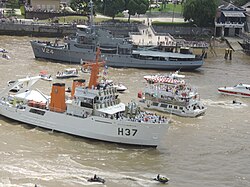
Belém is characterized by its low elevation (10 meters) and a humid tropical climate. The city experiences significant rainfall throughout the year, with an annual average of 3,308.3 mm, peaking between January and April.
| Metric | Annual Average / Range | Peak Month |
|---|---|---|
| Mean Daily Max Temp | 31.0°C to 33.2°C | September (33.2°C) |
| Mean Daily Min Temp | 22.8°C to 23.4°C | April (23.4°C) |
| Average Precipitation | 3,308.3 mm | March (506.3 mm) |
| Relative Humidity | 79.3% to 89.7% | March (89.7%) |
Demographics and Society
The population of Belém is a diverse blend of ancestries. According to a 2011 autosomal DNA study, the ancestral composition is 68.6% European, 20.9% Amerindian, and 10.6% African. Census data from 2018 indicates that the majority of the population identifies as Pardo (Multiracial) at 61.8%, followed by White (26.3%) and Black (11.5%).
The city is a major educational center, hosting prestigious institutions such as the Universidade Federal do Pará (UFPA) and the Federal Rural University of Amazonia (UFRA).
Culture and Architecture
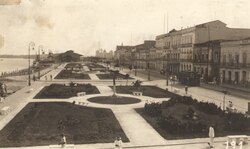
Belém's architecture is a timeline of its colonial and economic history. The early colonial style reflects 17th-century Lisbon, featuring tile-hung façades. In 1753, architect Giuseppe Antonio Landi redesigned the urban plan, modifying nearly all buildings of that era.
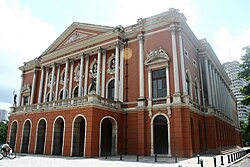
The late 19th and early 20th centuries saw a surge of wealth during the rubber cycle. This era introduced Neoclassical and Eclectic styles, often based on French models, as seen in the Theatro da Paz (built 1874) and the Bibi Costa Mansion.
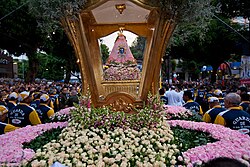
Círio de Nazaré
One of the city's most significant cultural events is the Círio de Nazaré, a massive religious celebration that draws millions of devotees.
Tourism and Landmarks
Belém offers a mix of natural beauty and urban history. Key attractions include:
- Ver-o-Peso Market: A historic public market in the old port center and a primary tourist draw.
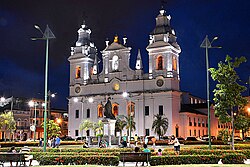
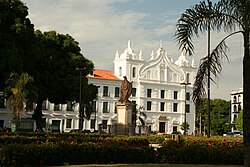
- Our Lady of Grace Cathedral: Also known as the Sé Cathedral, it is one of the largest in Brazil.
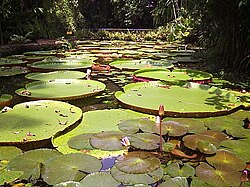
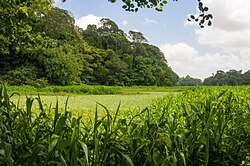
- Utinga State Park: A vital green space for nature lovers.
- Estação das Docas: A modern complex for leisure and gastronomy.
- Museu Paraense Emílio Goeldi: A renowned research museum.
Infrastructure and Sports
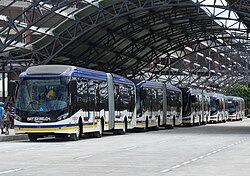
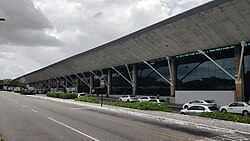
The city is well-connected via the Belém International Airport, which handles 2.7 million passengers annually. For regional travel, the city utilizes a comprehensive bus system and waterways.
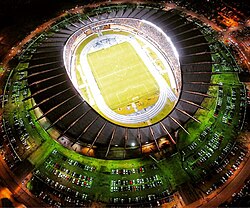
Football is a dominant passion in Belém, with three major teams: Paysandu (playing at Estádio da Curuzú), Remo (playing at Baenão), and Tuna Luso (playing at Estádio Francisco Vasques). The city also hosts the larger Estádio Olímpico do Pará.
Frequently Asked Questions
What is the best time to visit Belém based on weather?
While Belém is rainy year-round, the months of July, August, and September typically see the lowest average precipitation and the highest sunshine hours.
What is the significance of the Ver-o-Peso Market?
The Ver-o-Peso is a major tourist attraction and a cultural landmark located in the old port center, serving as a hub for local trade and Amazonian products.
Which architectural styles are most prominent in Belém?
The city features 17th-century Portuguese colonial architecture, 19th-century Neoclassical designs, and Eclectic mansions influenced by French styles from the rubber boom era.
What is the Círio de Nazaré?
The Círio de Nazaré is a massive religious celebration and one of the most important cultural events in Belém, attracting millions of participants.
How is Belém connected to the Amazon River?
Belém is located approximately 100 km upriver from the Atlantic Ocean on the Pará River, which is part of the greater Amazon River system.