South AmericaLatin AmericaSouth American economyAmazon RiverSouth American demographics

South America: Geography, History, and Economic Dynamics

South America: Geography, History, and Economic Dynamics South America is a continent of immense diversity, spanning approximately 17.84 million square kilometers. As the fourth largest c...

South America: Geography, History, and Economic Dynamics

South America is a continent of immense diversity, spanning approximately 17.84 million square kilometers. As the fourth largest continent by area and the fifth most populous, it is a region defined by its dramatic landscapes, complex colonial history, and a rapidly evolving economic profile. From the dense rainforests of the Amazon to the towering peaks of the Andes, the continent serves as a critical hub for global biodiversity and natural resources.

The region is composed of 12 sovereign nations and several dependencies, creating a multicultural tapestry where Indigenous heritage blends with European and African influences. This synthesis is evident in the continent's languages, religions, and urban centers, which range from the financial powerhouse of São Paulo to the high-altitude capitals of the Andes.
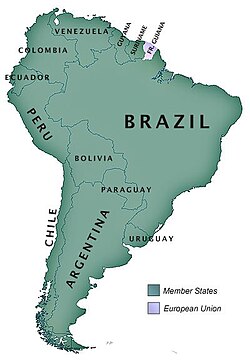
Scheme for geographical regions and subregions used by the United Nations Statistics Division

Key Facts

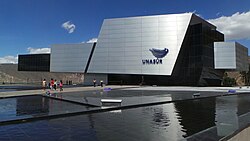
Headquarters of the UNASUR in Quito, Ecuador
  • Total Area: 17,840,000 km², ranking 4th globally.
  • Population: Approximately 434.25 million (2021), ranking 5th globally.
  • Economic Power: Nominal GDP of $3.62 trillion (2022 est), ranking 4th globally.
  • Dominant Religions: Christianity (90%), with Catholicism (67.4%) being the most prevalent.
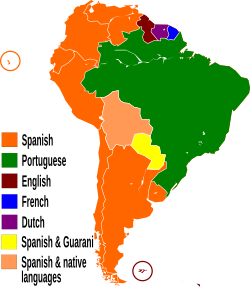
  • Primary Languages: Spanish and Portuguese are the most widely spoken, alongside English, French, Dutch, and various Indigenous languages like Quechua and Guaraní.

Historical Evolution

Rafael Correa, Evo Morales, Néstor Kirchner, Cristina Fernández, Luiz Inácio Lula da Silva, Nicanor Duarte, and Hugo Chávez signed the founding charter of the Bank of the South.

Prehistory and Pre-Columbian Civilizations

Long before European arrival, South America was home to sophisticated societies. The prehistoric Cueva de las Manos in Argentina provides early evidence of human artistic expression, while the Inca Empire established a vast administrative and architectural network, exemplified by the estate of Machu Picchu in Peru.
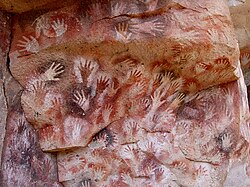
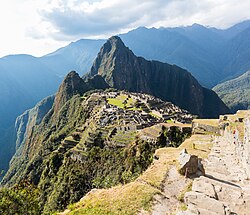
The prehistoric Cueva de las Manos, or "Cave of the Hands", in Argentina

The Inca estate of Machu Picchu, Peru, is one of the New Seven Wonders of the World.

European Colonization and Independence

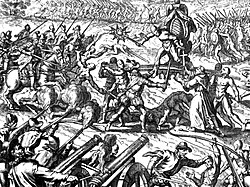
The landscape changed drastically starting in 1500 when Portuguese explorer Pedro Álvares Cabral landed in Brazil. Spanish colonization followed, often marked by violent confrontations, such as the Battle of Cajamarca, which decimated native populations. This era introduced the transatlantic slave trade, bringing millions of Sub-Saharan Africans to the continent, particularly to Brazil, where slavery persisted into the 19th century.

The Portuguese explorer Pedro Álvares Cabral landing in Brazil in 1500

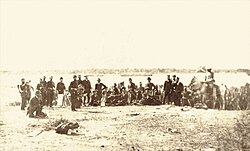
The Inca–Spanish confrontation in the Battle of Cajamarca left thousands of natives dead.

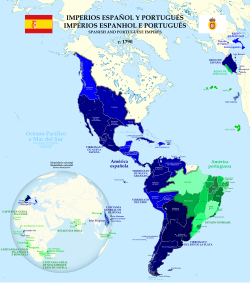
An interpretation of the extent of the Spanish and Portuguese colonies in the Americas in 1790

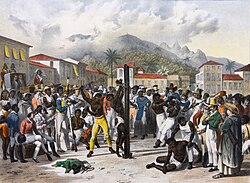
Public flogging of a slave in 19th-century Brazil

Nation-Building and Modern Conflict

The 19th century saw a wave of independence from Spain and Portugal, leading to the coronation of Pedro I as the first Emperor of Brazil. However, the path to stability was fraught with fragmentation and conflict, including the Ragamuffin War in Southern Brazil and later naval arms races between Brazil, Argentina, and Chile. In the 20th century, many nations experienced the rise and fall of military dictatorships before transitioning to contemporary democratic systems.
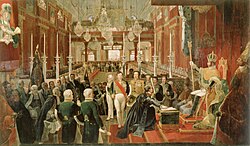
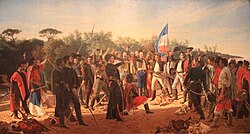
Coronation of Pedro I as 1st Emperor of Brazil

The Thirty-Three Orientals proclaimed the independence of Cisplatine Province.

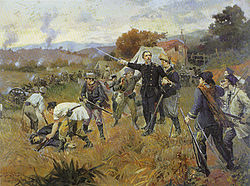
Battle scene in Southern Brazil during the Ragamuffin War

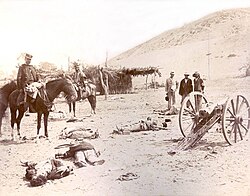
The Chilean Army in the battlefield of the Battle of Chorrillos, 1883

Imperial Brazilian Navy siege of Paysandú, 1865

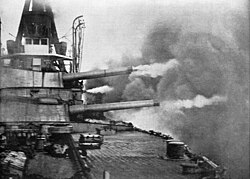
The Brazilian Minas Geraes class kindled an Argentine–Brazilian–Chilean naval arms race.

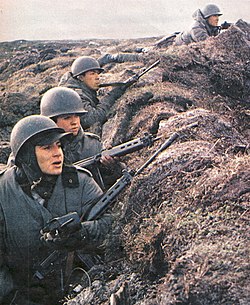
Argentine soldiers during the Falklands War

Geography and Environment

Trading panel of the São Paulo Stock Exchange is the second biggest in the Americas and 13th in the world.

South America's physical geography is characterized by extreme contrasts. The continent features a diverse array of landforms, from the vast Amazonian interior to the rugged Patagonia region. The climate varies significantly, as mapped by the Köppen-Geiger classification, ranging from tropical rainforests to arid deserts and alpine tundras.
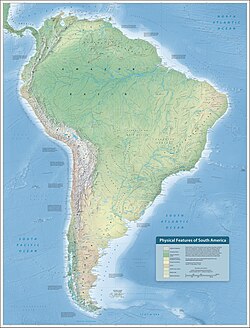
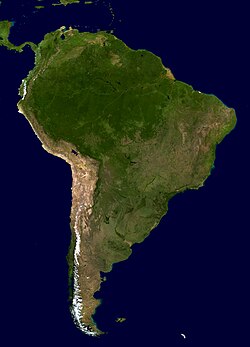
South America's landforms and land cover

A composite relief image of South America

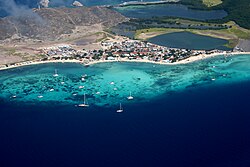
The Gran Roque village, the largest settlement of the Los Roques Archipelago, Venezuela

Köppen-Geiger climate classification map for South America[69]

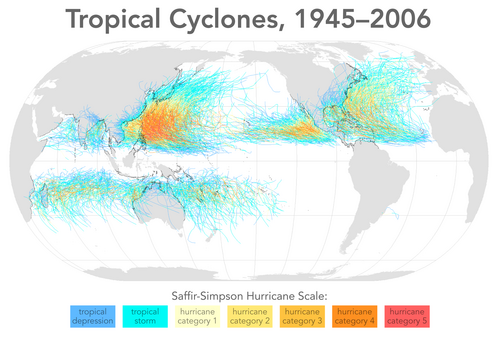
Map of all tropical cyclone tracks from 1945 to 2006

Economic Profile and Infrastructure

São Paulo, Brazil, one of the largest financial centers in the world

Industry and Natural Resources

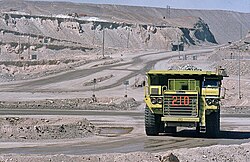
The economy of South America is heavily driven by the extraction of natural resources. Mining is a cornerstone of several economies; Chile operates Chuquicamata, the world's largest open-pit mine, while Bolivia's Cerro Rico remains a major silver source. The continent is also a global leader in the production of gemstones, including amethyst and emeralds.


Cerro Rico, Potosi, Bolivia, still a major silver mine

Amethyst mine in Ametista do Sul. South America is a major producer of gems such as amethyst, topaz, emerald, aquamarine and tourmaline.

Chuquicamata is the largest open pit mine in the world, near the city of Calama in Chile.

Agriculture and Manufacturing

Agriculture is a primary economic driver, with Brazil, Argentina, Chile, and Colombia leading the sector. In manufacturing, Brazil stands out with companies like Embraer, which produces the KC-390, the largest military transport aircraft in the region, and EMS, a leading pharmaceutical firm.
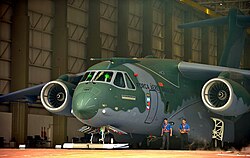
KC-390 is the largest military transport aircraft produced in South America by the Brazilian company Embraer.

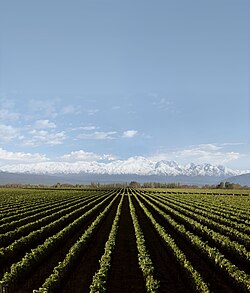
Vineyard in Luján de Cuyo, province of Mendoza, Argentina

EMS, the largest Brazilian pharmaceutical company

Energy and Transport

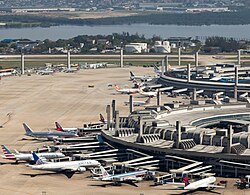
The region utilizes a mix of energy sources, from the massive hydroelectric output of the Itaipu Dam to the Pirapora Solar Complex and the Angra Nuclear Power Plant. Transport infrastructure includes extensive road networks, major seaports like the Port of Itajaí, and critical aviation hubs such as Rio de Janeiro International Airport.

Wind power in Parnaíba

Angra Nuclear Power Plant in Angra dos Reis, Rio de Janeiro

Pirapora Solar Complex, the largest in Brazil and Latin America with a capacity of 321 MW

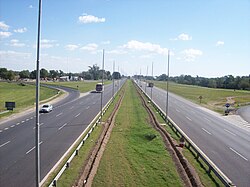
Ruta 9 / 14, in Zarate, Argentina

Rio de Janeiro International Airport

Port of Itajaí, Santa Catarina, Brazil

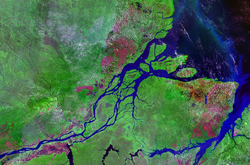
The mouth of the Amazon River

Demographics and Culture

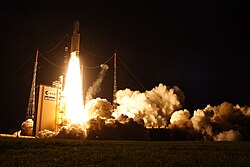
Launch at the Kourou Space Centre in French Guiana

The population of South America is a blend of various ethnic groups, including Europeans, West Asians, Indigenous peoples, and Sub-Saharan Africans. This has resulted in a diverse multiracial population, including Mestizos, Mulattos, Pardos, and Zambos. Indigenous groups such as the Tupi, Wayuu, and Yanomamö continue to maintain their cultural identities in territories like the Xingu in Brazil.
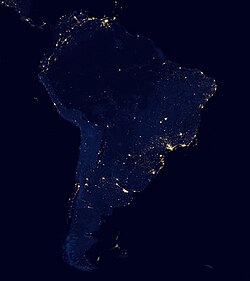
Satellite view of South America at night from NASA, showing the contrast between heavily populated coastal areas and the more remote regions of the Amazonian interior and Patagonia

Official languages in South America

Las Lajas Sanctuary, Ipiales, Colombia

A Japanese-Brazilian Miko during a festival in Curitiba

President of Brazil Lula and members of the Italian Brazilian community during the Grape Festival at Caxias do Sul

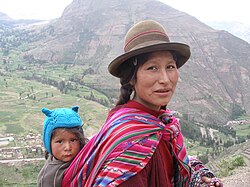
Peruvian woman and her son

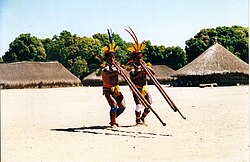
Xingu, an Indigenous territory of Brazil

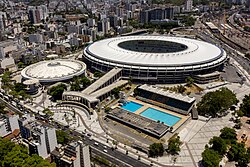
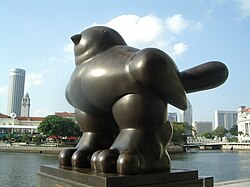
Culturally, the continent is known for its vibrant arts and sports. From the sculptures of Colombian artist Fernando Botero to the iconic Maracanã Stadium in Rio de Janeiro, South American culture is a global influence. Culinary traditions, such as the Brazilian Caipirinha, further reflect the region's unique identity.
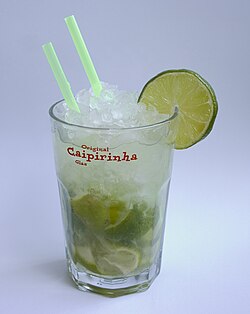
Caipirinha, a Brazilian cocktail, of São Paulo origin

Bird (UOB Plaza, Singapore), sculpture of Colombian artist Fernando Botero

Maracanã Stadium in Rio de Janeiro, Brazil

Regional Overview

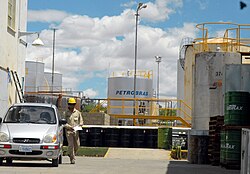
Refinery of Brazilian state-owned Petrobras in Cochabamba, Bolivia

The following table provides a summary of the key sovereign states within the continent.

Summary of South American Sovereign States (2021 Data)
Country Area (km²) Population Capital
Argentina 2,766,890 45,276,780 Buenos Aires
Bolivia 1,098,580 12,079,472 La Paz / Sucre
Brazil 8,514,877 214,326,223 Brasília
Chile 756,950 19,493,184 Santiago
Colombia 1,141,748 51,516,562 Bogotá
Ecuador 283,560 17,797,737 Quito
Guyana 214,999 804,567 Georgetown
Paraguay 406,750 6,703,799 Asunción
Peru 1,285,220 33,715,471 Lima
Suriname 163,270 612,985 Paramaribo
Uruguay 176,220 3,426,260 Montevideo
Venezuela 916,445 28,199,867 Caracas

Frequently Asked Questions

What are the most spoken languages in South America?

The most dominant languages are Spanish and Portuguese, reflecting the colonial history of Spain and Portugal. Other significant languages include English, French, Dutch, and various Indigenous languages such as Quechua, Guaraní, and Aymara.

Which country has the largest economy in South America?

Brazil has the largest economy, with a nominal GDP of approximately $2.13 trillion (2023) and a PPP GDP of $4.1 trillion (2023).

What is the primary religion in the region?

Christianity is the primary religion, practiced by 90% of the population, with Roman Catholicism being the most widespread denomination at 67.4%.

Which are the largest cities in South America by population?

The largest metropolitan areas include São Paulo (Brazil), Buenos Aires (Argentina), Rio de Janeiro (Brazil), Lima (Peru), and Bogotá (Colombia).

What are the major mineral exports of the continent?

South America is a global leader in the production of copper (particularly Chile), silver (Bolivia), and iron ore, as well as various precious gemstones like emeralds and amethysts.

References

  1. Sometimes included. Physiographically a part of South America, but geopolitically a part of North America. Aruba is a member nation of ODESUR.
  2. Occasionally included. An isolated volcanic island near the boundary between the African Plate and the Antarctic Plate, Bouvet Island is biogeographically and geologically associated with Antarctica. Despite being closer to Antarctica and Africa geographically, the United Nations geoscheme has included Bouvet Island in South America instead.
  3. Sometimes included. Physiographically a part of South America, but geopolitically a part of North America. Curaçao is a member nation of ODESUR.
  4. Geologically, South Georgia Island and the southernmost portion of mainland South America are both on the Scotia Plate while the South Sandwich Islands is on the nearby Sandwich Plate. Biogeographically and hydrologically, South Georgia and the South Sandwich Islands is associated with Antarctica. The United Nations geoscheme has included the disputed territory in South America.
  5. Occasionally included. An isolated volcanic island on the South American Plate, Ascension Island is geologically a part of South America, but geopolitically a part of Africa.