Amazon Basin: Geography, Biodiversity, and Human Impact
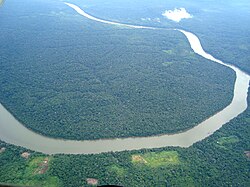
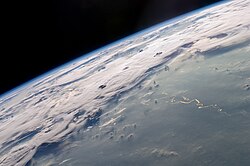
The Amazon basin is a vast geographical region in South America defined by the drainage system of the Amazon River and its extensive network of tributaries. Spanning several nations, this basin supports the largest rainforest on Earth and serves as one of the most critical ecological hubs for the planet's climate and biological diversity.
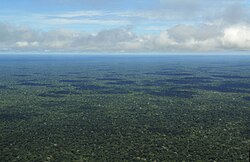
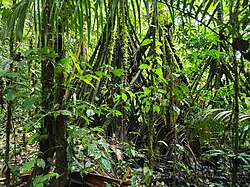
Most of the basin is covered by the Amazon rainforest, also known as Amazonia. This dense tropical forest covers an area of approximately 6 million km² (2.3 million mi²), making it the most biodiverse region in the world. It provides a sanctuary for a staggering variety of plant, mammal, bird, reptile, amphibian, fish, and insect species.
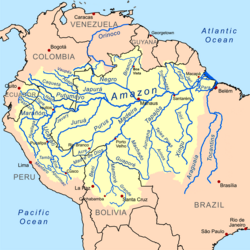
Key Facts
- Total Area: Approximately 6,923,000 km².
- Global Status: The world's largest rainforest and most biodiverse region.
- Countries Involved: Bolivia, Brazil, Colombia, Ecuador, Guyana, Peru, Suriname, Venezuela, and French Guiana.
- Primary Livelihoods: Fishing and agriculture are central to the local populations.
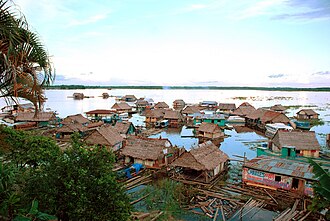
- Human Presence: Generally sparsely populated, though cities like Manaus and Belém serve as major urban centers.
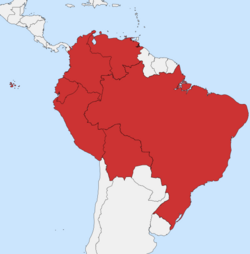
Geography and Distribution
The Amazon basin is a transboundary region, meaning it spreads across multiple political borders. While Brazil holds the largest portion of the basin, the drainage system is vital to the hydrology of the entire continent.
| Country | Area (km²) | Area (%) | Discharge (km) | Discharge (%) |
|---|---|---|---|---|
| Bolivia | 724,000 | 10.4 | 291 | 4.0 |
| Brazil | 4,674,619 | 67.5 | 4,167.3 | 57.2 |
| Colombia | 345,293 | 5.0 | 755 | 10.4 |
| Ecuador | 146,688 | 2.1 | 258.4 | 3.6 |
| Guyana | 12,224 | 0.2 | 8.8 | 0.1 |
| Peru | 967,176 | 14.0 | 1,739.5 | 23.9 |
| Venezuela | 53,000 | 0.8 | 60.0 | 0.8 |
| Total | 6,923,000 | 100.0 | 7,280 | 100.0 |
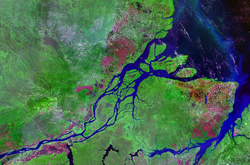
Biodiversity and Wildlife
The basin's unique environment supports an unparalleled array of life. From the canopy of the rainforest to the depths of the river system, the region is a hotspot for evolution and species richness.
Terrestrial Wildlife
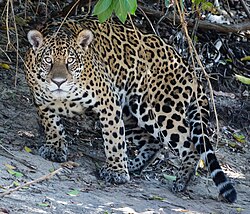
The rainforest is home to iconic mammals, birds, and reptiles. The dense vegetation provides a complex habitat for species that have adapted to the humid, tropical climate.
Aquatic Life and Fish Groups
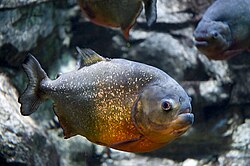
The river systems are equally diverse, hosting a wide variety of fish that are essential for both the ecosystem and human survival. Major fish groups include:
- Gymnotiformes: Neotropical electric fishes.
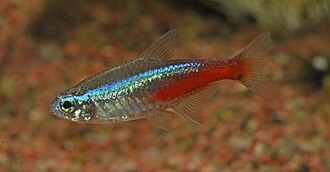
- Characiformes: Including tetras and their relatives.
- Potamotrygonidae: River stingrays.
- Arapaimidae: Bonytongues.
- Loricariidae: Suckermouth catfishes.
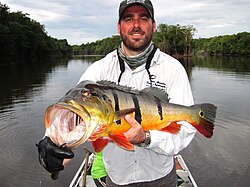
- Cichlinae: Pike and peacock cichlids.
Human Life and Economy
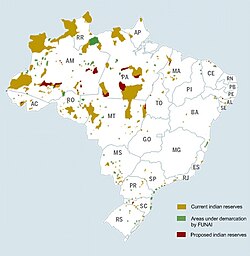
While much of the basin remains wild, it is inhabited by numerous indigenous communities representing a vast array of cultures and languages. For these populations, the river is the primary artery for transport and sustenance.
Livelihoods and Fishing
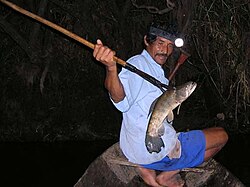
Agriculture and fishing are the cornerstones of the local economy. Fishing is categorized into several types:
- Subsistence Fishing: Local fishing for food and survival.
- Commercial Fisheries: Large-scale harvesting for markets.
- Ornamental Fishing: The capture of colorful species, such as the Cardinal Tetra, for the global aquarium trade.
- Sport Fishing: A growing economy centered around trophy fish like the peacock bass.
Environmental Challenges
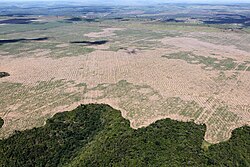
The Amazon basin faces significant threats from human encroachment. The expansion of roads and the increase in resource extraction have led to widespread deforestation, which threatens the region's biodiversity and its role in global climate regulation.
Frequently Asked Questions
Which countries are part of the Amazon basin?
The basin spans Bolivia, Brazil, Colombia, Ecuador, Guyana, Peru, Suriname, Venezuela, and the territory of French Guiana.
What is the size of the Amazon rainforest?
The Amazon rainforest, or Amazonia, covers an area of approximately 6 million km² (2.3 million mi²).
Why is the Amazon basin considered the most biodiverse region?
It is home to a vast number of the Earth's plant, mammal, bird, reptile, amphibian, fish, and insect species due to its massive size and tropical climate.
What are the primary economic activities for people living in the basin?
Fishing and agriculture are the most important livelihoods for the people residing in the Amazon basin.
What are the main threats to the Amazon basin?
The primary threats include deforestation, increased road-building, and resource extraction, all of which lead to human encroachment and loss of biodiversity.