Battle of Vittorio Veneto: The Final Blow to the Austro-Hungarian Empire
The Battle of Vittorio Veneto, fought between 24 October and 4 November 1918, stands as the decisive engagement on the Italian Front of World War I. This major offensive by the Royal Italian Army, supported by Allied forces, did more than just secure a military victory; it triggered the total collapse of the Austro-Hungarian Empire and accelerated the end of the First World War.
The battle took place near the city of Vittorio (renamed Vittorio Veneto in 1923). By the time the offensive began, the Austro-Hungarian forces were reeling from internal instability and a naval blockade of the Adriatic, leaving them vulnerable to a final, coordinated push.
Key Facts
- Date: 24 October – 4 November 1918.
- Outcome: Decisive Italian victory and the dissolution of the Austro-Hungarian Empire.
- Allied Strength: 57 divisions (primarily Italian, with British, French, and US support) and 7,700 artillery pieces.
- Central Axis Strength: 52 divisions (46 infantry, 6 cavalry) and 6,030 artillery pieces.
- Major Captures: 448,000 Austro-Hungarian prisoners and over 5,000 artillery pieces.
- Ending: The Armistice of Villa Giusti, signed 3 November 1918.
Historical Background
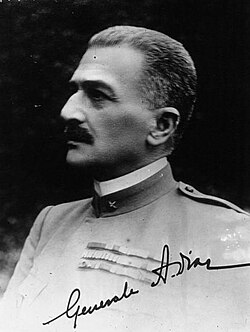
The road to Vittorio Veneto began with the devastating Italian defeat at the Battle of Caporetto in 1917, where the Italian Army suffered over 300,000 casualties. This disaster led to the appointment of General Armando Diaz as Supreme Commander. Diaz stabilized the front by implementing defense in depth—a strategy using multiple layers of defensive positions—and utilizing mobile reserves around the Piave River.
In June 1918, Austria-Hungary launched a massive offensive to break the Piave line, attempting to push into Lombardy and central Venetia. This effort ended in a heavy defeat for the imperial army. The situation worsened on 1 November when the new Hungarian government, led by Count Mihály Károlyi, recalled all conscripts from Hungarian territories, severely depleting the Habsburg forces.
The Course of the Battle
The Crossing of the Piave
The offensive began on the night of 23 October. The Tenth Army, under the Earl of Cavan, targeted the Grave di Papadopoli islands to establish a foothold. British troops from the 7th Division, supported by Italian engineers (Pontieri), successfully seized the northern half of the island using bayonets for silence. Despite heavy machine-gun fire resisting the Italian assault on the southern half, the island was secured by dawn.
By 27 October, the Allies had established a bridgehead 2.5 miles deep and 5 miles broad. When General Svetozar Boroević ordered a counter-attack, his troops—ravaged by influenza, malaria, and low morale—refused to obey, signaling a systemic collapse of the Austro-Hungarian military discipline.
The Struggle for Monte Grappa
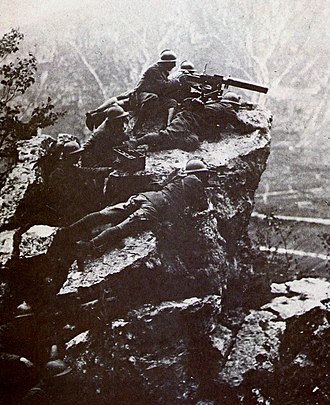
Simultaneously, the Italian Fourth Army launched a "splintering attack" on Monte Grappa to draw in Austro-Hungarian reserves. The fighting here was brutal, involving steep slopes and secondary peaks. Between 24 and 31 October, the Italian artillery unleashed a massive barrage, firing 2,446,000 shells. By 31 October, the Fourth Army broke through the Austrian positions and advanced toward Feltre.
The Final Advance
On 29 October, the Italian Eighth Army pushed toward the city of Vittorio, entering it on 30 October. As the Allied lines surged forward, the 332nd US Infantry Regiment and other reserves poured across the Piave. The Austro-Hungarian army disintegrated, with prisoners numbering 50,000 by 31 October and swelling to 300,000 by 4 November.
Casualties and Results
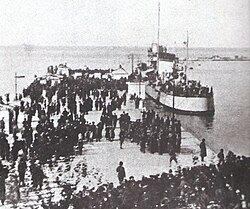
The battle resulted in a staggering loss of manpower and equipment for the Central Powers. While the Allies suffered significant losses—particularly on Monte Grappa—the Austro-Hungarian collapse was absolute.
| Belligerent | Killed | Wounded | Missing/Captured | Total Casualties |
|---|---|---|---|---|
| Allied Forces | ~7,000 (Italy) | ~23,000 (Italy) | ~8,000 (Italy) | ~40,917 (Italy) + 2,139 (UK) + 778 (FR) |
| Austria-Hungary | 30,000 | 50,000 | 448,000 | 528,000 |
Aftermath and Global Impact
The Armistice of Villa Giusti was signed on 3 November 1918, taking effect the following day. The victory led to the immediate dissolution of the Austro-Hungarian Empire, with Hungary leaving the personal union with Austria and new nations, such as the precursor to Yugoslavia, emerging from the ruins.
The collapse of Austria-Hungary left the German Empire isolated. This strategic failure, combined with internal unrest like the Wilhelmshaven and Kiel mutinies, forced Germany to request an armistice. The war officially ended on the Western Front on 11 November 1918, just one week after the Italian victory.
Frequently Asked Questions
Why is the battle called Vittorio Veneto if the city was just called Vittorio?
At the time of the battle in 1918, the city was named Vittorio. It was referred to as "Vittorio Veneto" to specify its location in the Veneto region. The city was officially renamed Vittorio Veneto in July 1923.
What role did the United States play in the battle?
The United States contributed the 332nd Infantry Regiment, which served as part of the reserves and poured over the Piave River to support the Italian Tenth Army during the final stages of the offensive.
How did the Battle of Caporetto influence this victory?
The defeat at Caporetto led to the replacement of General Luigi Cadorna with General Armando Diaz. Diaz's reorganization of the army and his focus on defense in depth provided the stability and morale necessary to launch the successful Vittorio Veneto offensive.
What was the significance of the Piave River?
The Piave River served as the primary defensive line for the Italian Army. The ability of the Allies to force a crossing and establish bridgeheads was the critical tactical requirement for the offensive's success.
Did the battle directly cause the end of World War I?
While it did not end the entire war alone, it caused the collapse of the Austro-Hungarian Empire, which was Germany's primary ally. This loss made continued German resistance untenable, leading to the general armistice on 11 November.