Armistice of Villa Giusti: The End of Warfare for Austria-Hungary
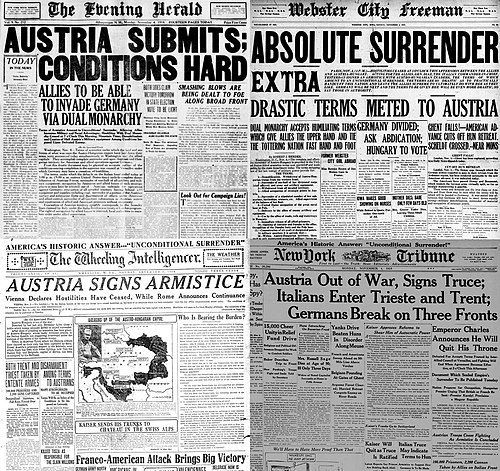
The Armistice of Villa Giusti, also known as the Padua Armistice, was the convention that effectively ended the fighting between the Allies and Associated Powers and the Austro-Hungarian Empire during World War I. Represented primarily by Italy, the Allies negotiated a ceasefire that signaled the collapse of the Dual Monarchy's military capabilities on the Italian front.
The armistice protocol and its supplementary agreement were signed on November 3, 1918, at the Villa Giusti, located just outside Padua in the Veneto region of Northern Italy. The agreement took effect 24 hours later. It is important to note that this specific armistice applied only to Austria; Hungary subsequently signed a separate agreement known as the Belgrade armistice.
Key Facts
- Signed: November 3, 1918, at Villa Giusti, Italy.
- Effective Date: November 4, 1918.
- Primary Negotiators: Italy (representing the Allies) and Austria-Hungary.
- Prisoners of War: Approximately 380,000 k.u.k. (Imperial and Royal) prisoners were captured by Italy, with 30,000 dying in captivity.
- Territorial Impact: Led to the Italian annexation of South Tyrol, Trieste, the Austrian Littoral, and parts of Dalmatia.
The Road to Ceasefire
By late October 1918, the Austro-Hungarian Army had reached a state of extreme fatigue. The empire was fracturing along ethnic lines, and military commanders recognized that a ceasefire was the only way to potentially preserve the Dual Monarchy.
The breaking point occurred during the final stage of the Battle of Vittorio Veneto. As a stalemate broke, Austro-Hungarian troops began a chaotic withdrawal. On October 28, Austria-Hungary formally requested an armistice from Italy. While the Austro-Hungarians hesitated over the specific text of the agreement, Italy set a strict deadline for acceptance: November 3 at 00:00. Austria-Hungary complied, and the agreement entered into force the following day.
During this transition period, Italian forces advanced rapidly, reaching Trento and Udine and landing in Trieste to secure as many prisoners of war as possible.
Terms of the Armistice
The ceasefire was scheduled to begin at 15:00 on November 4. Tensions remained high during the final hours; General Weber of Austria requested an immediate cessation of combat and a halt to the Italian advance. This was sharply rejected by Italian General Pietro Badoglio, who threatened to scrap negotiations and resume full-scale warfare if the terms were not met.
Territorial and Military Requirements
The armistice imposed strict conditions on the Austro-Hungarian forces, including:
- The evacuation of all territories occupied since August 1914.
- The surrender of South Tirol, Tarvisio, the Isonzo Valley, Gorizia, Trieste, Istria, western Carniola, and portions of Dalmatia.
- The expulsion or internment of all German forces within Austria-Hungary within 15 days.
- Granting the Allies unrestricted use of internal communications and allowing the transit of Triple Entente armies to reach Germany from the south.
Following the agreement, the Italian Army deployed between 20,000 and 22,000 soldiers to occupy Innsbruck and all of North Tyrol in November 1918.
Post-War Annexations
In accordance with the secret Treaty of London, Italy eventually annexed several regions, including Southern Tyrol (now Trentino-Alto Adige/Südtirol), Trieste, the Austrian Littoral, and specific parts of Dalmatia, such as Zadar, Lastovo, and Palagruža.
Summary of the Armistice
| Category | Details |
|---|---|
| Location | Villa Giusti, Padua, Italy |
| Date Signed | November 3, 1918 |
| Effective Date | November 4, 1918 |
| Key Italian Figure | General Pietro Badoglio |
| Key Austrian Figure | General Viktor Weber Edler von Webenau |
| Resulting Treaties | Treaty of Saint-Germain-en-Laye and Treaty of Trianon |
Signatories
Italy
- Tenente Generale Pietro Badoglio
- Maggior Generale Scipione Scipioni
- Colonnello Tullio Marchetti
- Colonnello Pietro Gazzera
- Colonnello Pietro Maravigna
- Colonnello Alberto Pariani
- Capitano di Vascello Francesco Accinni
Austria-Hungary
- General Viktor Weber Edler von Webenau
- Oberst Karl Schneller
- Fregattenkapitän Johannes Prinz von und zu Liechtenstein
- Oberstleutnant J.V. Nyékhegyi
- Korvettenkapitän Georg Ritter von Zwierkowski
- Oberstleutnant i.G. Victor Freiherr von Seiller
- Hauptmann i.G. Camillo Ruggera
Frequently Asked Questions
Did the Armistice of Villa Giusti end the war for all of Austria-Hungary?
It ended the warfare between the Allies and Austria-Hungary, but it specifically applied to Austria. Hungary later signed a separate agreement known as the Belgrade armistice.
Why did Austria-Hungary seek a ceasefire in October 1918?
The Austro-Hungarian Army was severely fatigued, and the empire was collapsing along ethnic lines. A ceasefire was seen as the only way for the Dual Monarchy to potentially survive.
What happened to the Austro-Hungarian prisoners of war?
Italy captured approximately 380,000 k.u.k. prisoners of war, and roughly 30,000 of these individuals died during their captivity.
Which territories did Italy acquire as a result of the war?
Based on the armistice and the secret Treaty of London, Italy annexed Southern Tyrol, Trieste, the Austrian Littoral, and parts of Dalmatia, including Zadar, Lastovo, and Palagruža.
Who were the primary military leaders involved in the negotiations?
The key figures included General Pietro Badoglio for Italy and General Viktor Weber Edler von Webenau for Austria-Hungary.