League of the Three Emperors: Bismarck's Strategy for European Stability
In the volatile landscape of late 19th-century diplomacy, the League of the Three Emperors (known in German as the Dreikaiserbund) stood as a cornerstone of European geopolitics. Spanning from 1873 to 1887, this alliance brought together the German, Russian, and Austro-Hungarian Empires in a strategic effort to maintain a fragile peace and preserve the existing social order.
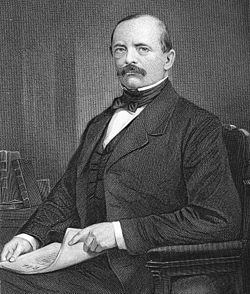
The architect of this system was Chancellor Otto von Bismarck, who managed German foreign policy from 1870 until 1890. Bismarck's primary objective was to ensure a peaceful Europe based on the balance of power—the principle that no single nation should become dominant enough to dictate terms to others. His greatest fear was a "hostile combination" of France, Russia, and Austria-Hungary, which could potentially crush the newly unified German state.
Key Facts
- Participants: The German Empire, the Russian Empire, and the Austro-Hungarian Empire.
- Primary Architect: Chancellor Otto von Bismarck.
- Core Goal: To isolate France and prevent a coalition of powers against Germany.
- Timeline: First alliance (1873–1878); Second alliance (1881–1887).
- Main Conflict: Rivalry between Russia and Austria-Hungary over influence in the Balkans.
- Successor: The Reinsurance Treaty of 1887 (temporary tie with Russia).
The Strategic Logic of the Alliance
Bismarck recognized that if Germany were to remain secure, it had to prevent its neighbors from uniting against it. By allying with two of the three major eastern powers, he ensured that Germany would not be forced to make excessive concessions to a single partner. The League served several critical functions:
- Containment of France: By securing ties with Russia and Austria-Hungary, Bismarck effectively isolated France, Germany's primary adversary.
- Internal Stability: The alliance acted as a bulwark against radical sentiments and socialist movements, such as the First International, which the conservative monarchs viewed as threats to their dominance.
- Regional Control: The three empires collaborated to keep restive ethnic groups, particularly the Poles, under control in Eastern Europe.
The First League and the Balkan Crisis (1873–1878)
Negotiated on October 22, 1873, the first agreement sought to resurrect the spirit of the 1815 Holy Alliance. It was preceded by the Schönbrunn Convention, signed by Russia and Austria-Hungary in June 1873. While the alliance initially succeeded in maintaining the status quo, it was eventually undermined by the Balkans—the region of Southeast Europe where the interests of Russia and Austria-Hungary clashed.
Bismarck attempted to resolve these tensions by dividing the Balkans into spheres of influence, granting Austria predominance in the western areas and Russia in the eastern areas. However, these efforts were insufficient. The alliance disbanded in 1878 due to territorial disputes and fears that Russian support for Serbia would ignite irredentism (the desire to reclaim lost territory) among Slavic populations.
Following this collapse, Germany formed the defensive Dual Alliance with Austria-Hungary in 1879, which later expanded into the Triple Alliance with Italy in 1882.
The Second League and Final Dissolution (1881–1887)
Despite the first failure, Bismarck recognized Russia's diplomatic importance. On June 18, 1881, a more formal Three Emperors' Alliance was established. This second iteration included specific provisions: no territorial changes in the Balkans could occur without prior agreement, and Austria-Hungary was permitted to annex Bosnia and Herzegovina at its discretion.
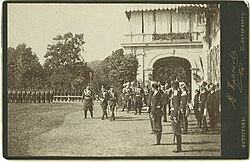
The treaty also stipulated that if one member went to war with a non-member great power, the other two would remain neutrally friendly. This agreement was renewed in 1884 at Skierniewice, but it ultimately lapsed in 1887. The persistent conflict of interest between Russia and Austria-Hungary in the Balkans proved insurmountable.
To prevent a total diplomatic break with Russia, Bismarck signed the Reinsurance Treaty in 1887. However, after Bismarck's dismissal in 1890, the treaty was not renewed, leading to the development of the Franco-Russian Alliance and the end of the long-standing Prussian-Russian partnership.
Summary of the Three Emperors' Alliances
| Feature | First League (1873–1878) | Second League (1881–1887) |
|---|---|---|
| Primary Focus | Anti-radicalism and status quo | Formal territorial agreements and neutrality |
| Balkan Strategy | Divided spheres of influence | Prior agreement for territorial changes |
| Key Outcome | Led to the Dual Alliance (1879) | Led to the Reinsurance Treaty (1887) |
| Reason for Failure | Russo-Austrian rivalry in Balkans | Russo-Austrian rivalry in Balkans |
Frequently Asked Questions
Why did Bismarck want to isolate France?
Bismarck feared that France, seeking revenge after its defeat in the Franco-Prussian War (1870–1871), would form an alliance with either Russia or Austria-Hungary to attack Germany. Isolation was the only way to prevent a two-front war.
What was the role of the Balkans in the alliance's failure?
The Balkans were a flashpoint because both Russia and Austria-Hungary sought influence over the region's Slavic populations. Russia's Pan-Slavist goals clashed with Austria-Hungary's desire to maintain territorial integrity and regional control.
What was the Reinsurance Treaty of 1887?
It was a secret agreement between Germany and Russia designed to maintain friendly relations and avoid war after the second League of the Three Emperors collapsed, ensuring that Russia would not ally with France.
How did the League address internal political threats?
The alliance was not just about borders; it was a conservative pact. The three monarchs aimed to suppress radical socialist movements, such as the First International, to protect their respective imperial thrones.
What happened after Bismarck was dismissed in 1890?
The new German leadership failed to renew the Reinsurance Treaty with Russia. This diplomatic blunder pushed Russia toward France, resulting in the Franco-Russian Alliance and ending the era of Prussian-Russian cooperation.