Serbia: A Journey Through History, Culture, and Geography
Located in the heart of the Balkan Peninsula, the Republic of Serbia is a land of profound historical depth and diverse natural beauty. From the ancient settlements of the Neolithic era to its role as a modern parliamentary republic, Serbia has served as a crossroads between Central Europe and the East, shaping a unique national identity defined by resilience and cultural richness.
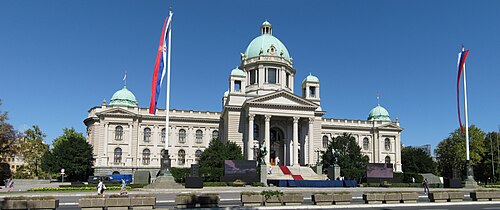
Today, Serbia is recognized for its vibrant capital, Belgrade, its strategic position along the Danube river, and a complex political history that has seen it transition through empires, kingdoms, and socialist federations.
![Topographic map of Serbia[i]](/images/1a/13/1a1319b6c6f513999d8a6275005d8c73ffb0bfa5f6d886c1587d85864358ec61.png)
Key Facts
- Capital: Belgrade, the nation's largest city and economic hub.
- Official Language: Serbian, utilizing both Cyrillic and Latin scripts (synchronic digraphia).
- Government: Unitary parliamentary republic.
- Geography: Features 165 mountains and the massive Đerdap 1 Hydroelectric Power Station on the Danube.
- Economy: A major EU provider of frozen fruits (raspberries, blackberries, apples, and plums).
- Demographics: Predominantly Serb (80.6%) and Eastern Orthodox Christian (81.1%).
A Timeline of Serbian History
Prehistory and Antiquity
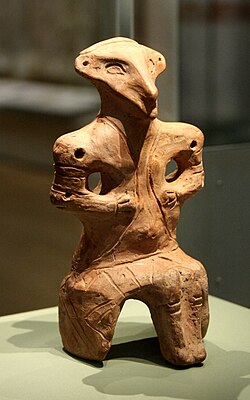
Serbia's human history stretches back to the Neolithic period, exemplified by the Vinča culture, known for its early figurines and settlements.
During antiquity, the region was heavily influenced by the Roman Empire. Some historians suggest that as many as 18 Roman emperors were born in what is now modern-day Serbia, with sites like the Felix Romuliana Imperial Palace serving as lasting testaments to this era.
![Remnants of the Felix Romuliana Imperial Palace, 298 AD, a UNESCO World Heritage Site; Some historians believe as many as 18 Roman emperors were born in modern-day Serbia[24][25]](/images/c3/0e/c30ee1218e1d64067939657065a700d76b4081ad4f8d5c189e4e8d059b567c13.jpg)
The Middle Ages and Imperial Ambitions
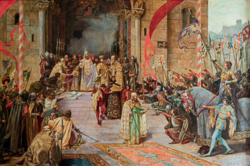
The medieval period saw the rise of the Serbian state, evolving from a principality in the 7th century to a kingdom by 1217. The pinnacle of this era occurred in 1346 when Stefan Dušan, known as Dušan the Mighty, was crowned Emperor of the Serbs and Greeks.
However, the late 14th century brought significant challenges. The Battle of Kosovo in 1389 remains a cornerstone of Serbian national identity and tradition, marking a pivotal struggle against Ottoman expansion.
![The Battle of Kosovo in 1389 is particularly important to Serbian history, tradition and national identity[44]](/images/c0/a6/c0a6bdfc880f026ce9aba713a5f077c6912303c54c9556802a2a331e4f515894.jpg)
Revolution, Independence, and the World Wars
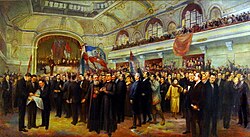
After centuries of Ottoman and Habsburg rule, the Serbian Revolution, led by Karađorđe and Miloš Obrenović, laid the foundation for the modern state. This path led to the establishment of the Principality of Serbia in 1815 and the Kingdom of Serbia in 1882.
![The Serbian Revolution, led by Karađorđe and Miloš Obrenović, marked the foundation of modern Serbia[70]](/images/36/04/3604a2868cdc892064cff12415e20eab2a6adb309dbd1c013bc37b1e45fd904f.jpg)
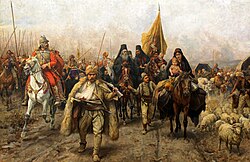
The 20th century brought immense hardship. During World War I, King Peter I led the nation through the Great Serbian Retreat in 1915. The human cost was staggering, with Serbia losing approximately 850,000 people—roughly a quarter of its pre-war population.
![King Peter I of Serbia led the nation during the Great Serbian Retreat in 1915. Serbia lost about 850,000 people, a quarter of its pre-war population.[90]](/images/6e/bc/6ebcb69e9e5d2576ab54a6511852f71383aa92c88f77749787e745794d9c527b.jpg)
Yugoslavia and the Modern Republic
In 1918, the Kingdom of Yugoslavia was formed, unifying various South Slavic peoples. Following World War II, the region transitioned into Socialist Yugoslavia. Under this system, Belgrade became a global diplomatic center, hosting the first Non-Aligned Movement Summit Conference in 1961, which championed a policy of neutrality during the Cold War.
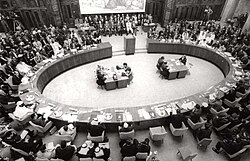
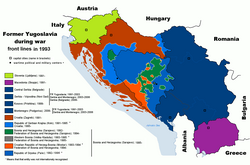
The breakup of Yugoslavia in the 1990s was marked by conflict and political transition. After a period as part of Serbia and Montenegro, the Republic of Serbia officially emerged as an independent state in 2006.
Geography and Natural Environment
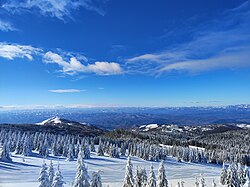
Serbia's landscape is characterized by a blend of fertile plains in the north and rugged mountains in the south. With 165 mountains, the terrain offers diverse ecosystems and opportunities for tourism, such as the Kopaonik ski resort.
![Wild horses at the Stara Planina; there are 165 mountains in the country[212]](/images/08/38/083857da102d0a532e0a3f8eecc80dc3413ebf631d1b03e34ea466de38a18a51.jpg)
Hydrologically, the Danube river is the most significant artery, supporting both transport and energy. The Đerdap 1 Hydroelectric Power Station stands as one of Europe's largest hydro power installations.
![The Đerdap 1 Hydroelectric Power Station is the largest dam on the Danube river and one of the largest hydro power stations in Europe[317]](/images/5e/39/5e39ecc1f23f642160acc57f1cf747897da8e4d572da72f0b7e1aec24988846f.jpg)
Economy and Infrastructure
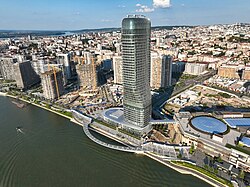
Serbia possesses a diversified economy. Belgrade serves as the primary economic center, acting as a hub for trade, finance, and modern services. The industrial sector is bolstered by automotive manufacturing, such as the FCA plant in Kragujevac where the Fiat Grande Panda is produced.
Agriculture remains a vital pillar, particularly in the production of frozen fruits for the European Union market. Serbia is a leading producer of raspberries, blackberries, apples, and plums.
![Serbia is one of the largest providers of frozen fruit to the EU and a large producer of fruits like raspberries, blackberries, apples and plums[294][295]](/images/3a/d2/3ad2dfd53d1cb6a15b88d5778dd0a379b260b629e712e2fa5db0c54e8879ff53.jpg)
| Category | Detail |
|---|---|
| Total Area | 88,499 km² (including Kosovo) |
| Population (2022 Census) | 6,647,003 |
| GDP (Nominal 2026 Est.) | $112.03 billion |
| HDI (2023) | 0.833 (Very High) |
| Currency | Serbian dinar (RSD) |
Culture and Society
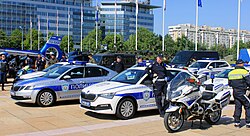
Serbian culture is a blend of Orthodox Christian traditions and European influences. The Saint Sava Cathedral in Belgrade is one of the largest Orthodox churches globally, reflecting the deep spiritual ties of the population.
![The Saint Sava Cathedral in Belgrade is one of the largest Orthodox churches in the world.[388]](/images/79/e5/79e5aa118b561e2e758073ee8ec65e6d944f5a974060ca5529a5ef68b60dba4a.jpg)
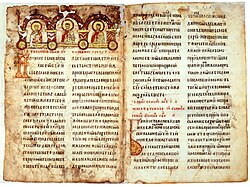
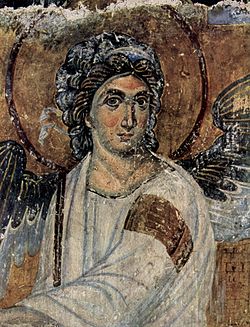
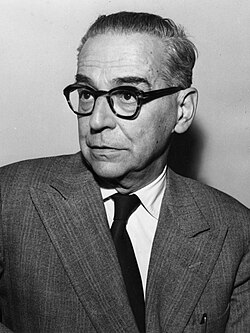
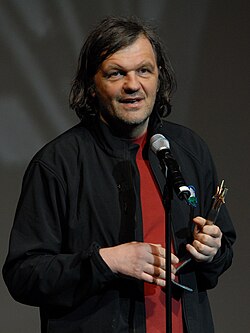
The nation is also proud of its intellectual and artistic contributions. Ivo Andrić received the Nobel Prize in Literature in 1961, and filmmaker Emir Kusturica has twice won the Palme d'Or at Cannes. In the arts, the Miroslav Gospel (1180) stands as a masterpiece of illuminated manuscripts.
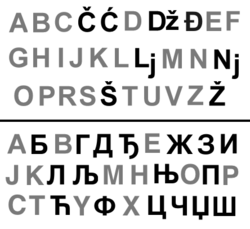
Language is a unique aspect of Serbian identity. The country practices synchronic digraphia, meaning that all literate citizens use both the Cyrillic and Latin scripts interchangeably.
Frequently Asked Questions
![The Fiat Grande Panda is manufactured in the FCA plant in Kragujevac[305]](/images/ee/3a/ee3aaf260bd433168bd29709176cde463c2871ecbaa0b640f8e434d21233206f.jpg)
![Ethnic structure of Serbia by municipalities and cities in 2022[i]](/images/e2/04/e20433c762c8d7cdbea5d0a7d12aa275a9a798381cb6129af040d8e820b2daa7.png)
What is synchronic digraphia in the context of Serbia?
Synchronic digraphia refers to the linguistic situation in Serbia where two different writing systems—Cyrillic and Latin—are used interchangeably by the literate population for the same language.
Which is the largest city in Serbia?
Belgrade is the capital and largest city, serving as the nation's political, economic, and cultural center.
What are Serbia's primary agricultural exports?
Serbia is one of the largest providers of frozen fruit to the European Union, specializing in raspberries, blackberries, apples, and plums.
What was the significance of the Non-Aligned Movement in Belgrade?
The 1961 summit in Belgrade established the Non-Aligned Movement, which allowed countries to remain neutral and avoid aligning with either the United States or the Soviet Union during the Cold War.
How many mountains are there in Serbia?
There are 165 mountains across the country, contributing to its diverse geography and tourism industry.