Battle of Liberty Place: The 1874 New Orleans Insurrection
The Battle of Liberty Place, also known as the Battle of Canal Street, was a violent attempted insurrection that took place in New Orleans from September 14 to 17, 1874. This conflict pitted the White League—a paramilitary organization composed largely of Confederate veterans—against the racially integrated government of Reconstruction-era Louisiana.
Occurring during a period of intense political instability, the battle represented a desperate attempt by white supremacists to overturn the Republican state government and dismantle the progress toward racial equality and opportunity for Black citizens in the South.
Key Facts
- Date: September 14–17, 1874
- Location: New Orleans, Louisiana
- Primary Belligerents: The White League vs. the Louisiana State Government (Metropolitan Police and State Militia)
- Insurgent Strength: Approximately 5,000 members
- Government Strength: Approximately 3,500 police and militiamen
- Outcome: The rebellion was suppressed following the arrival of federal troops.
- Casualties: At least 35 people killed, including 21 White League members and three civilians.
Political Roots: The Disputed Election of 1872
The violence of 1874 was the culmination of years of political strife stemming from the disputed gubernatorial election of 1872. Two men claimed victory: Democrat John McEnery and Republican William Pitt Kellogg. The conflict was exacerbated by the actions of Governor Henry C. Warmoth, who appointed a State Returning Board (the body responsible for administering elections) that declared McEnery the winner.
However, a rival board endorsed Kellogg, who alleged widespread election fraud and the use of violence and intimidation by Democrats to suppress Black voters. The legislature eventually impeached and removed Warmoth, and the federal government ultimately certified William Pitt Kellogg as the legitimate governor.
This tension had previously manifested in the Colfax massacre of April 1873, where a white militia attacked freedmen defending Republican officeholders, resulting in the deaths of 150 Black people and three white people.
The Outbreak of Violence
By 1874, McEnery and his allies formed a "rump" legislature in New Orleans. On September 14, the White League mobilized 5,000 men to forcibly install McEnery in power. The insurrection began after a committee of citizens attempted to protest the seizure of private arms; when Governor Kellogg refused to meet with them, the situation escalated.
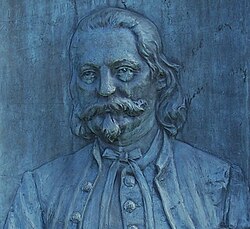
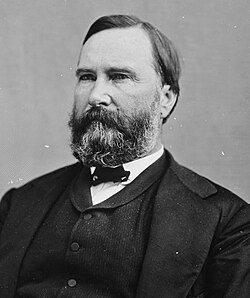
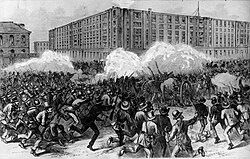
Frederick Nash Ogden was appointed provisional general of the "Louisiana State Militia" (the White League's designation). By 4:00 PM, the White League had occupied key intersections south of Canal Street. When the Metropolitan Police, commanded by former Confederate General James Longstreet, ordered the crowds to disperse, gunfire broke out.
The police forces were quickly overwhelmed. The White League captured a piece of artillery, seized City Hall and the fire alarm telegraph, and constructed barricades using street railroad cars. During the fighting, General Longstreet was shot and fell from his horse.
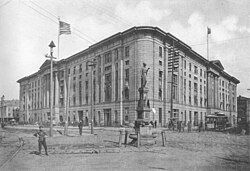
The insurgents successfully occupied the statehouse and the armory for three days. Governor Kellogg and his allies were forced to seek sanctuary in the Custom House, a federal building protected by a company of U.S. Army troops.
The Federal Response and Aftermath
Governor Kellogg appealed to President Ulysses S. Grant for assistance. Within three days, federal troops arrived in New Orleans. Facing a superior military force, the White League retreated before the troops could engage them in a full-scale battle. General William H. Emory negotiated the restoration of the state administration and the return of arms from the state arsenal in exchange for a guarantee that the opposition leaders would not be arrested.
Despite the violence, no members of the White League were prosecuted for their roles in the insurrection. To ensure the stability of the government, President Grant ordered General Philippe Régis de Trobriand and the 13th Regiment to remain in the city. They stayed until January 1877, when federal troops were withdrawn as part of the Compromise of 1877.
Summary of the Conflict
| Category | White League (Insurgents) | State Government (Defenders) |
|---|---|---|
| Commanders | Frederick Nash Ogden | James Longstreet |
| Force Size | 5,000 | 3,500 |
| Fatalities | 21+ killed | 11 killed |
| Wounded | 19 wounded | 60 wounded |
| Key Objective | Install John McEnery as Governor | Maintain elected Republican government |
The Legacy of the Monument
In 1891, during a period of Democratic political dominance and the systematic disenfranchisement of Black citizens, the city erected the Battle of Liberty Place Monument. This white marble obelisk was designed to praise the insurrection from a white supremacist perspective.
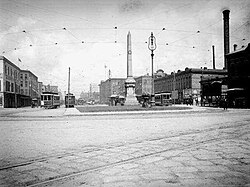
Over the following century, the monument became a point of contention. In 1974, a marker was added to distance the city from the monument's original white supremacist inscription. In 1989, it was moved to a less prominent location and its text was altered to honor "Americans on both sides of the conflict." Finally, in December 2015, the New Orleans City Council voted to remove the monument. It was taken down on April 24, 2017, under police escort due to threats from its supporters.
Frequently Asked Questions
Why was the Battle of Liberty Place fought?
The battle was an attempt by the White League to overthrow the Reconstruction-era Republican government of Louisiana and install John McEnery as governor following a disputed election in 1872.
Who was the White League?
The White League was a paramilitary organization consisting largely of Confederate veterans who sought to restore white supremacy and Democratic control in Louisiana.
What role did the federal government play?
The federal government certified William Pitt Kellogg as the governor and, upon his request, President Ulysses S. Grant sent federal troops to New Orleans to suppress the insurrection and restore the elected government.
Was anyone punished for the insurrection?
No. Despite the deaths and the seizure of government buildings, the opposition leaders were granted freedom from arrest in exchange for the restoration of the state administration.
What happened to the monument commemorating the battle?
The monument was removed by the city of New Orleans on April 24, 2017, after the City Council deemed it a nuisance and recognized its origins as a tribute to white supremacy.