Storyville: The Rise and Fall of New Orleans' Infamous Red-Light District
From 1897 to 1917, a specific section of New Orleans, Louisiana, became the center of the city's vice and entertainment. Known as Storyville, this regulated red-light district was a unique social experiment that blended legality, morality, and art. While established to contain and monitor prostitution, it evolved into a cultural hub that played a pivotal role in the birth of jazz music.
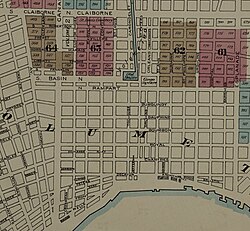
Located in the Faubourg Tremé neighborhood, the district was bounded by North Robertson, Iberville, Basin, and St. Louis Streets. Its proximity to a major train station made it an immediate attraction for travelers, transforming it into one of the city's primary revenue centers by the turn of the century.
Key Facts
- Established: July 6, 1897, via municipal ordinance.
- Founder: City Alderman Sidney Story, who drafted the legislation.
- Geography: A 38-block area in Faubourg Tremé, New Orleans.
- Closure: Shut down on November 12, 1917, due to U.S. military pressure during WWI.
- Cultural Legacy: A critical environment for early jazz musicians, including a young Louis Armstrong.
The Creation and Regulation of "The District"
The New Orleans City Council sought to regulate prostitution by restricting it to a single, monitored area. Drawing inspiration from the legalized red-light districts of Dutch and German port cities, Alderman Sidney Story authored Ordinance No. 13,032. This law forbade prostitution anywhere in the city except within the strictly defined limits of the district.
Though officially called "The District," the area was quickly nicknamed "Storyville" after the alderman, a title that Story himself reportedly disliked. The district offered a wide spectrum of establishments, from cheap "cribs" (small, low-cost rooms) costing as little as 50 cents, to opulent mansions along Basin Street where services could cost up to $10.
The Blue Books
To navigate the district, visitors could purchase Blue Books for 25 cents. These were essentially directories for sex workers, available in saloons, barbershops, and railroad stations. Published primarily by Billy Struve, these guides categorized workers by name, address, race, and religion—including designations such as white, black, Jewish, French, or octaroon (a person of one-eighth African ancestry).
Notable Figures and Establishments
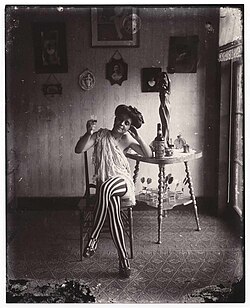
Storyville was home to several powerful personalities and lavish venues that defined its era. The most famous of these was Mahogany Hall, an upscale establishment operated by the businesswoman Lulu White. Mahogany Hall specialized in employing women of mixed race and was known for its luxury, featuring 15 bedrooms and five parlors.
Lulu White became one of the most prominent madams in the city, catering to Louisiana's wealthiest men. Despite her success, she frequently clashed with law enforcement over liquor licenses and eventually lost $150,000 in investment schemes following the district's closure.
The Influence of Music
The district's diverse population and colonial history—influenced by French, Spanish, and Anglo-American cultures—created a fertile ground for musical experimentation. Saloons, dance clubs, and brothels provided steady employment for musicians, allowing different styles to blend into what would become jazz.
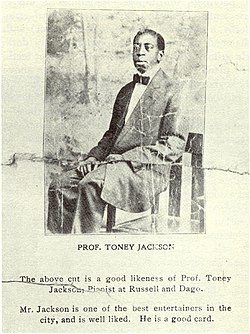
Many legendary figures are associated with the Storyville era, including Louis Armstrong, Jelly Roll Morton, Buddy Bolden, and Joe "King" Oliver. When the district closed, these musicians spread their talents to other cities, most notably Chicago, helping to popularize jazz across the United States.
The Closure of Storyville
The decline of Storyville was accelerated by the United States' entry into World War I. Secretary of War Newton D. Baker and Secretary of the Navy Josephus Daniels viewed the district as a "bad influence" and a threat to public health and troop morality. After several soldiers were killed within the district, the military demanded its closure.
Despite protests from Mayor Martin Behrman, who argued that legality did not dictate popularity, the city government ordered Storyville to shut down by midnight on November 12, 1917. While the area continued to host some cabarets and speakeasies through the 1920s, the regulated era of prostitution had ended.
Storyville Today
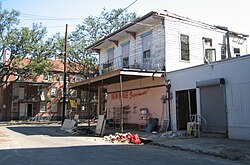
During the Great Depression in the 1930s, most of the district's buildings—including the grand mansions of Basin Street—were demolished to make way for the Iberville Housing Projects. Today, only three buildings from the era remain: Lulu White's Saloon, Joe Victor's Saloon, and the store formerly known as Frank Early's Saloon.
The legacy of the district lives on through the New Orleans Storyville Museum and in various works of fiction, including novels by Anne Rice and David Fulmer, as well as the 2022 television adaptation of Interview with the Vampire.
| Category | Details |
|---|---|
| Active Years | 1897–1917 |
| Primary Purpose | Regulated red-light district |
| Key Figure | Alderman Sidney Story |
| Most Famous Venue | Mahogany Hall (Lulu White) |
| Major Cultural Impact | Development and spread of Jazz music |
| Reason for Closure | WWI military mandates on morality and health |
Frequently Asked Questions
Why was Storyville created?
It was established by the New Orleans City Council to restrict and regulate prostitution within a specific, monitored area of the city, based on models used in European port cities.
What were the "Blue Books"?
The Blue Books were directories sold to visitors that listed the names, addresses, and specialties of sex workers in the district, often categorized by race and religion.
How did Storyville contribute to the birth of jazz?
The district's saloons and brothels provided a venue where musicians from diverse backgrounds could perform and blend different musical traditions, creating the foundation for early jazz.
Who was Lulu White?
Lulu White was a prominent madam who owned and operated Mahogany Hall, one of the most luxurious and famous brothels in Storyville.
What happened to the buildings in Storyville?
Most were demolished in the 1930s to build the Iberville Housing Projects, though a few saloons and stores still stand today.