Baroque Architecture: The Art of Grandeur and Drama
Emerging in the late 16th century and flourishing through the 18th century, Baroque architecture is defined by its theatricality, opulence, and a desire to evoke awe. Originating in Italy and spreading across Europe and Latin America, this style moved away from the rigid symmetry of the Renaissance toward dynamic forms, lavish ornamentation, and a sophisticated use of light and shadow.
The movement was deeply intertwined with the Counter-Reformation, as the Catholic Church utilized grand architectural statements to inspire faith and project power. From the sweeping colonnades of Rome to the ornate cathedrals of Mexico City, Baroque design transformed the built environment into a stage for spiritual and political drama.
Key Facts
- Active Period: Late 16th century to the 18th century.
- Primary Locations: Europe and Latin America.
- Core Philosophy: Use of visual and theatrical effects to amaze and awe the viewer.
- Key Techniques: Trompe-l'œil (optical illusions creating 3D effects on flat surfaces) and cruciform plans.
- Evolution: Progressed from Early Baroque to High Baroque, and eventually into the more ornate Rococo (Rocaille) style.
The Evolution of the Baroque Style
Early Baroque (1584–1625)
The Early Baroque period was dominated by Roman architects who laid the groundwork for the style's dramatic flair. A pivotal moment was the consecration of the Church of the Gesù in 1584, featuring work by Giacomo della Porta. Other defining works include Carlo Maderno's façade of Santa Susanna (1603) and the colonnade of St. Peter's Basilica. In France, the style began to take root with the Luxembourg Palace, built for Marie de' Medici between 1615 and 1645.
![Sebil of Abdülhamid I, Istanbul (circa 1780)[49]](/images/4c/20/4c20088d3193577d9b8bfc116fb6211bb39f9ce498e2841d43220f6e01f98ad5.jpg)
High Baroque (1625–1675)
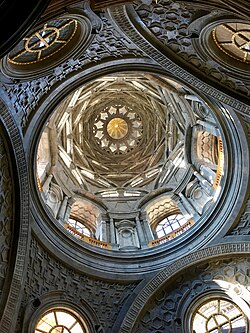
During the High Baroque, the style reached its peak of complexity and emotional intensity. In Rome, the rivalry and genius of Gian Lorenzo Bernini and Francesco Borromini produced masterpieces such as the colonnade of St. Peter's Square and the San Carlo alle Quattro Fontane. In Venice, Baldassare Longhena created the iconic Santa Maria della Salute.
France also embraced the High Baroque, with Jacques Lemercier introducing the first church dome in Paris at the Sorbonne Chapel. This era saw the rise of massive domes and intricate interiors, such as the Château de Maisons by François Mansart.
Late Baroque and Rococo (1675–1750)
The Late Baroque period saw the style evolve into regional variations. In England, Christopher Wren redefined the skyline of London with St. Paul's Cathedral and the Greenwich Hospital. In France, the Palace of Versailles became the epicenter of royal grandeur, eventually giving way to the Rocaille style (French Rococo) between 1723 and 1759, characterized by even more ornate, shell-like decorations, as seen in the Hôtel de Soubise.
Global Reach and Regional Variations
Central and Eastern Europe
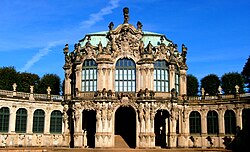
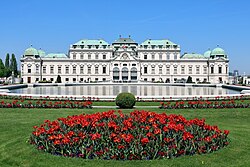
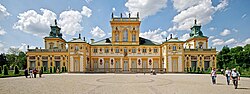
In the Grand Duchy of Lithuania (modern Lithuania and Belarus), the Baroque style was introduced by Jesuits. It evolved from the early basilican churches, like the Corpus Christi Church in Nyasvizh, to the distinct Vilnian Baroque style seen in the reconstruction of Saint Sophia Cathedral in Polotsk. In Austria and Germany, the style manifested in grand palaces and abbeys, such as the Upper Belvedere Palace in Vienna and the Zwinger in Dresden.
Latin America and the Iberian Peninsula
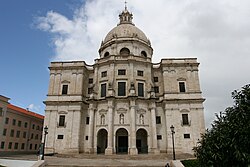
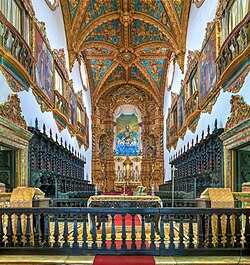
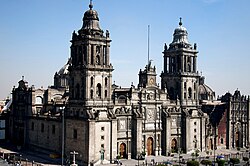
Spanish and Portuguese colonization carried the Baroque style to the Americas, where it merged with local influences. The Churrigueresque style—an extremely ornate Spanish Baroque—is evident in the Cathedral Basilica of Zacatecas in Mexico. Other massive undertakings include the Mexico City Metropolitan Cathedral and the Havana Cathedral in Cuba. In Brazil, the Basilica and Convent of Nossa Senhora do Carmo in Recife showcases the Portuguese colonial influence.
Other Notable Regional Styles
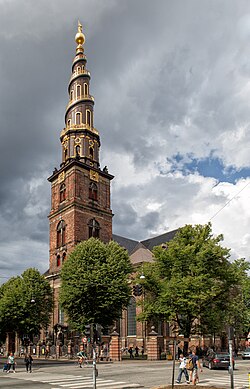
- Nordic Baroque: Exemplified by the Church of Our Saviour in Copenhagen.
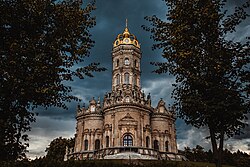
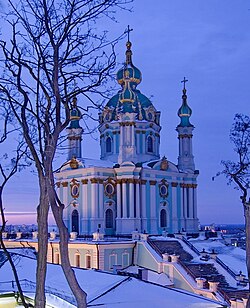
- Russian and Ukrainian Baroque: Seen in the Petrine Baroque of Saint Petersburg and the Elizabethan style of St. Andrew's Church in Kyiv.
- Ottoman Baroque: A later adaptation in 18th-century Istanbul.
Summary of Major Baroque Works
| Architect | Key Work | Location | Period/Style |
|---|---|---|---|
| Gian Lorenzo Bernini | St. Peter's Square | Rome, Italy | High Baroque |
| Christopher Wren | St. Paul's Cathedral | London, England | Late Baroque |
| Francesco Borromini | San Carlo alle Quattro Fontane | Rome, Italy | High Baroque |
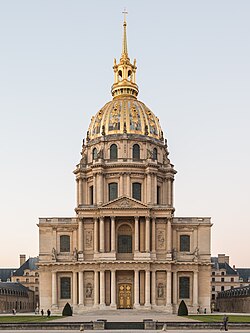
| Jules Hardouin-Mansart | Chapel of Les Invalides | Paris, France | Late Baroque |
| Fischer von Erlach | Karlskirche | Vienna, Austria | Late Baroque |
Frequently Asked Questions
What is the difference between Baroque and Rococo?
Baroque is characterized by grandeur, drama, and heavy ornamentation used to evoke awe. Rococo, or the Rocaille style, emerged later as a more delicate, playful, and ornate variant, often focusing on interior decoration with shell-like motifs and pastel colors.
What is trompe-l'œil in Baroque architecture?
Trompe-l'œil is a French term meaning "deceive the eye." In Baroque architecture, it refers to the use of realistic imagery to create the optical illusion that a flat ceiling or wall is a three-dimensional space, such as an open sky or a deep dome.
How did the Counter-Reformation influence this style?
The Catholic Church used the Baroque style as a tool for the Counter-Reformation, designing churches and cathedrals that were visually overwhelming to emphasize the power of the faith and attract followers back to the church.
Which architects were most influential in the High Baroque period?
In Italy, Gian Lorenzo Bernini and Francesco Borromini were the most influential, known for their dynamic use of space and complex geometries. In France, Jacques Lemercier played a key role in introducing the style's hallmarks, such as the church dome, to Paris.