Baron Sondes: The Military and Political Life of George John Milles
George John Milles, the 4th Baron Sondes, lived a life defined by military duty, aristocratic responsibility, and the shifting landscapes of 19th-century England. From the battlefields of the Napoleonic Wars to the halls of the British peerage, his trajectory reflects the traditional path of the English gentry during the Regency and Victorian eras.
Early Life and Education
Born on January 20, 1794, as John George Watson, he was the second son of Lewis Watson, the 2nd Baron Sondes, and Mary Milles. His formal education began at Christ Church, Oxford, where he matriculated on October 17, 1811. During his early years, he was known as the Honorable George Watson.
Military Career and the Napoleonic Wars
George entered the British Army during one of the most turbulent periods in European history. On December 15, 1812, he purchased a cornetcy (the lowest commissioned officer rank in a cavalry regiment) in the Royal Horse Guards. His ascent was rapid; by March 24, 1814, he had purchased a lieutenancy.
His service coincided with the Napoleonic Wars, including the Peninsular War and the Battle of Toulouse. Most notably, he fought at the Battle of Waterloo during the Hundred Days, a pivotal conflict that ended Napoleon's rule. For his service, he was awarded the Military General Service Medal. He initially retired from active army service in May 1816.
Transition to the Milles Estate
In 1820, George underwent a significant personal and legal change. On December 27, following the terms of his grandfather Richard Milles' will, he changed his surname to Milles. This transition allowed him to inherit the Milles estate located in North Elmham, Norfolk. Between 1820 and 1836, he was styled as the Honorable George Milles.
During this period, he married Eleanor Knatchbull, the fifth daughter of Sir Edward Knatchbull, the 8th Baronet.
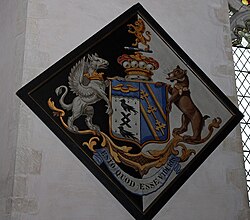
Civic Leadership and the Peerage
George returned to military service through the Yeomanry (volunteer cavalry forces) in 1826, receiving a commission as a captain in the 2nd Regiment of Norfolk Yeomanry Cavalry. His influence in the region grew, leading to his appointment as the High Sheriff of Norfolk in 1830. By March 31, 1831, he was promoted to the rank of major within the Norfolk Yeomanry.
On March 14, 1836, he succeeded his brother in the peerage, becoming the 4th Baron Sondes. Shortly after, on September 20, 1836, he was commissioned as a captain in the East Kent Regiment of Yeomanry Cavalry, subsequently resigning from the Norfolk Yeomanry in April 1838. His status as a peer was further highlighted in June 1838, when he attended the coronation of Queen Victoria to give homage in person.
Later Years and Legacy
In his later life, Baron Sondes engaged in business ventures, including holding shares in the Faversham Public Rooms Company, which was eventually wound up in 1871. He passed away on December 17, 1874, at the age of 80 in Norfolk. He was buried in North Elmham and succeeded by his eldest son, George Milles, who later became the 1st Earl Sondes.
Key Facts
- Full Name: George John Milles (born John George Watson).
- Military Rank: Major.
- Major Conflicts: Napoleonic Wars, Peninsular War, and the Battle of Waterloo.
- Civic Role: High Sheriff of Norfolk (1830).
- Education: Christ Church, Oxford.
- Honors: Military General Service Medal.
| Category | Details |
|---|---|
| Lifespan | January 20, 1794 – December 17, 1874 |
| Primary Units | Royal Horse Guards, Norfolk Yeomanry, East Kent Yeomanry |
| Peerage Title | 4th Baron Sondes (succeeded 1836) |
| Burial Site | North Elmham, Norfolk |
| Successor | George Milles, 1st Earl Sondes |
Frequently Asked Questions
Why did George John Milles change his name?
He changed his surname from Watson to Milles on December 27, 1820, to comply with the will of his grandfather, Richard Milles, which allowed him to inherit the Milles estate in North Elmham, Norfolk.
Which major battles did Baron Sondes participate in?
He fought in the Napoleonic Wars, specifically the Peninsular War, the Battle of Toulouse, and the Battle of Waterloo.
What was his role in Norfolk's local government?
In 1830, he served as the High Sheriff of Norfolk, a significant administrative and judicial role in the county.
When did he become the 4th Baron Sondes?
He succeeded his brother in the peerage on March 14, 1836.
What military honors did he receive?
He was awarded the Military General Service Medal for his service during the Napoleonic era.