Napoleonic Wars: The Global Conflict and Rise of the First French Empire
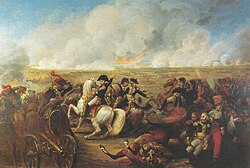
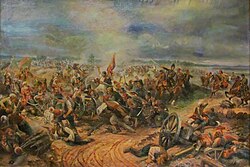
The Napoleonic Wars (1803–1815) were a series of global conflicts that pitted a fluctuating array of European coalitions against the French First Republic and, subsequently, the First French Empire. Driven by the political upheaval of the French Revolution, these wars established a period of French hegemony over continental Europe under the leadership of Napoleon Bonaparte.
These conflicts are generally categorized into seven distinct campaigns: five named after the coalitions that opposed Napoleon (the Third through Seventh Coalitions), the Peninsular War, and the French invasion of Russia.
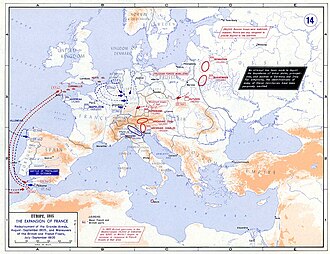
Key Facts
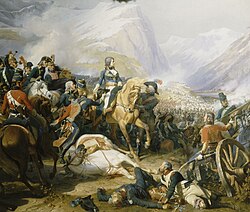
- Duration: 18 May 1803 to 20 November 1815.
- Primary Belligerents: The French Empire and its client states versus a coalition including the United Kingdom, Russia, Austria, and Prussia.
- Peak French Strength: Approximately 1.2 million regulars, sailors, marines, and militia in 1813.
- Outcome: A decisive Coalition victory leading to the fall of Napoleon.
- Global Reach: While centered in Europe, the wars impacted the Americas, Egypt, and Asia.
The Path to Empire: Early Conflicts
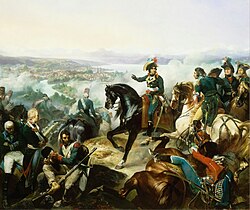
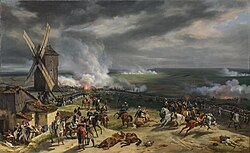
The wars grew out of the French Revolutionary Wars (1792–1802). Early victories, such as the Battle of Valmy, set the stage for Napoleon's rise to power.
The War of the Third Coalition (1805)
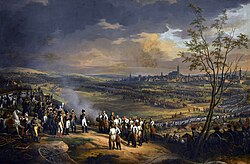
In April 1805, Britain and Russia formed an alliance to remove French influence from the Swiss Confederation and the Batavian Republic (modern-day Netherlands). Austria joined after Napoleon was proclaimed King of Italy. The conflict saw a masterclass in maneuver at Ulm, where Napoleon surrounded the Austrian army under Karl Mack von Leiberich, forcing a surrender with minimal French losses.
Expansion and the Fourth Coalition (1806–1807)
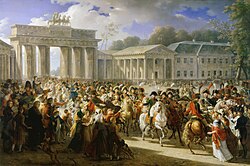
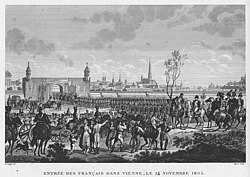
Following his successes, Napoleon continued to expand French influence, leading to the War of the Fourth Coalition. This period was marked by the French entry into Berlin after defeating Prussian forces at Jena.
The Height of French Power
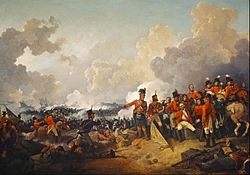
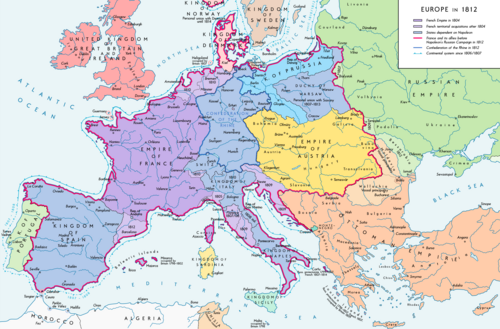
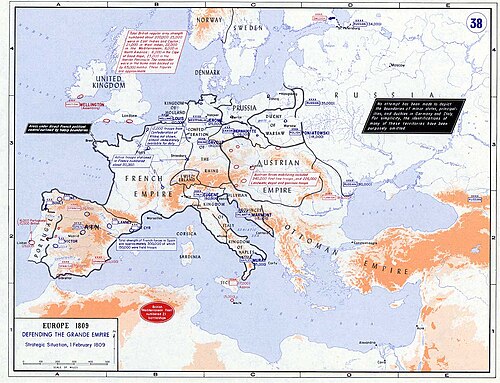
At its zenith in 1812, the French Empire reached its greatest territorial extent, controlling vast swaths of Europe through direct rule or client states, including the Kingdom of Spain, the Kingdom of Naples, and the Kingdom of Westphalia.
The Peninsular War (1808–1814)
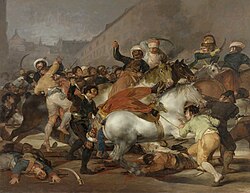
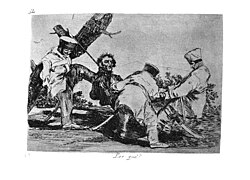
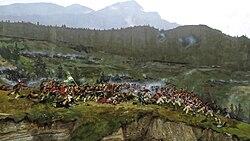
Napoleon's attempt to control the Iberian Peninsula led to a grueling conflict known as the Peninsular War. This theater was characterized by fierce guerrilla warfare and significant civilian suffering, as depicted in the works of Francisco de Goya.
Naval Warfare and British Dominance
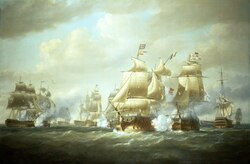
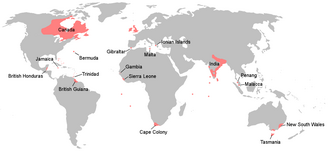
While Napoleon dominated the land, the United Kingdom maintained naval supremacy. The Battle of Trafalgar remains one of the most significant naval engagements in history, ensuring that a French invasion of Britain remained impossible.
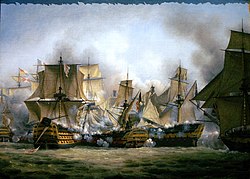
![The British HMS Sandwich fires at the French flagship Bucentaure (completely dismasted) in the battle of Trafalgar. Bucentaure also fights HMS Victory (behind her) and HMS Temeraire (left side of the picture). HMS Sandwich did not fight at Trafalgar and her depiction is a mistake by the painter.[74]](/images/f1/aa/f1aafc915ea06fa6211fc1dc97c96ce0c41843b3c6d973bd424ffb4fc44ab958.jpg)
The Turning Point: The Invasion of Russia
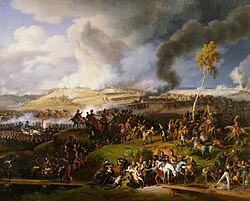
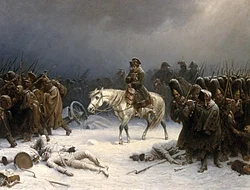
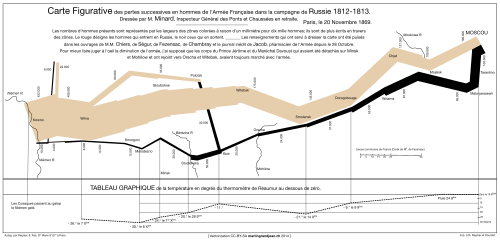
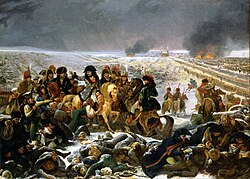
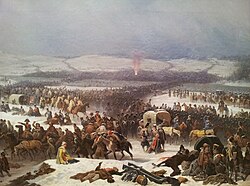
The tide turned in 1812 when Napoleon led the Grande Armée (the Great Army) into Russia. Despite reaching Moscow, the campaign became a catastrophe due to scorched-earth tactics and the brutal Russian winter. The retreat from Russia resulted in the loss of approximately half a million men.
The Fall of Napoleon
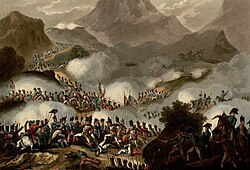
The weakened French army faced the War of the Sixth Coalition. The Battle of Leipzig became the largest battle in Europe prior to World War I, involving over 600,000 soldiers. By March 1814, Russian forces entered Paris, leading to Napoleon's first abdication.
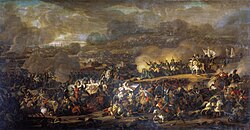
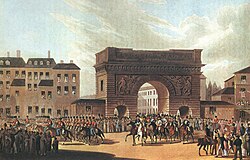
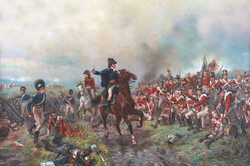
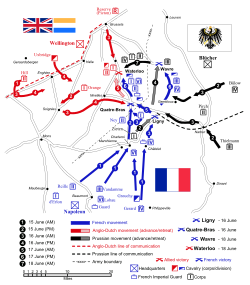
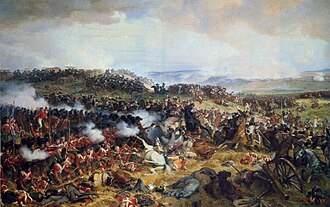
After a brief return from exile, Napoleon's final defeat occurred at the Battle of Waterloo in 1815, where the Duke of Wellington and coalition forces ended his rule for good.
Military Legacy and Innovations
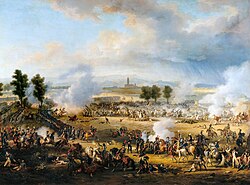
The Napoleonic era introduced several military advancements. The French utilized the semaphore system for rapid communication and pioneered aerial surveillance using hot-air balloons, first seen at the Battle of Fleurus in 1794.
The scale of the conflict also shifted toward "total war," utilizing the levée en masse (mass conscription) to field armies of unprecedented size. This shifted the nature of warfare from small professional armies to massive national mobilizations.
![Fragment from the manuscript "Memoires on Napoleon's campaigns, experienced as a soldier of the second regiment". Written by Joseph Abbeel, a soldier participating in the War of the Sixth Coalition, 1805–1815.[124]](/images/b3/a0/b3a04ccfc7b27bedcdab846ee74c027383931f50e550236aae6fe1d07a797a19.jpg)
Summary of Conflict Scale
| Nation | Peak Strength | Estimated Deaths |
|---|---|---|
| French Empire | 1,200,000 | ~971,000 (Combat & Disease) |
| Russia | 712,000 | 450,000–500,000 |
| Austria | 630,000 | 500,000–600,000 (incl. German states) |
| United Kingdom | 380,000 | 311,000 |
| Prussia | 281,000 | Included in German states total |
| Spain | 255,000 | 300,000 |
Frequently Asked Questions
What was the primary cause of the Napoleonic Wars?
The wars originated from the political forces of the French Revolution and the subsequent French Revolutionary Wars, as European monarchies sought to contain the spread of revolutionary ideals and French territorial expansion.
How did the British contribute to Napoleon's defeat?
Britain provided critical financial support to coalition partners and maintained naval dominance, most notably at the Battle of Trafalgar, which prevented Napoleon from invading England and disrupted French trade.
Why was the invasion of Russia a failure?
The campaign failed due to the vast distances, the Russian strategy of scorched earth (destroying resources to deny them to the enemy), and the devastating impact of the Russian winter on the Grande Armée.
What was the result of the Congress of Vienna?
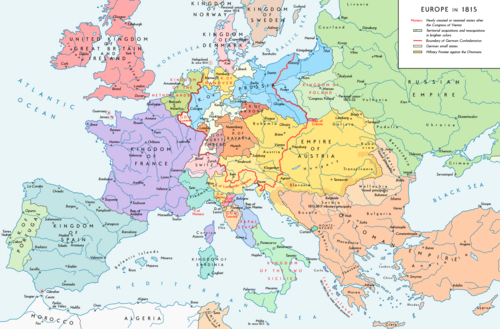
The Congress of Vienna in 1815 established new national boundaries within Europe to create a balance of power and prevent any single nation from dominating the continent again.
What was the 'levée en masse'?
The levée en masse was a policy of mass conscription that allowed France to mobilize its entire population for war, creating armies far larger than those of its opponents.