Baghdad Railway: The Imperial Ambitions of the Berlin-Baghdad Line
The Baghdad Railway, also known as the Berlin–Baghdad railway, was one of the most ambitious and politically charged infrastructure projects of the early 20th century. Conceived in 1903, the project aimed to link Berlin with Baghdad, extending further to establish a strategic port on the Persian Gulf. Spanning approximately 1,600 kilometers (1,000 miles) through the territories of modern-day Turkey, Syria, and Iraq, the line was designed to be more than just a transport route; it was a tool of geopolitical influence.
Funding and engineering were primarily driven by the German Empire, with Deutsche Bank and the Philipp Holzmann company leading the effort. For the Ottoman Empire, the railway offered a means to maintain control over the Arabian Peninsula and expand influence toward Egypt. For Germany, the line promised direct access to the suspected oil fields of Mesopotamia and a trade route to the eastern reaches of its colonial empire that bypassed the British- and French-controlled Suez Canal.
![Share of the Baghdad railway, issued 31 December 1903[1]](/images/cd/00/cd00971a4bc59411f9ec4378fea234baaa2f744fba4ca37b345e8ee98b3e8017.jpg)
Key Facts
- Operation Dates: 1903–1934 (initial phase); completed in 1940.
- Technical Specification: 1,435 mm (4 ft 8 1⁄2 in) standard gauge.
- Primary Backers: German Empire (Deutsche Bank, Philipp Holzmann) and the Ottoman Empire.
- Route: Connected Istanbul (via Konya) through Adana, Aleppo, and Mosul to Baghdad.
- Strategic Goal: Access to Mesopotamian oil and the Persian Gulf port of Basra.
Geopolitical Rivalries and the Road to World War I
The construction of the railway became a flashpoint for international disputes. Britain, in particular, viewed the project with suspicion, fearing German encroachment on its interests in the Persian Gulf. Historians often debate whether the railway was a primary cause of World War I or merely a symptom of the broader imperial rivalry between the Great Powers.
Diplomatic attempts to resolve these tensions culminated in a 1913 agreement between Britain and the Ottoman Government. The terms stipulated that there would be no differential treatment on railways in Asiatic Turkey, British representatives would join the Baghdad Railway Company Board, and the line would terminate at Basra. However, these agreements were largely rendered moot by the outbreak of war on August 1, 1914.
Construction Challenges and Wartime Impact
Technical hurdles, particularly the rugged terrain of the Taurus Mountains, significantly delayed progress. By 1915, the railway was still 480 kilometers (300 miles) short of completion, leaving a critical gap between the lines ending east of Diyarbakır and those reaching north from Baghdad. This fragmentation severely limited the railway's strategic utility during the war.
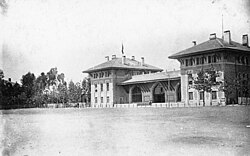
During the conflict, the journey from Istanbul to Baghdad took approximately 22 days to cover 2,020 kilometers (1,260 miles). While the railway struggled, other regional lines like the Hejaz railway became targets for guerrilla forces, including those led by T. E. Lawrence.
The Route and Landscape
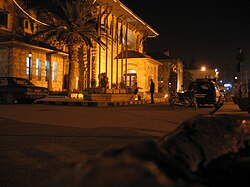
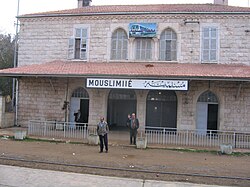
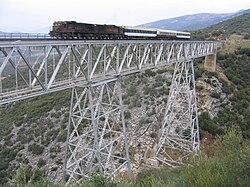
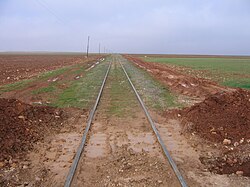
The railway traversed a diverse array of landscapes, from the Anatolian table lands to the Çukurova plain. Key transit points included:
- Konya and Karaman: Early sections completed in the 1890s.
- The Cilician Gates: A challenging passage through the Taurus foothills.
- Aleppo: A major junction where the line branched toward Istanbul and Baghdad.
- Mosul and Baghdad: The final urban hubs of the northern stretch.
Completion and the Taurus Express
Following World War I, the geopolitical map shifted. In 1932, the Kingdom of Iraq gained independence from Britain. By 1936, Iraq purchased the railways within its territory and began filling the remaining gaps, specifically the section from Tel Kotchek to Baiji, driven by the discovery of heavy oil that was difficult to transport via pipeline.
The railway was finally completed on July 15, 1940. Two days later, the Taurus Express made its inaugural full journey from Istanbul to Baghdad. To support this service, the British firm Robert Stephenson and Hawthorns produced streamlined Pacific steam locomotives (the PC class) for the Iraqi State Railways in 1941.
Summary of Railway Specifications and History
| Feature | Detail |
|---|---|
| Track Gauge | 1,435 mm (Standard Gauge) |
| Key Cities | Istanbul, Konya, Adana, Aleppo, Mosul, Baghdad |
| Completion Date | July 15, 1940 |
| Primary Successors | TCDD (Turkey), CNS (Syria) |
| Strategic Terminus | Basra (Persian Gulf) |
Modern Status
In the latter half of the 20th century, a new standard gauge line between Baghdad and Basra opened for freight in 1964 and passengers in 1968, finally connecting the Bosphorus to the Persian Gulf without a break of gauge. However, political instability and strained relations between Turkey, Syria, and Iraq have made continuous international traffic rare.
A brief revival occurred in February 2010, when a link between Mosul, Iraq, and Gaziantep, Turkey, was reopened for a short period. Currently, services remain limited, and the strategic importance of the line has been diminished by alternative transport methods.
Frequently Asked Questions
Why was the Baghdad Railway strategically important to Germany?
Germany sought direct access to Mesopotamian oil fields and a trade route to the Persian Gulf via Basra, which would allow them to bypass the British-controlled Suez Canal.
When was the railway actually completed?
Although started in 1903, the line was not fully completed until July 15, 1940, due to technical difficulties in the Taurus Mountains and the interruptions of World War I.
What was the Taurus Express?
The Taurus Express was the premier train service that began operating in 1940, marking the first complete rail journey between Istanbul and Baghdad.
How did Britain attempt to limit the railway's influence?
Britain used diplomatic pressure to ensure the line terminated at Basra and required British sanction for any further construction toward the Gulf. After WWI, the Treaty of Versailles and the San Remo Oil Agreement further stripped Germany of its ownership and oil stakes in the region.
Is the Baghdad Railway still in use today?
While sections of the line exist and some domestic services operate, continuous international traffic between Turkey, Syria, and Iraq is rare due to regional political tensions.