Article 231 and the Controversy of the War Guilt Clause
At the conclusion of the First World War, the Treaty of Versailles sought to establish a new global order and settle the accounts between the German Empire and the Allied and Associated Powers. Central to this settlement was Article 231, a provision that would become one of the most debated and resented sentences in diplomatic history. While commonly referred to as the "war guilt clause," the article served a specific legal purpose: providing the justification for Germany to pay reparations for the damages caused during the conflict.
The text of Article 231 stated that the Allied and Associated Governments affirmed, and Germany accepted, the responsibility of Germany and her allies for causing all the loss and damage suffered by the Allies as a consequence of the war, which was described as being imposed upon them by the aggression of Germany and her allies.
Key Facts
- Legal Purpose: Article 231 was designed to create a legal basis for reparations, not necessarily to issue a moral judgment.
- The "Guilt" Misnomer: The word "guilt" does not actually appear in the English text of Article 231.
- Financial Obligation: The London Schedule of Payments (1921) set Germany's actual requirement at 50 billion gold marks.
- Payment Reality: Between 1919 and 1931, Germany paid between 19 and 21 billion gold marks.
- Widespread Application: Similar responsibility clauses were included in treaties with Austria, Hungary, and Bulgaria.
The Road to Versailles
The Paris Peace Conference began on January 18, 1919, with 70 delegates from 26 nations. The goal was to define the post-war world and secure peace. However, the process was marked by a significant exclusion: representatives from Germany were barred from the negotiations. Allied leaders feared that a German delegation might influence the proceedings or play different nations against one another.
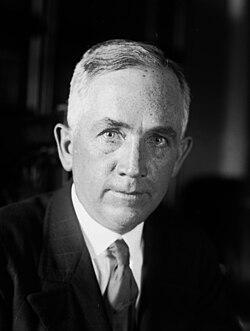
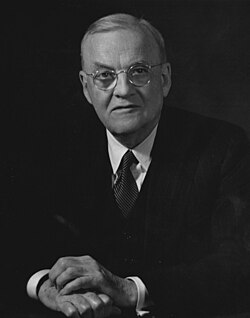
The resulting Treaty of Versailles was named after the Paris suburb where it was signed. Within this document, Article 231 was drafted by Norman Davis and John Foster Dulles.
The German Reaction and Interpretation
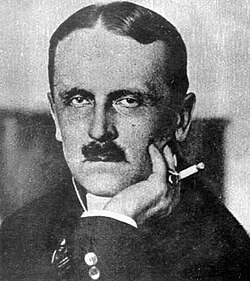
The reception of Article 231 in Germany was overwhelmingly negative, fueled in part by a translation error. The official German edition suggested that Germany admitted to being the "author of the war," which felt like a surrender of national honor. This sense of humiliation was deepened by the article's placement; it followed sections dealing with war crimes trials, leading many Germans to view it as a criminal indictment rather than a financial clause.
While the public reacted with outrage, some government officials privately acknowledged that Germany's legal position was weaker than the imperial government had claimed during the war.
Reparations: Theory vs. Reality
Reparations—compensation demanded from a defeated party—were a standard feature of peace treaties and were permitted under the 1907 Hague Convention. The Allies distinguished "reparations" from "indemnities" (punitive settlements), intending the funds to be used for rebuilding destroyed infrastructure and supporting bereaved families.
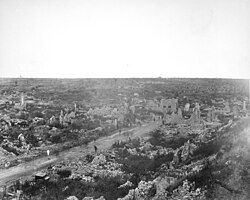
Although Article 231 established a theoretical "unlimited liability," subsequent articles narrowed this responsibility to civilian damages. The final amount was based on Germany's capacity to pay rather than the total sum of Allied claims.
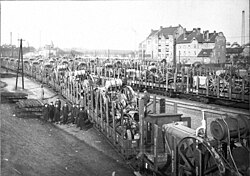
| Metric | Value/Detail |
|---|---|
| Total Central Powers Liability (1921) | 132 billion gold marks |
| Germany's Required Payment | 50 billion gold marks ($12.5 billion) |
| Estimated Actual Payments | 19 to 21 billion gold marks |
| Impact on National Income | Approx. 2% to 2.4% annually |
Historical Assessments of Responsibility
Over the decades, historians have clashed over the meaning and fairness of Article 231. In the 1920s, scholars like Robert C. Binkley and A. C. Mahr argued that the clause was a simple assumption of liability, similar to paying for a car accident, rather than a criminal plea. Conversely, Sidney Fay argued that all of Europe shared the blame for the 1914 outbreak.
By the mid-20th century, the debate shifted. In 1942, Luigi Albertini concluded that Germany bore primary responsibility. Later, in the 1960s, Fritz Fischer challenged the consensus of shared responsibility, placing the blame firmly on the Wilhelmine elite. More recent research by James Joll suggests that while the origins were complex, Germany had decided on war as early as December 1912.
Frequently Asked Questions
Did Article 231 actually use the word "guilt"?
No. The English text of the article does not use the word "guilt." It refers to "responsibility" for loss and damage. The term "war guilt clause" became the popular name for the article due to German interpretation and subsequent historical discourse.
Why was Germany excluded from the Paris Peace Conference?
German representatives were barred from the negotiations primarily because the Allied powers feared they would attempt to unfairly influence the proceedings or play the different Allied nations against each other.
How much did Germany actually pay in reparations?
While the required amount was set at 50 billion gold marks in 1921, actual payments were much lower. Estimates vary between 19 billion (Niall Ferguson) and 20.598 billion gold marks (Reparation Commission/Bank for International Settlements).
Was Article 231 unique to the treaty with Germany?
No. Similar clauses establishing responsibility for damages were incorporated into the treaties signed with Austria, Hungary, and Bulgaria, though these nations generally did not interpret them as declarations of war guilt.
What was the primary purpose of Article 231?
The primary purpose was to establish a legal foundation that allowed the Allied and Associated Powers to demand financial reparations for civilian damages caused during the war.