Treaty of Versailles: The Peace Agreement That Ended World War I
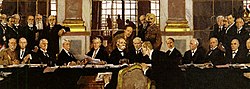
The Treaty of Versailles was the primary peace treaty that concluded World War I, ending the state of war between Germany and the majority of the Allied Powers. Signed on June 28, 1919, the agreement was finalized in the Hall of Mirrors at the Palace of Versailles in France—exactly five years after the assassination of Archduke Franz Ferdinand, the event that triggered the global conflict.
While an armistice had stopped the actual fighting on November 11, 1918, it took six months of intense negotiations at the Paris Peace Conference to establish the formal terms of peace. Notably, Germany was excluded from these negotiations, forced to accept the final terms without input.
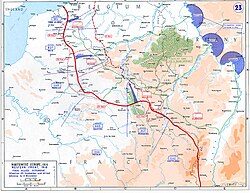
Key Facts
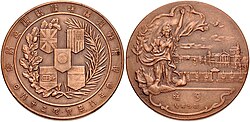
- Signed: June 28, 1919; effective January 10, 1920.
- Location: Hall of Mirrors, Palace of Versailles, France.
- Primary Parties: Germany and the Principal Allied and Associated Powers (USA, British Empire, France, Italy, and Japan).
- War Guilt: Article 231 forced Germany to accept full responsibility for the war.
- Reparations: Germany was required to pay an initial 20 billion gold marks ($5 billion).
- Key Outcome: Establishment of the League of Nations to prevent future conflicts.
The Paris Peace Conference and Negotiations
Negotiations began on January 18, 1919, at the French Foreign Ministry in Paris. The conference involved 70 delegates from 27 nations. Russia was excluded because it had signed a separate peace treaty (the Treaty of Brest-Litovsk) and withdrawn from the war early. German representatives were also barred from the talks to prevent them from attempting to divide the Allied powers diplomatically.
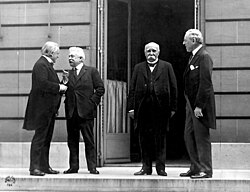
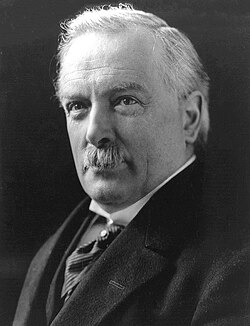
The proceedings were dominated by the "Big Four" leaders: David Lloyd George of Great Britain, Vittorio Orlando of Italy, Georges Clemenceau of France, and Woodrow Wilson of the United States.
The Role of the Big Four
Each of the primary leaders brought different objectives to the table. While Woodrow Wilson promoted his "Fourteen Points" as a basis for a just and lasting peace, France, led by Clemenceau, sought harsher terms to ensure German security threats were permanently neutralized. The British and Italians also sought to balance their own imperial interests and regional security.
Core Terms of the Treaty
The Treaty of Versailles imposed stringent conditions on Germany across territorial, military, and financial dimensions.
Territorial Changes and Mandates
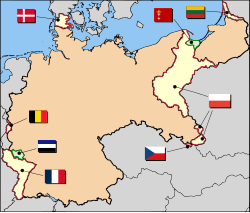
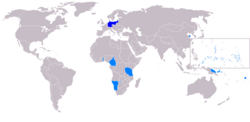
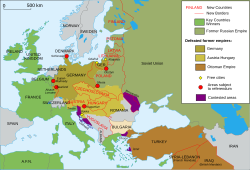
Germany suffered significant land losses. Territories were annexed or transferred to neighboring countries, and some were decided via plebiscite (a direct vote by the people). Additionally, Germany's overseas colonies were stripped and converted into League of Nations mandates, meaning they were administered by Allied powers on behalf of the international community.
Military Restrictions
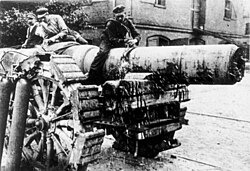
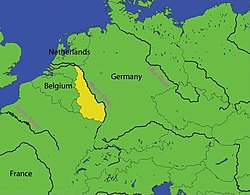
To prevent future aggression, the treaty imposed strict limits on the German military. This included the decommissioning of heavy weaponry and the demilitarization of the Rhineland, a strategic buffer zone between Germany and France.
Reparations and the "War Guilt Clause"
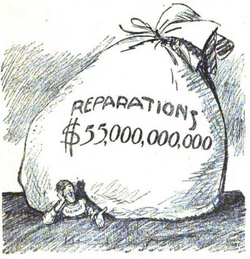
One of the most controversial aspects was Article 231, known as the War Guilt Clause. It required Germany to accept responsibility for the losses and damages caused by the war. This provided the legal basis for reparations. An Allied Reparation Commission was established to determine the final sum, but Germany was immediately required to pay 20 billion gold marks in gold, commodities, and securities.
War Crimes and Legal Accountability
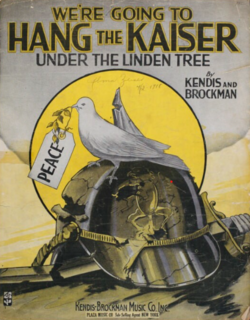
The treaty attempted to hold individuals accountable for the conflict. Article 227 called for the trial of Kaiser Wilhelm II for a "supreme offence against international treaties." Furthermore, Articles 228 and 229 allowed for the extradition of other German war criminals to be tried by military tribunals.
Global Reactions and Implementation
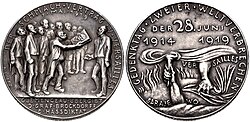
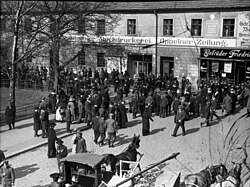
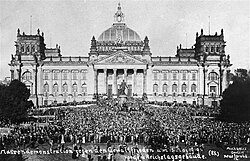
The treaty was met with varying degrees of acceptance and outrage. In Germany, the terms were viewed as a "Diktat" (dictated peace), leading to widespread demonstrations in front of the Reichstag.
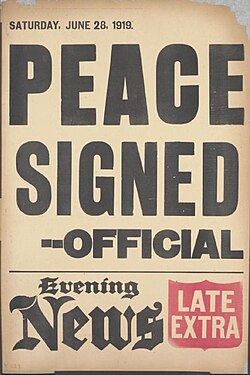
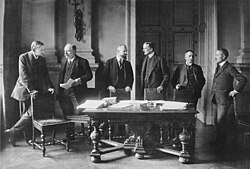
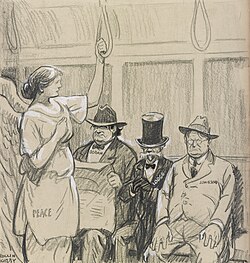
In the United States, the treaty faced significant political opposition. Republican isolationists in the Senate, including Senators Borah and Lodge, blocked the ratification of the treaty, primarily due to objections regarding the League of Nations.
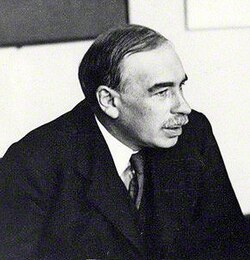
Economists like John Maynard Keynes denounced the agreement as a "Carthaginian peace"—a peace so harsh it was intended to permanently crush the defeated party—warning that the economic burden would destabilize Europe.
Long-term Consequences
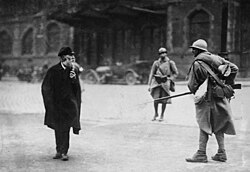
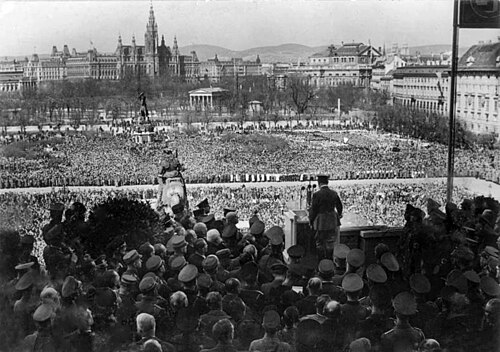
The implementation of the treaty was fraught with tension. French soldiers eventually occupied the Ruhr region, which led to the withdrawal of American forces from the Rhineland. Decades later, the perceived injustice of the treaty was exploited by Adolf Hitler, who cited the violation of treaty terms (such as Article 80) during his announcement of the Anschluss (annexation of Austria) in 1938.
Summary of Treaty Terms
| Category | Key Provisions | Impact on Germany |
|---|---|---|
| Legal | Article 231 (War Guilt Clause) | Accepted full responsibility for the war. |
| Financial | Reparations Commission | Initial payment of 20 billion gold marks. |
| Territorial | Annexations and Mandates | Loss of European land and all overseas colonies. |
| Military | Disarmament and Demilitarization | Heavy guns decommissioned; Rhineland cleared. |
| Political | League of Nations | New international body created to maintain peace. |
Frequently Asked Questions
Why was Germany not allowed to negotiate the treaty?
The Allied powers excluded German negotiators to prevent them from exploiting diplomatic divisions among the Allies and to ensure that the terms were accepted without modification.
What was the significance of Article 231?
Known as the War Guilt Clause, it forced Germany to accept legal responsibility for the war, which served as the justification for the Allies to demand massive financial reparations.
Did the United States ratify the Treaty of Versailles?
No. Despite President Woodrow Wilson's efforts, the U.S. Senate refused to ratify the treaty due to opposition from isolationists who feared the League of Nations would draw the U.S. into future foreign conflicts.
What happened to Germany's colonies?
Germany's overseas colonies were seized and turned into mandates under the League of Nations, meaning they were managed by Allied powers rather than being fully annexed.
How did the treaty contribute to the rise of the Nazi Party?
The harsh economic reparations and the perceived national humiliation of the "War Guilt Clause" created deep resentment in Germany, which Adolf Hitler used as a powerful propaganda tool to gain support.