Armistice of Mudros: The End of Ottoman Hostilities in World War I
The Armistice of Mudros was the pivotal agreement that ended fighting in the Middle Eastern theatre of World War I between the Ottoman Empire and the Allied Powers. Signed on October 30, 1918, this document signaled the collapse of Ottoman military efforts and paved the way for the eventual partitioning of the empire and the birth of the modern Turkish state.
The agreement was finalized aboard the British battleship HMS Agamemnon in Moudros harbor, located on the Greek island of Lemnos. It was signed by Rauf Bey, the Ottoman Minister of Marine Affairs, and Admiral Somerset Arthur Gough-Calthorpe, the Commander-in-Chief of the British Mediterranean Fleet. The terms took effect at noon on October 31, 1918.
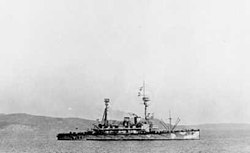
Key Facts
- Date Signed: October 30, 1918.
- Effective Date: October 31, 1918.
- Location: HMS Agamemnon, Moudros harbor, Lemnos.
- Primary Signatories: Rauf Bey (Ottoman Empire) and Admiral Somerset Arthur Gough-Calthorpe (Great Britain).
- Outcome: Ended hostilities in the Middle East and led to the occupation of Istanbul.
- Final Resolution: Superseded by the Treaty of Lausanne in 1923.
The Road to Surrender
By 1918, the Ottoman Empire faced a contradictory military situation. In the Caucasus, the Ottomans had actually regained ground and pushed into formerly Russian-controlled territories following the collapse of the Russian Empire. However, these gains created friction with their ally, Germany, which prioritized securing Caucasus oil from the Bolshevik government in Moscow.
While the east seemed promising, the west was collapsing. In Syria, British forces were advancing steadily, leading to the fall of Damascus in October 1918. The final blow came from Southeast Europe during the Macedonian front (the Salonika campaign). A successful Allied offensive in September 1918 defeated the Bulgarian army, forcing Bulgaria to sign the Armistice of Salonica. This left the Ottoman capital, Constantinople, vulnerable to an overland siege.
Recognizing that the war was no longer winnable, Grand Vizier Talaat Pasha and his ministry resigned on October 13, 1918, to avoid the Allies imposing harsher terms on the new government. His successor, Ahmed Izzet Pasha, immediately sought armistice terms through the captured British General Charles Vere Ferrers Townshend.
Negotiations and Terms
The British government took a lead role in the negotiations, intentionally excluding the French to expedite the process and secure their own strategic interests. Prime Minister David Lloyd George sought a quick deal to divide Ottoman territories among the Allies before the United States could intervene.
The negotiations took place on the HMS Agamemnon starting October 27. Because both the British and the Ottomans were eager to reach an agreement, the final terms were accepted with little resistance, despite being heavily weighted in favor of the Allies.
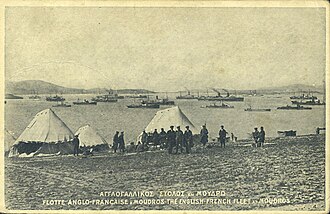
Primary Conditions of the Armistice
- Military Demobilization: The Ottoman Army and Air Force were to be demobilized.
- Territorial Surrender: All garrisons outside of Anatolia were surrendered.
- Strategic Access: All ports, railways, and strategic points were made available to the Allies.
- Control of the Straits: The Allies gained the right to occupy forts controlling the Dardanelles and the Bosporus.
- Security Clause: A broad provision allowed the Allies to occupy any Ottoman territory "in case of disorder" threatening their security.
- Caucasus Borders: Ottoman forces were required to retreat to pre-war borders with the Russian Empire.
Aftermath and the Rise of Modern Turkey
The Armistice of Mudros was not a final peace treaty but a ceasefire. It was followed by the occupation of Istanbul and the 1920 Treaty of Sèvres, which imposed harsh partitioning terms on the empire. However, the Treaty of Sèvres was never ratified by the Ottoman Parliament, which the Allies officially disbanded on April 11, 1920.
This political vacuum led to the Turkish War of Independence. Mustafa Kemal Pasha and his followers established the Grand National Assembly of Turkey in Ankara on April 23, 1920, acting as the de facto government. Following a Turkish victory in the war, the Armistice of Mudros and the Treaty of Sèvres were superseded by the Treaty of Lausanne on July 24, 1923, which defined the borders of the modern Turkish nation-state.
| Feature | Details |
|---|---|
| Signatories | Rauf Bey (Ottoman) & Admiral Calthorpe (British) |
| Key Terms | Demobilization, surrender of non-Anatolian garrisons, Allied control of Straits |
| Immediate Result | Occupation of Istanbul and partitioning of the Empire |
| Long-term Result | Turkish War of Independence and the Treaty of Lausanne |
Frequently Asked Questions
Where was the Armistice of Mudros signed?
It was signed on board the British battleship HMS Agamemnon in Moudros harbor on the Greek island of Lemnos.
Why did the British exclude the French from the negotiations?
The British government wanted to conduct negotiations alone to avoid potential French demands that might foil the treaty and to secure territorial gains promised in the Sykes–Picot Agreement without French interference.
What happened to the table used for the signing?
The table is currently located on board the HMS Belfast in London Bridge, although it is not open to the public.
How did the Armistice of Mudros lead to the Treaty of Lausanne?
The harsh terms of the armistice and the subsequent Treaty of Sèvres sparked the Turkish War of Independence. The victory of Turkish nationalist forces led to the negotiation of the Treaty of Lausanne in 1923, which replaced the previous agreements.
What was the "in case of disorder" clause?
This was a vague and broad provision in the armistice that granted the Allies the right to occupy any Ottoman territory if they deemed it necessary to maintain security.