Armenians: History, Culture, and the Global Diaspora
The Armenians are an Indo-European people with a rich and ancient heritage, primarily centered in the Armenian Highlands. Known for their resilience and cultural contributions, they have established a profound presence both in their ancestral homeland and across a vast global network known as the Diaspora. From the legendary foundations of their nation to the establishment of the world's first state-sponsored Christian church, the Armenian story is one of endurance and artistic brilliance.
Historically, Armenians first appear in records shortly after the end of the 7th century BCE. Their identity is deeply tied to the geography of Mount Ararat and the surrounding plateaus, where they developed a unique language and a sophisticated social structure that would eventually lead to the rise of powerful kingdoms.
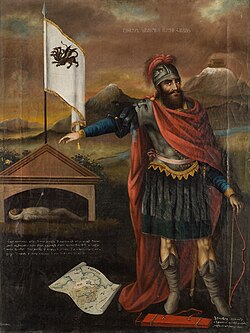
Key Facts
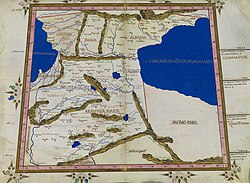
- Total Population: Estimated between 8 million and 11 million worldwide.
- Primary Language: Armenian.
- Religion: Predominantly the Armenian Apostolic Church, the world's oldest national church.
- Global Presence: Significant populations in Armenia, Russia, the United States, France, and Lebanon.
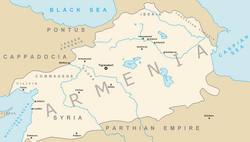
- Historical Peak: Reached its greatest territorial extent under Tigranes the Great (95–55 BCE).
Historical Evolution
Antiquity and the Golden Age
In ancient times, Armenians were recognized as a distinct entity in the Near East. Their influence grew significantly during the era of Tigranes the Great, whose empire expanded the borders of Armenia to an unprecedented scale, bridging the gap between the Mediterranean and the Caspian Sea.
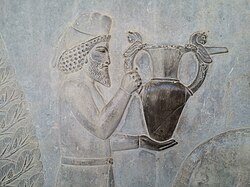
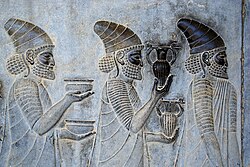
Ancient records, including bas-reliefs at Persepolis, depict Armenians as tribute bearers, often bringing their renowned wine to the Persian Shah, highlighting their early economic and agricultural importance in the region.
The Adoption of Christianity
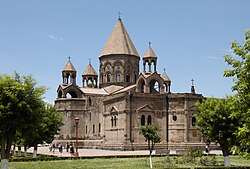
A pivotal moment in Armenian history occurred in 301 AD, when Armenia became the first nation to adopt Christianity as its state religion. This transition was solidified with the establishment of the Etchmiadzin Cathedral, which remains the mother church of the Armenian Apostolic Church.
Middle Ages and Early Modern Era
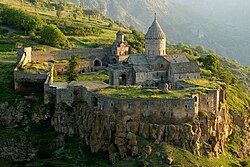
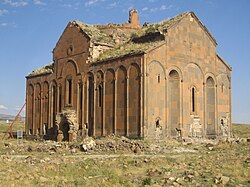
During the Middle Ages, Armenia became a center for learning, theology, and architecture. The period saw the construction of magnificent monasteries and cathedrals, such as the Cathedral of Ani and the Tatev Monastery, which served as bastions of culture and faith.
Armenian scholars and artists also excelled in the creation of illuminated manuscripts, blending intricate calligraphy with vivid imagery to preserve religious and historical texts.

Geographic Distribution and the Diaspora
While the Republic of Armenia remains the cultural heartland, a significant portion of the Armenian population lives abroad. This global dispersion was driven by various historical factors, including conflict and migration.
Population Centers
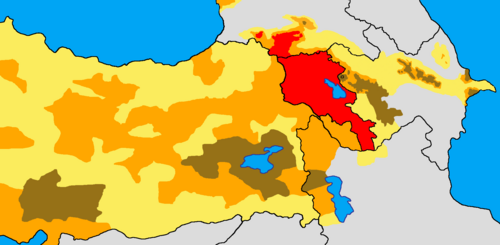
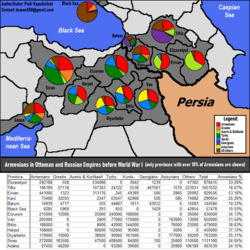
Today, the population is distributed across several key regions. While nearly 3 million reside in Armenia, millions more are found in Russia and the United States. Other notable communities exist in France, Georgia, Lebanon, and Iran.
Regional Dynamics
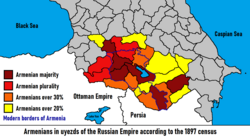
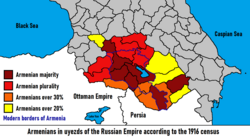
The distribution of Armenians within the Russian Empire was historically significant, as evidenced by census data from 1897 and 1916. In more recent history, the Nagorno-Karabakh region (Republic of Artsakh) maintained an overwhelming Armenian majority until 2023, when the population largely fled to Armenia following Azerbaijani victory in the region.
| Region/Country | Estimated Population |
|---|---|
| Armenia | 2,961,514 |
| Russia | 1,182,388 – 2,900,000 |
| United States | 1,000,366 – 1,500,000 |
| France | 250,000 – 750,000 |
| Turkey | 60,000 – 5,000,000 (incl. Hidden Armenians) |
| Lebanon | 150,000 |
| Iran | 120,000 |
Cultural Heritage
Arts and Architecture
Armenian architecture is characterized by its unique use of stone and sacred geometry, seen in the conical domes of its churches. Beyond buildings, the nation is famous for its carpet weaving and traditional dress, which reflect a blend of regional influences and indigenous styles.
Cuisine and Traditions
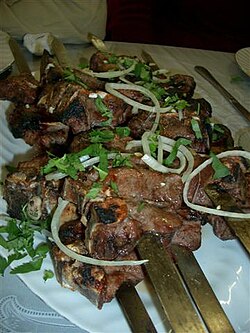
Armenian cuisine is a celebrated part of its identity, with dishes like Khorovats (grilled meat) being a favorite among the people. The culture also places a high value on education and intellectual achievement, often being recognized for its academic contributions.
Institutions
Several organizations maintain the Armenian spirit worldwide. The Armenian Relief Society and Homenetmen (a scouting and athletic organization founded in 1910) provide social and physical development for the community, with Homenetmen boasting approximately 25,000 members globally.
Frequently Asked Questions
When did Armenia adopt Christianity?
Armenia adopted Christianity as its state religion in 301 AD, making it the first nation in the world to do so.
Who was Tigranes the Great?
Tigranes the Great was a king of Armenia (95–55 BCE) under whom the Kingdom of Armenia reached its greatest territorial extent.
What is the Armenian Diaspora?
The Armenian Diaspora refers to the millions of Armenians living outside the Republic of Armenia, with large communities in Russia, the US, France, and the Middle East.
What is the significance of the Etchmiadzin Cathedral?
Established in 301 AD, the Etchmiadzin Cathedral is the mother church of the Armenian Apostolic Church and a central symbol of Armenian faith and identity.
What happened to the population of Nagorno-Karabakh in 2023?
Following the defeat of the Republic of Artsakh by Azerbaijan in 2023, nearly the entire Armenian population of the region fled into Armenia.