Prelates in the Christian Church: Roles, Ranks, and Jurisdictions
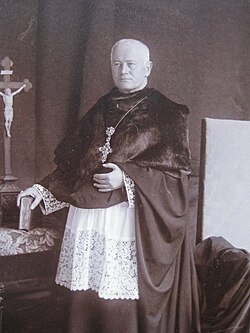
In the complex hierarchy of Christian ecclesiastical governance, the term prelate refers to a high-ranking member of the clergy who holds ordinary authority—the power of jurisdiction over a specific group of people or a geographic area. Derived from the Latin praelatus (meaning "set above" or "preferred"), a prelate is essentially a leader appointed to oversee others within the church structure.
The primary model for all prelacy is the bishop, whose jurisdiction is his particular church. From this foundation, various other roles have evolved, ranging from those with significant governing power to those who hold the title as a personal honor.
Key Facts
- Definition: A prelate is a high-ranking cleric who is an ordinary or ranks with ordinaries in precedence.
- Primary Example: The bishop is the archetypal prelate.
- Types of Prelatures: These include territorial prelatures (geographic) and personal prelatures (based on specific missions or groups).
- Honorary Titles: Some priests are "lesser prelates," holding the title of monsignor as a personal honorific.
- Global Reach: While common in the Catholic Church, the term is also used in the Armenian Apostolic Church to denote a diocesan bishop.
Categories of Prelates
Major Prelates and Ordinaries
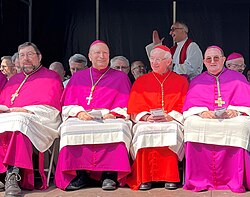
In a general sense, a prelate is any ecclesiastical person possessing ordinary authority over a jurisdiction, such as a diocese, an apostolic vicariate, an exarchate, or a territorial abbacy. This category includes cardinals, who serve as the most senior advisers to the Supreme Pontiff and share in the co-governance of the church.
Certain officials within the Roman Curia (the administrative apparatus of the Holy See) are also considered superior prelates even if they are not bishops. Examples include protonotaries apostolic and the auditors (judges) of the Roman Rota.
Lesser or Honorary Prelates
By extension, the term applies to "inferior" prelates. These are priests who are granted the title and dress of a prelate as a personal honor rather than a jurisdictional office. These individuals, including Papal chaplains and prelates of honor, typically use the title monsignor.
Territorial vs. Personal Prelatures
Territorial Prelatures
A territorial prelate governs a geographic area known as a territorial prelature. This region exists outside the jurisdiction of any diocese and is subject directly to the Holy See. Historically referred to as a prelate nullius (prelate of no diocese), these entities are distinct from standard dioceses. As of 2013, there were 44 such prelatures within the Latin Church.
Personal Prelatures
Unlike territorial versions, a personal prelature is not defined by geography. Instead, its jurisdiction applies to specific persons regardless of where they live. Established during the Second Vatican Council and later codified in the 1983 Code of Canon Law, these institutions carry out specific pastoral or missionary works.
Personal prelatures are secular organizations; their members do not take religious vows and live normal lives in the world, distinguishing them from religious institutes. The only current example is Opus Dei, established in 1982. In Opus Dei, the Prelate is elected by members and confirmed by the Pope.
| Feature | Territorial Prelature | Personal Prelature |
|---|---|---|
| Basis of Authority | Geographic region | Specific persons/mission |
| Jurisdiction | Outside any diocese | Non-territorial |
| Example | Prelate nullius | Opus Dei |
| Member Status | Local faithful | Secular members (no vows) |
Ethical Guidelines and Accountability
The role of a prelate carries significant prestige, which has occasionally led to concerns regarding luxury and power. On February 15, 2018, Pope Francis issued a motu proprio (a decree issued on his own initiative) ordering retired prelates and bishops to live simply and renounce desires for power.
This directive followed criticisms of retired officials maintaining luxurious lifestyles, including large apartments and police escorts. A prominent example involved Tarcisio Bertone, a former Cardinal Secretary of State, whose apartment renovations were funded by diverted hospital funds and who continued to use police escorts after retirement.
Frequently Asked Questions
What is the difference between a prelate and a bishop?
While every bishop is a prelate, not every prelate is a bishop. A prelate is any high-ranking cleric with ordinary jurisdiction; some prelates are bishops, while others may be priests with specific jurisdictional powers or honorary titles.
What does the title "Monsignor" signify?
The title monsignor is typically used for "lesser prelates"—priests who have been granted the title and dress of a prelate as a personal honor from the Pope. In some countries, the title is also applied to bishops and archbishops.
How does a personal prelature differ from a religious order?
A personal prelature is a secular organization where members do not take religious vows and live normal lives in the world. In contrast, religious institutes are organizations where members take vows and live according to the specific laws of their institute.
What is a "prelate nullius"?
A prelate nullius is a territorial prelate whose jurisdiction is not part of any diocese, meaning the territory is subject directly to the Holy See (the Pope).
Is the term "prelate" only used in the Catholic Church?
No. While prominent in the Catholic Church, the term is also used in the Armenian Apostolic Church to describe a diocesan bishop, and his jurisdiction is referred to as a "prelacy."