Armenian Apostolic Church
The Armenian Apostolic Church serves as more than just a religious institution; it is widely regarded as the custodian of Armenian national identity. As an Oriental Orthodox church, it represents a profound spiritual legacy that has shaped the cultural and social fabric of the Armenian people for nearly two millennia.
From its early roots in the 1st century to its current global presence, the church has navigated complex theological shifts and political upheavals, maintaining its role as the foundational core of the Armenian identity.
Key Facts
- Orientation: Oriental Orthodox.
- Headquarters: Mother See of Holy Etchmiadzin.
- Current Leader: Karekin II, Catholicos of All Armenians.
- Membership: Approximately 9 million self-reported members globally.
- Language: Classical Armenian is used in liturgy.
- Independence: Formally became autocephalous (independent) in 610 at the Third Council of Dvin.
History and Origins
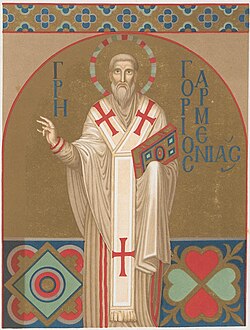
The origins of the church date back to the 1st century in the Kingdom of Armenia, with foundations attributed to Bartholomew the Apostle and Thaddeus (Jude). However, it was Gregory the Illuminator who is credited as the primary founder of the organized church in Armenia.
In its early stages, the church was subordinated to the Bishop of Caesarea and participated in the broader Christian world, including representation at the First Council of Nicea in 325. Early records show a distinct liturgical evolution; for instance, a 335 letter from Macarius, the Bishop of Jerusalem, to the Armenians highlighted divergent baptismal and eucharistic rites in Armenia that echoed the old East Syriac Rite.
The church's path toward independence was gradual. It first separated from the Patriarchate of Constantinople during the Second Council of Dvin in 554, eventually achieving full autocephaly by 610.
Persecution and Canonization
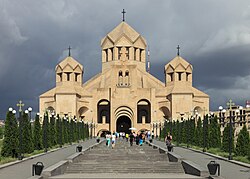
Throughout its history, the church has endured significant periods of Russian and Ottoman persecution. One of the most poignant moments in its modern history occurred on April 23, 2015, when the church canonized all victims of the Armenian genocide. With victim estimates ranging from 700,000 to 1.8 million, this event is believed to be the largest canonization service in history and the first such act by the church in four hundred years.
Doctrine and Theology
The Armenian Apostolic Church adheres to Oriental Orthodox Theology, specifically the concept of Miaphysitism. This Christological position differs from the Dyophysitism of the Eastern Orthodox and Catholic churches, focusing on the one united nature of Christ.
The church utilizes the Septuagint and the New Testament in Armenian versions. Its liturgical life is governed by the Armenian Rite, conducted primarily in Classical Armenian.
Women in Ministry
The role of women in the church has seen historical and contemporary developments. While traditionally patriarchal, there have been movements toward the ordination of deaconesses. For example, the Tehran Prelacy ordained a deaconess in 2018, reflecting ongoing discussions regarding women's roles in ministry.
Structure and Leadership
The church operates under an episcopal polity and is characterized by a complex administrative structure involving two catholicosates and two patriarchates.
The Two Catholicosates
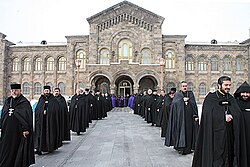
- Catholicos of All Armenians: Based at the Mother See of Holy Etchmiadzin, this office holds primary authority.
- Catholicos of Cilicia: A separate see that manages various prelacies, particularly in the diaspora.
Global Jurisdiction
The church's reach extends far beyond the borders of Armenia. It is organized into eparchies (dioceses) that cover the homeland and the vast Armenian diaspora.
- In Armenia: Eparchies include Ararat, Syunik, Tavush, and others. In Armenia, 79% of respondents in a 2024 survey identified as belonging to the church.
- In the Diaspora: The church maintains a strong presence in North America (600,000 members), South America (10,000 members), and Europe (25,000 members).
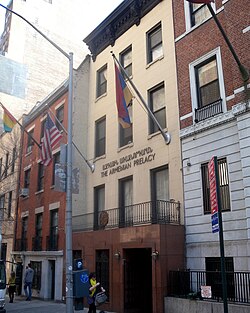
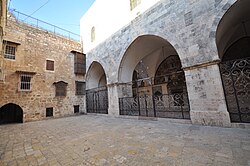
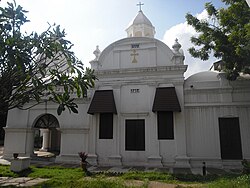
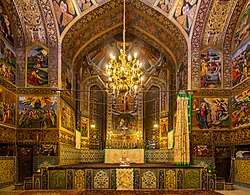
Notable international sites include the Armenian Patriarchate of Jerusalem and historical churches such as the Vank Cathedral in Isfahan and the Armenian Church in Madras, India.
Church Summary
| Feature | Details |
|---|---|
| Classification | Christian (Oriental Orthodox) |
| Founder | Gregory the Illuminator, Bartholomew, Thaddeus |
| Headquarters | Mother See of Holy Etchmiadzin |
| Key Scripture | Septuagint, New Testament (Armenian versions) |
| Global Membership | ~9 million |
| Autocephaly Date | 610 AD |
Frequently Asked Questions
What is the difference between the two Catholicosates?
The Catholicos of All Armenians, based in Etchmiadzin, is the primary spiritual leader. The Catholicosate of Cilicia is a separate administrative see that manages specific prelacies, particularly those in the diaspora and certain Middle Eastern regions.
How does the church view the Armenian Genocide?
The church views the victims of the genocide as martyrs. In 2015, it performed a historic collective canonization of the estimated 1.5 million victims to honor their memory and faith.
What is Miaphysitism?
Miaphysitism is the theological belief that in the person of Jesus Christ, divinity and humanity are united in one nature, without confusion or alteration. This distinguishes the Oriental Orthodox churches from other Christian denominations.
Is the Armenian Apostolic Church independent?
Yes, the church is autocephalous, meaning it is self-governing and independent of external ecclesiastical authority. This independence was formally solidified at the Third Council of Dvin in 610.
What role does the church play in Armenian national identity?
The church is seen as the custodian of national identity. A 2018 Pew Research Center survey found that 82% of respondents in Armenia believe being Christian is very or somewhat important to being truly Armenian.