Aristotle's Biology: The Foundations of Systematic Zoology
Long before the advent of modern laboratories, Aristotle (384–322 BC) established a rigorous approach to the study of life that would dominate biological thought for two millennia. His work represents the first instance in history where biology was treated as a science grounded in systematic observation and the collection of empirical data. By moving beyond pure philosophy and engaging directly with the natural world, Aristotle laid the groundwork for how we categorize and understand living organisms today.
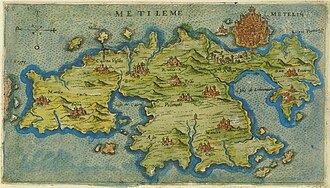
Much of Aristotle's groundbreaking research was conducted on the island of Lesbos, particularly within the Pyrrha lagoon (now the Gulf of Kalloni). Here, he meticulously documented marine life, applying a method of data collection, pattern recognition, and causal inference that mirrors the style of modern biological exploration.
Key Facts
- Species Cataloged: Aristotle named approximately 500 species of birds, mammals, and fish, and identified dozens of invertebrates.
- Anatomical Study: He described the internal anatomy of over 100 animals and performed dissections on roughly 35 of them.
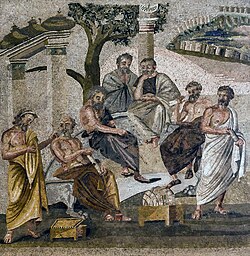
- Core Theory: His biological framework is based on the concept of form, which differs from Plato's abstract Theory of Forms by emphasizing the physical material.
- Scientific Legacy: His writings remained the primary authority in biology from the 4th century BC until the Renaissance.
The Aristotelian Approach to Life
The Concept of Form and Soul
Aristotle argued that a living thing's identity is derived from both its design and the material used to create it, a concept he illustrated through the analogy of woodcarving.
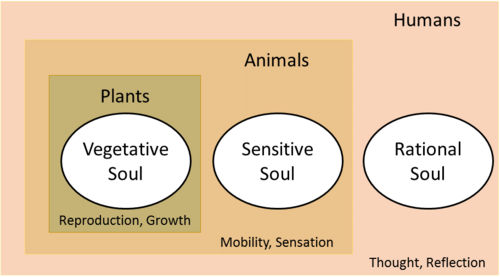
Central to his system was the concept of the soul, which he viewed as the organizing principle of a living system. He categorized souls into three types: vegetative (shared by plants, animals, and humans), sensitive (shared by animals and humans), and rational (unique to humans). This hierarchy defined the capabilities and nature of every living being.
Five Major Biological Processes
Aristotle identified five fundamental processes that govern life. Modern biologists have found these descriptions detailed enough to construct mathematical models of his proposed mechanisms:
- Metabolism: The process where food is converted into the body's uniform parts and residues are excreted.
- Temperature Regulation: A cycle used to maintain a steady state, which Aristotle noted progressively fails as an organism ages.
- Information Processing: The way animals perceive their environment; Aristotle believed the heart was the seat of perception.
- Embryogenesis: The study of embryonic development and spontaneous generation.
- Inheritance: The transmission of form and movement from parents to offspring.
![Metabolism: Leroi's open system model. Food is converted to the body's uniform parts and excreted residues.[11]](/images/2c/e8/2ce858abc0976b14668e276e471b52f9de9eabac20ed38efff3b2d00ae01a9f0.png)
![Temperature regulation: Leroi's model based on Youth and Old Age, Life and Death 26.[11][12]](/images/28/b0/28b0f3081f9d44e2509dfd08d86f28a106e79f83dd5bf0f437fe9634339aa637.png)
![Information processing: Leroi's "centralized incoming and outgoing motions model" of an animal's "sensitive soul"; the heart is the seat of perception.[17]](/images/63/70/637039f04d3acabe5ea2467155ef5bb759271c62cd68a31ec8cd5ccda3e4c982.png)
![Inheritance: model of transmission of movements from parents to child, and of form from the father. Male aspects are shown in red; female aspects in blue. The model is not fully symmetric.[19]](/images/85/dc/85dc0f358d5444b3d287c178e34aaedd1deb023f2cb71c6b6ec42d603dbc72fb.png)
Empirical Observations and Methodology
Observation and Dissection
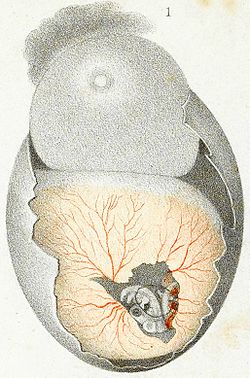
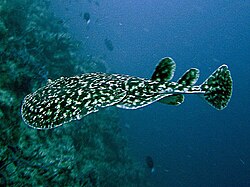
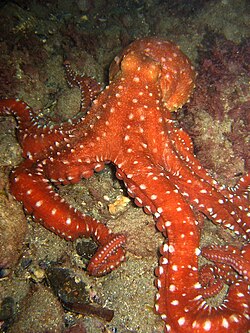
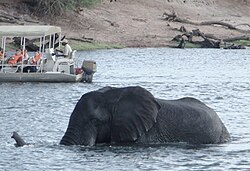
Unlike his predecessors, Aristotle relied on direct evidence. He observed the beating heart of a chick embryo and correctly reported that electric rays could stun their prey. He also noted the ability of octopuses to change color when disturbed and observed elephants using their trunks as snorkels while swimming.
Mechanism and Analogy
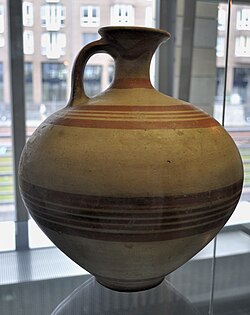
To explain complex biological mechanisms, Aristotle often used analogies from the physical world. For example, he compared biological processes to the movement of water through a porous pot (an oenochoe) to explain how substances move within a living system.
Growth Laws and Predictions
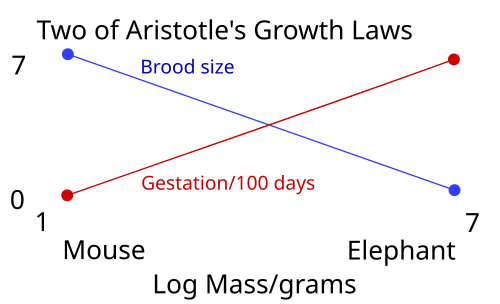
Through his observations, Aristotle inferred laws of growth that remain accurate for mammals: he predicted that as body mass increases, brood size decreases while the gestation period increases.
Classification of Living Things
Aristotle developed a sophisticated classification system based on shared characteristics, such as the presence of blood and the number of legs. This system allowed him to organize a vast array of life forms into a logical hierarchy.
| Group | Blood | Legs | Soul Type | Qualities | Examples |
|---|---|---|---|---|---|
| Live-bearing tetrapods | With blood | 4 legs | Sensitive, Vegetative | Hot, Wet | Cat, hare |
| Birds | With blood | 2 legs | Sensitive, Vegetative | Hot, Wet (Dry eggs) | Bee-eater, nightjar |
| Cephalopods | Without | Tentacles | Sensitive, Vegetative | Cold, Wet | Squid, octopus |
| Plants | Without | None | Vegetative | Cold, Dry | Fig |
| Minerals | Without | None | None | Cold, Dry | Iron |
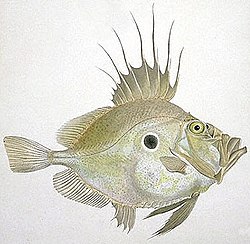
Among the many species he identified was the khalkeus (John Dory), showcasing his deep knowledge of ichthyology.
Historical Influence and Legacy
Aristotle's biological works—including History of Animals, Generation of Animals, and On the Soul—were transmitted through Syriac and Arabic translations before returning to Latin in the Middle Ages. Scholars like Albertus Magnus expanded upon his zoology, while Thomas Aquinas integrated his metaphysics into theology.
![Albertus Magnus commented extensively on Aristotle's zoology, adding more of his own.[68]](/images/7a/ae/7aae2677d9724b939399b437ca50cce315fcd605a61dabf176536452c7d3968b.jpg)
During the Renaissance, his classification systems continued to influence encyclopedists like Konrad Gessner. However, by the Early Modern period, some scientists began to reject his views as outdated. It wasn't until the 19th century that zoologists like Georges Cuvier and Louis Agassiz revived interest in his work, recognizing the accuracy of many of his original observations.
Frequently Asked Questions
How did Aristotle's method differ from Plato's?
While Plato sought universals through abstract philosophy, Aristotle backed his views with detailed, systematic observation and empirical data collection from the natural world.
What are the three types of souls described by Aristotle?
Aristotle identified the vegetative soul (basic life functions), the sensitive soul (perception and movement), and the rational soul (intellect), stating that humans are unique in possessing all three.
Which biological processes did Aristotle define?
He detailed five major processes: metabolism, temperature regulation, information processing, embryogenesis, and inheritance.
Was Aristotle's classification system accurate?
While not aligned with modern genetics, his system was remarkably advanced for its time, correctly identifying patterns in anatomy and growth laws that are still observed in mammals today.
What was the role of the heart in Aristotle's theory?
Aristotle believed the heart was the seat of perception and the center of the "sensitive soul," acting as the hub for incoming and outgoing information processing.