Aridity and Global Dryland Trends: Understanding the Changing Landscape
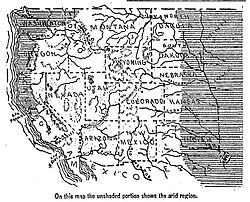
Aridity describes a specific geographical condition defined by low annual precipitation, rising temperatures, and limited water availability. These regions are not merely empty spaces; they represent approximately 43% of the Earth's total available land area. Because these areas often feature degraded soils, their health and functional stability are vital for regulating the atmospheric components of our global ecosystems.
Key Facts
- Arid regions cover roughly 43% of the world's available land.
- More than three-quarters of Earth's land has become permanently drier in recent decades.
- A quarter of the global population currently resides in expanding drylands.
- Climate change and land use are primary drivers of increasing aridity.
The Drivers of Aridity and Climate Change
The distribution of aridity is largely dictated by the general circulation of the atmosphere—the large-scale movement of air that distributes heat and moisture around the planet. However, this distribution is not static. As climate change progresses, these patterns shift significantly.
One notable example of this shift can be seen in the Nile Basin. Projections suggest that a temperature increase of 1.5–2.1 percent over the next 30–40 years could transition the region from semi-arid to fully arid. Such a change would drastically reduce the amount of land available for agricultural use.
The Impact of Land Use
Beyond atmospheric shifts, human activity plays a critical role. Changes in land use can increase the demand on soil water, which in turn exacerbates aridity levels in a given region.
Global Trends and the UNCCD Report
Recent data highlights a concerning trend in the Earth's moisture levels. A December 2024 report from the United Nations Convention to Combat Desertification (UNCCD) provided a stark assessment of the current state of our planet's drylands.
The report concluded that more than 75% of the Earth's land has become permanently drier in recent decades. Crucially, the UNCCD warns that the drier climates currently affecting vast regions across the globe are unlikely to return to their previous states. This permanent shift poses significant challenges for the 25% of the global population living in these expanding drylands.
| Metric | Value/Status |
|---|---|
| Global land area affected by aridity | Approximately 43% |
| Land experiencing permanent drying | Over 75% |
| Population in expanding drylands | 25% of global population |
| Primary drivers | Atmospheric circulation, climate change, land use |
Frequently Asked Questions
What defines an arid climate?
An arid climate is characterized by low annual precipitation, increased temperatures, and limited availability of water.
How much of the Earth's land is considered arid?
Arid regions make up approximately 43% of the total available land area on Earth.
Can aridity be reversed?
According to a December 2024 UNCCD report, the drier climates currently affecting vast regions of the globe are not expected to return to how they were previously.
How does climate change affect the Nile Basin?
A projected temperature increase of 1.5–2.1 percent over the next 30–40 years could change the Nile Basin from a semi-arid region to an arid one, reducing land usable for agriculture.
What role does land use play in aridity?
Changes in land use can increase the demand on soil water, which can lead to an increase in aridity.