Holocene Epoch: The Geological Era of Human Civilization
The Holocene is the current geological epoch, spanning from approximately 11,700 years ago to the present day. Part of the Quaternary Period within the Cenozoic Era, this epoch is characterized by a relatively stable climate that allowed for the rise of human civilization, the development of agriculture, and the establishment of permanent settlements.
Formally defined by the International Commission on Stratigraphy (ICS), the lower boundary of the Holocene is marked by a Global Boundary Stratotype Section and Point (GSSP) located in the NGRIP2 ice core in Greenland. The epoch is currently divided into three ages: the Greenlandian, the Northgrippian, and the Meghalayan.
Key Facts
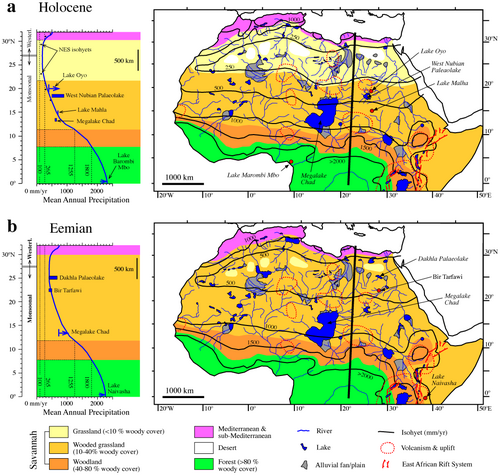
- Time Span: 0.0117 to 0 million years ago (Ma).
- Lower Boundary: Defined by the NGRIP2 ice core in Greenland.
- Climate Divisions: Divided into five chronozones based on climatic fluctuations.
- Key Events: Includes the 8.2 kiloyear event and the 4.2 kiloyear event.
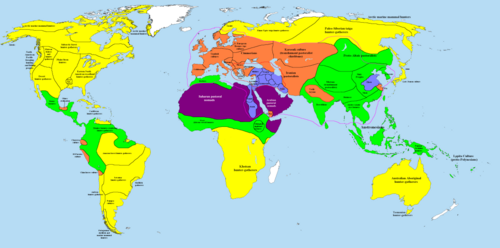
- Human Impact: The era of the transition from nomadic pastoralists to farming societies and the rise of proto-cities.
Chronology and Climatic Intervals
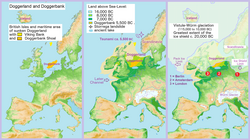
To better understand the environmental shifts of the last 11,700 years, scientists divide the Holocene into chronozones—time intervals based on specific climatic fluctuations. These zones help track the transition from the end of the last glacial period to the modern era.
| Chronozone | Interval (ka BP) | From (ka BP) | To (ka BP) |
|---|---|---|---|
| Preboreal | 10 - 9 | 10 | 9 |
| Boreal | 9 - 8 | 9 | 8 |
| Atlantic | 8 - 5 | 8 | 5 |
| Subboreal | 5 - 2.5 | 5 | 2.5 |
| Subatlantic | 2.5 - Present | 2.5 | 0 |
Note: "ka BP" refers to kilo-annum Before Present, meaning thousands of years before 1950.
Regional Environmental Developments
Asia and the Indian Summer Monsoon
In South Asia, the Indian Summer Monsoon (ISM)—the seasonal wind pattern that brings heavy rainfall to the region—has fluctuated significantly. Sediments from Lonar Lake in Maharashtra indicate dry conditions around 11,400 BP, which shifted to a much wetter climate between 11,400 and 11,100 BP. While the Early Holocene was generally wet, the Middle Holocene (6,200 to 3,900 BP) saw a period of aridification.
In East Asia, the Sea of Japan experienced notable warmth during the Middle Holocene, with temperature fluctuations occurring in rhythmic cycles every 400–500 and 1,000 years.
Southeast Asia and Marine Changes
Before 7,500 BP, the Gulf of Thailand was an arid landmass exposed above sea level. However, global warming triggered a marine transgression—a geological event where sea levels rise relative to the land—between 7,500 and 6,200 BP, flooding the region.
North America
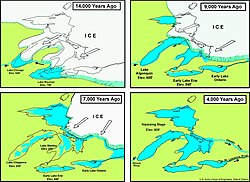
Western North America was drier during the Middle Holocene than it is today, characterized by wetter winters and drier summers. Following the thermal maximum of the Holocene Climate Optimum around 4,500 BP, the East Greenland Current strengthened. Later, a massive megadrought affected the Great Basin from 2,800 to 1,850 BP.
Human and Ecological Evolution
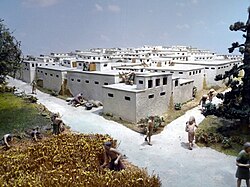
The stability of the Holocene facilitated a massive shift in human societal structures. Early humans transitioned from nomadic pastoralists to simple farming societies, leading to the creation of proto-cities. One of the most prominent examples is Çatalhöyük, established around 7300 BC.
These developments were often tied to climate amelioration, where improving weather conditions supported the domestication of plants and animals. However, this era also witnessed significant extinction events, including the loss of the giant deer Megaloceros giganteus.
Frequently Asked Questions
What is the Holocene?
The Holocene is the current geological epoch that began approximately 11,700 years ago after the last major glacial period. It is characterized by a warmer, more stable climate that enabled the development of human civilization.
How is the Holocene divided?
It is divided into three formal ages (Greenlandian, Northgrippian, and Meghalayan) and five climatic chronozones: Preboreal, Boreal, Atlantic, Subboreal, and Subatlantic.
What was the Holocene Climate Optimum?
The Holocene Climate Optimum was a period of warmer global temperatures. In North America, its thermal maximum ended around 4,500 BP, leading to changes in ocean currents like the East Greenland Current.
What is a marine transgression?
A marine transgression occurs when the sea level rises relative to the land, causing the ocean to cover previously exposed land areas, such as what happened in the Gulf of Thailand between 7,500 and 6,200 BP.
How did the Indian Summer Monsoon change over time?
The ISM intensified between 11,400 and 11,100 BP, making the region very wet. It later weakened during the Middle Holocene (6,200 to 3,900 BP) and again in the Late Holocene, though it experienced a brief period of high strength between 3,400 and 3,200 BP.