Andean Community: Driving Integration in South America
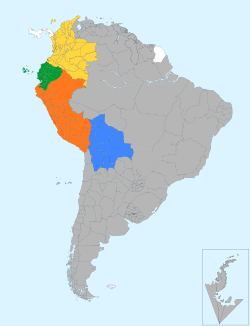
The Andean Community (Spanish: Comunidad Andina de Naciones, or CAN) is a prominent international organization based in South America. Comprising the member states of Bolivia, Colombia, Ecuador, and Peru, the organization is dedicated to the economic, political, and social integration of its members. By functioning as a free trade area, the CAN aims to establish a comprehensive customs union among South American nations to foster regional stability and growth.
Founded on the principles of cooperation, the community operates as a supranational entity, meaning its legal acts are directly applicable within member states and can take precedence over national laws. This structure makes it one of the most robust subregional organizations in Latin America and the Caribbean.
Key Facts
- Member States: 4 full members (Bolivia, Colombia, Ecuador, Peru).
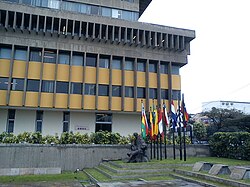
- Headquarters: Lima, Peru.
- Legal Foundation: The Cartagena Agreement of 1969.
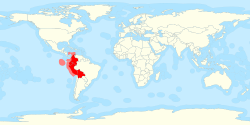
- Total Area: Approximately 3,781,914 km².
- Population: Estimated at 113 million inhabitants.
- GDP (PPP): Estimated at $902.86 billion (2017).
- Official Languages: Spanish, Quechua, Aymara, and 34 other indigenous languages.
The Legal Framework: The Cartagena Agreement
The legal bedrock of the organization is the Cartagena Agreement, signed on May 26, 1969. This agreement established a supranational legal order modeled after the European Community law. Under this framework, the Andean Community is empowered to adopt legal acts that grant individual rights without requiring further ratification by national governments.
To ensure the rule of law, the member states established the Andean Court of Justice (AGHV), which oversees legal disputes and ensures the consistent application of community law across the region.
Historical Evolution and Membership
The organization began as the Andean Pact in 1969, originally founded by Bolivia, Chile, Colombia, Ecuador, and Peru. Over the decades, membership has fluctuated due to shifting political and economic landscapes:
- Venezuela: Joined in 1973 but withdrew in 2006, citing disagreements over free trade agreements signed by Colombia and Peru with the United States.
- Chile: Withdrew in 1976 due to economic incompatibilities.
- Institutional Reform: In 1996, via the Trujillo Protocol, the organization was renamed the Comunidad Andina de Naciones (CAN).
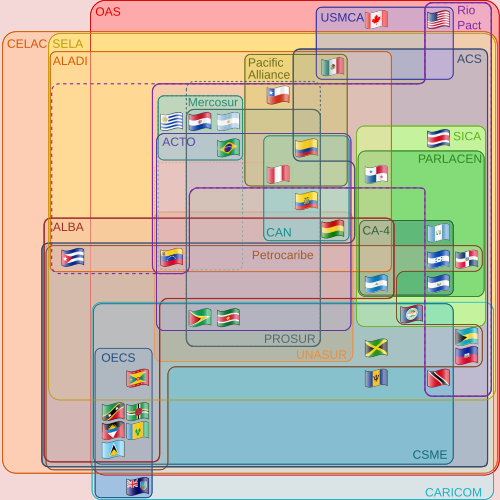
Beyond full membership, the CAN has expanded its reach through associate members. In 2005, Argentina, Brazil, Paraguay, and Uruguay (all members of Mercosur) were granted associate status, facilitating closer ties between the two largest trading blocs in South America.
Economic and Social Integration
The CAN focuses on removing trade barriers and promoting industrialization. A key goal has been the pursuit of technological sovereignty, aiming to reduce dependence on foreign technology companies. The community has also implemented a Common External Tariff and an "open skies" policy to enhance regional connectivity.
Integration extends beyond trade to the movement of people. Since January 1, 2005, citizens of member states can travel between member countries using only their national ID cards, eliminating the need for visas. Additionally, the Andean passport was introduced in 2001 to standardize travel documents across the region.
Organizational Structure
The Andean Community operates through a complex network of institutions designed to manage political, legal, and social affairs:
- Andean Presidential Council: The highest political authority.
- Andean Parliament: Located in Bogotá, Colombia.
- Andean Court of Justice: Located in Quito, Ecuador.
- General Secretariat: Based in Lima, Peru.
- CAF (Development Bank of Latin America and the Caribbean): Based in Caracas, Venezuela.
| Category | Details |
|---|---|
| Full Members | Bolivia, Colombia, Ecuador, Peru |
| Associate Members | Argentina, Brazil, Paraguay, Uruguay |
| Working Language | Spanish |
| HDI (2017) | 0.781 (High) |
| Total Area (EEZ) | 6,573,757 km² |
Frequently Asked Questions
What is the primary goal of the Andean Community?
The primary goal is the economic, political, and social integration of its member states to create a free trade area and eventually a customs union in South America.
How does the Andean Community differ from a standard trade agreement?
Unlike simple trade agreements, the CAN is a supranational organization. Its laws take precedence over national laws of member states and are directly applicable without needing local ratification.
Can citizens of member states travel without a passport?
Yes, since 2005, citizens of member countries can enter other member states using only their national ID cards, though a standardized Andean passport is also available.
Why did Venezuela leave the Andean Community?
Venezuela withdrew in 2006 because President Hugo Chávez believed that the free trade agreements signed between the United States and the member states of Colombia and Peru damaged the community's unity.
What is the relationship between the CAN and Mercosur?
The two are the main trading blocs of South America. They have signed cooperation agreements and have historically explored the possibility of merging into a larger South American Free Trade Area (SAFTA).