Latin American Integration: A History of Political and Economic Unity
The quest for Latin American integration—often referred to as Latin Americanism—is a centuries-old ambition. From the early dreams of independence leaders to the complex trade blocs of the 21st century, the region has consistently sought ways to unite to protect its autonomy, foster economic growth, and balance the influence of global superpowers.
This journey has evolved from early attempts at creating a single regional state to the establishment of specialized organizations focusing on trade, security, and cultural ties. While the vision of a fully unified "fatherland" remains elusive, the proliferation of regional pacts demonstrates a persistent drive toward collective strength.
Key Facts
- Simón Bolívar was the primary early architect of regional unity, envisioning a confederation to protect new republics from European and U.S. influence.
- The Organization of American States (OAS) evolved from the Pan American Union in 1948, initially focusing on collective security during the Cold War.
- Mercosur and the Andean Community (CAN) represent the most significant efforts toward economic and trade integration in South America.
- CELAC was established in 2010 as an alternative to the OAS, specifically excluding the United States and Canada.
- Public support for integration remains generally high, though it has seen a decline in several countries since the late 1990s.
19th Century Precedents: The Dream of Bolívar
Following the wars of independence (1808–1825), the newly sovereign states of the Americas faced the challenge of maintaining their autonomy. Simón Bolívar, a pivotal leader in South American independence, advocated for a united front to prevent European powers—particularly the United Kingdom—and the expanding United States from re-conquering the region.
Bolívar's vision was inspired by Francisco de Miranda, who proposed a single independent state encompassing all of Spanish America. In 1819, Bolívar successfully established Gran Colombia. He later attempted to expand this into an "Andean Confederation" by joining it with Peru and Upper Peru, but the project failed to materialize.
Other early attempts at large-scale unity also collapsed. The Federal Republic of Central America dissolved in 1840, and the Peru-Bolivian Confederation lasted only three years. By contrast, Mexico and the Kingdom of Brazil (which declared independence in 1822) remained as the region's primary large states.
In 1826, Bolívar organized the Amphictyonic Congress (the Congress of Panama) to create a league of republics for mutual defense and commerce. However, only Gran Colombia ratified the resulting treaty, and the nation itself collapsed by 1830. These early failures are why modern politicians often refer to regional integration as "Bolívar's dream."
The Rise of Pan-Americanism and the 20th Century
By the late 19th century, the focus shifted toward international trade and Pan-Americanism, a movement characterized by the leading role of the United States. In 1889, eighteen nations created the Commercial Bureau of the American Republics to promote hemispheric trade. This body eventually evolved into the Pan American Union in 1910.
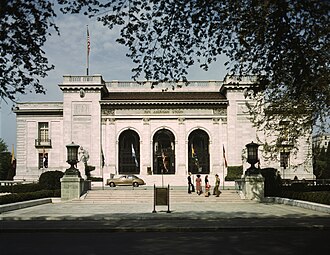
The aftermath of World War II and the onset of the Cold War shifted the priority back to political and security cooperation. To prevent Soviet or communist incursions, member states adopted the Inter-American Treaty of Reciprocal Assistance (the Rio Treaty) in 1947. In 1948, the Pan American Union was transformed into the Organization of American States (OAS), which officially began functioning in 1951.
As the 20th century progressed, some Latin American leaders sought alternatives to the OAS to reduce U.S. dominance. This led to the creation of the Rio Group in 1986, which relied on annual summits rather than a permanent secretariat. Simultaneously, the Ibero-American Community of Nations was formed in 1991 to strengthen ties between Latin American countries and their former colonial counterparts, such as Spain and Portugal.
Modern Trade Blocs and Economic Integration
In the mid-to-late 20th century, trade became the primary driver for regional organizations. In 1951, the Organization of Central American States (ODECA) was formed, later leading to the Central American Common Market in 1960.
Other significant economic initiatives include:
- ALALC and ALADI: The Latin American Free Trade Association (ALALC), formed in 1960, aimed to eliminate trade duties. It was transformed into the Latin American Integration Association (ALADI) in 1980 to pursue more ambitious social and economic development.
- The Andean Community (CAN): Founded as the Andean Pact in 1969, this group has seen fluctuating membership, including the withdrawal of Chile (1976) and Venezuela (2006).
- Mercosur: Established in 1991 by Argentina, Brazil, Paraguay, and Uruguay, this bloc promotes the free movement of goods, people, and currency.
- Pacific Alliance: Formed in 2012 by Chile, Colombia, Mexico, and Peru, focusing on deeper integration and outward-looking trade.
In 2004, Mercosur and the Andean Community signed the Cusco Declaration, aiming to create a political South American Community of Nations, later renamed the Union of South American Nations (UNASUR) in 2007.
Summary of Major Regional Organizations
| Organization | Primary Focus | Key Characteristic |
|---|---|---|
| OAS | Security & Politics | Includes USA and Canada |
| CELAC | Political Integration | Excludes USA and Canada |
| Mercosur | Trade & Economics | South American focus |
| CAN | Trade & Economics | Andean region focus |
| Pacific Alliance | Trade & Integration | Pacific coast focus |
Public Sentiment and Future Outlook
Public support for integration remains generally high, with a majority of Latin Americans supporting both economic and political unity. However, data from Latinobarómetro indicates a decline in this support between 1997 and 2010 in many countries. Interestingly, support is often higher among men and those with higher education levels.
Politically, the "pink tide"—a shift toward left-wing governments—has seen the political left become the strongest advocates for political integration, a trend that differs from the European experience where the political center typically leads integration efforts.
Looking forward, some leaders continue to push for a more cohesive union. Most recently, Mexican President Andrés Manuel López Obrador has advocated for a regional union of the Americas that mirrors the structure of the European Union.
Frequently Asked Questions
What was "Bolívar's dream"?
Bolívar's dream refers to the vision of Simón Bolívar to unite the independent Spanish American republics into a single confederation or league to ensure their collective security and autonomy against foreign powers.
How does CELAC differ from the OAS?
While the Organization of American States (OAS) includes the United States and Canada, the Community of Latin American and Caribbean States (CELAC) specifically excludes them to foster integration without North American influence.
What is the primary purpose of Mercosur?
Mercosur is a trade bloc designed to promote free trade and the fluid movement of goods, currency, and people among its member nations in South America.
Why did the early 19th-century unions fail?
Early attempts like Gran Colombia and the Federal Republic of Central America failed due to internal instability, civil wars, and a lack of cohesive political unity among the newly formed sovereign states.
Is there public support for a European Union-style integration in Latin America?
Yes, while support has fluctuated, a majority of the population still favors economic and political integration, and some current political leaders have explicitly proposed a model similar to the EU.