Argentina Economy: Analysis of Growth, Industry, and Financial Evolution
Argentina stands as a significant upper-middle income economy in South America, characterized by a rich history of extreme wealth, industrial ambition, and periodic financial volatility. As a member of the G-20, Mercosur, and the WTO, the nation plays a pivotal role in regional trade and global commodity markets. From the fertile plains of the Pampas to the high-tech energy fields of Vaca Muerta, Argentina's economic landscape is as diverse as its geography.
The nation currently navigates a complex transition period, balancing a high Human Development Index (HDI) of 0.865 with significant challenges in inflation and poverty. With a population of approximately 46 million, Argentina continues to leverage its natural resources and skilled labor force to stabilize its fiscal trajectory.
Key Facts
- GDP (Nominal 2025): $683.37 billion, ranking 24th globally.
- GDP (PPP 2025): $1.49 trillion, ranking 29th globally.
- Currency: Argentine peso (ARS).
- Human Development Index: 0.865 (Very High).
- Primary Export Partners: Brazil (14.7%), China (11.3%), European Union (9.7%), and the United States (9.6%).
- Major Energy Asset: Vaca Muerta, one of the world's largest shale oil and gas fields.
Economic History and Evolution
Argentina's economic journey is often described as a series of dramatic cycles. Between 1880 and 1905, the country experienced a "Golden Age," driven by massive immigration and agricultural exports, making it one of the wealthiest nations in the world at the time.
![GDP per capita, 1880 to 2022.[35]](/images/bd/ff/bdff3c8166fded410c3ee9f31da4a7532a38fcfd1744c80bcf8c86ea26944d7a.png)
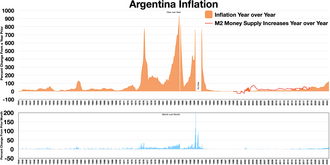
The mid-20th century saw a shift toward nationalization under the Perón era (1945–1955), followed by a period of severe debt crises and hyperinflation from the late 1970s through the 1990s. A notable recovery occurred between 2002 and 2015, fueled by a global commodity boom and the Kirchner administration's policies. However, this was tempered by a significant default in 2001 and subsequent debt restructuring of approximately $100 billion between 2005 and 2010.
![GNI per capita since 1961, adjusted for inequality.[33][34]](/images/de/e4/dee4f5985622af7a3fff7d21b6a6d06c4eb189dabe1abe5a4baa1bfcda153135.png)
Most recently, the period from 2023 to 2025 has been marked by "shock therapy" and austerity reforms under the Milei administration, aimed at curbing inflation and restructuring the state's fiscal approach.
Sectoral Analysis
Agriculture and Natural Resources
Agriculture remains a cornerstone of the Argentine economy, contributing 6.0% to the GDP. The fertile Pampas region is world-renowned for soy production, which accounts for nearly half of the nation's crop output. Additionally, Argentina is the fifth-largest wine producer globally, with significant vineyards in the Mendoza Province.
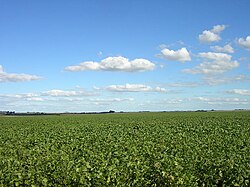
![Vineyard in Mendoza Province. Argentina ranks as the fifth largest wine producer worldwide.[59]](/images/c5/9f/c59f6e4e38e716917c0604a731fb1900371a2a5c8e3594f8d488b0666377ebc6.jpg)
In terms of energy, the Vaca Muerta tight oil (shale oil) field is a critical strategic asset. It holds an estimated 16.2 billion barrels of oil and 308 trillion cubic feet of natural gas, ranking as the third-largest such field globally.
![The Vaca Muerta tight oil (shale oil) field holds 2.58×10⁹ m3 (16.2×10⁹ bbl) of oil and 8.7×10¹² m3 (308×1012 cu ft) of natural gas. It is estimated to be the third largest.[72][73]](/images/72/9f/729f7913d9c4dd0b5a402d5969131faec94cb1f661ebcd7578b9b29a8fd6ebea.png)
Industry and Manufacturing
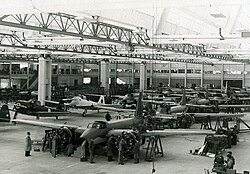
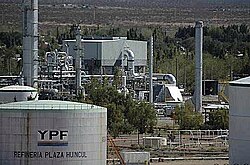
Manufacturing accounts for 17.2% of the GDP. The industrial base is diverse, spanning food processing, motor vehicles, chemicals, pharmaceuticals, and steel. The automotive sector and the production of machinery and equipment are key drivers of domestic industrial value.
Services and Infrastructure
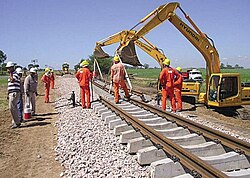
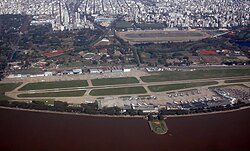
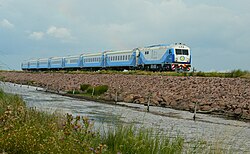
The services sector is the largest contributor to the economy, with business, social, and other services making up 33.3% of the GDP. Commerce and tourism also play a vital role (16.9%), supported by an extensive transport network including the Belgrano Railway and major hubs like Aeroparque Jorge Newbery.
Trade and Financial Indicators
Argentina maintains a robust trade profile, though it often faces challenges with its current account balance. Brazil remains the primary trading partner for both imports and exports.
| Indicator | Value | Global/Regional Rank |
|---|---|---|
| Nominal GDP | $683.37 Billion | 24th |
| GDP per Capita (Nominal) | $14,360 | 70th |
| GDP Growth | 4.4% | N/A |
| Inflation (CPI Sept 2025) | 31.8% | N/A |
| Unemployment Rate | 6.3% | N/A |
| Government Debt | 73.1% of GDP | N/A |
![Argentina money supply increases year over year. Daily data points.[153]](/images/7a/34/7a34bd56da2786e41e0f2954a4a0e0e404e1a8e67035e1ebbac970ab7688f471.png)
Frequently Asked Questions
What is the current state of inflation in Argentina?
As of September 2025, the Consumer Price Index (CPI) inflation rate was recorded at 31.8% by INDEC, reflecting ongoing efforts to stabilize the economy after periods of much higher hyperinflation.
Which industries are the primary drivers of Argentina's GDP?
The largest sector is business and social services (33.3%), followed by manufacturing (17.2%) and commerce and tourism (16.9%). Agriculture, while smaller in GDP percentage (6.0%), remains a critical export driver.
What is the significance of the Vaca Muerta field?
Vaca Muerta is one of the world's largest shale deposits, containing approximately 16.2 billion barrels of oil and 308 trillion cubic feet of natural gas, positioning Argentina as a potential global energy powerhouse.
Who are Argentina's main trading partners?
Brazil is the most significant partner, accounting for 14.7% of exports and 24.3% of imports. Other major partners include China, the European Union, and the United States.
What is the current poverty level in Argentina?
In 2025, approximately 31.7% of the population lived below the national poverty line, with 7.3% living in extreme poverty.